journal
Where to hang wall decor in a girl nursery above the crib or changing table
Auraveli Editorial ·
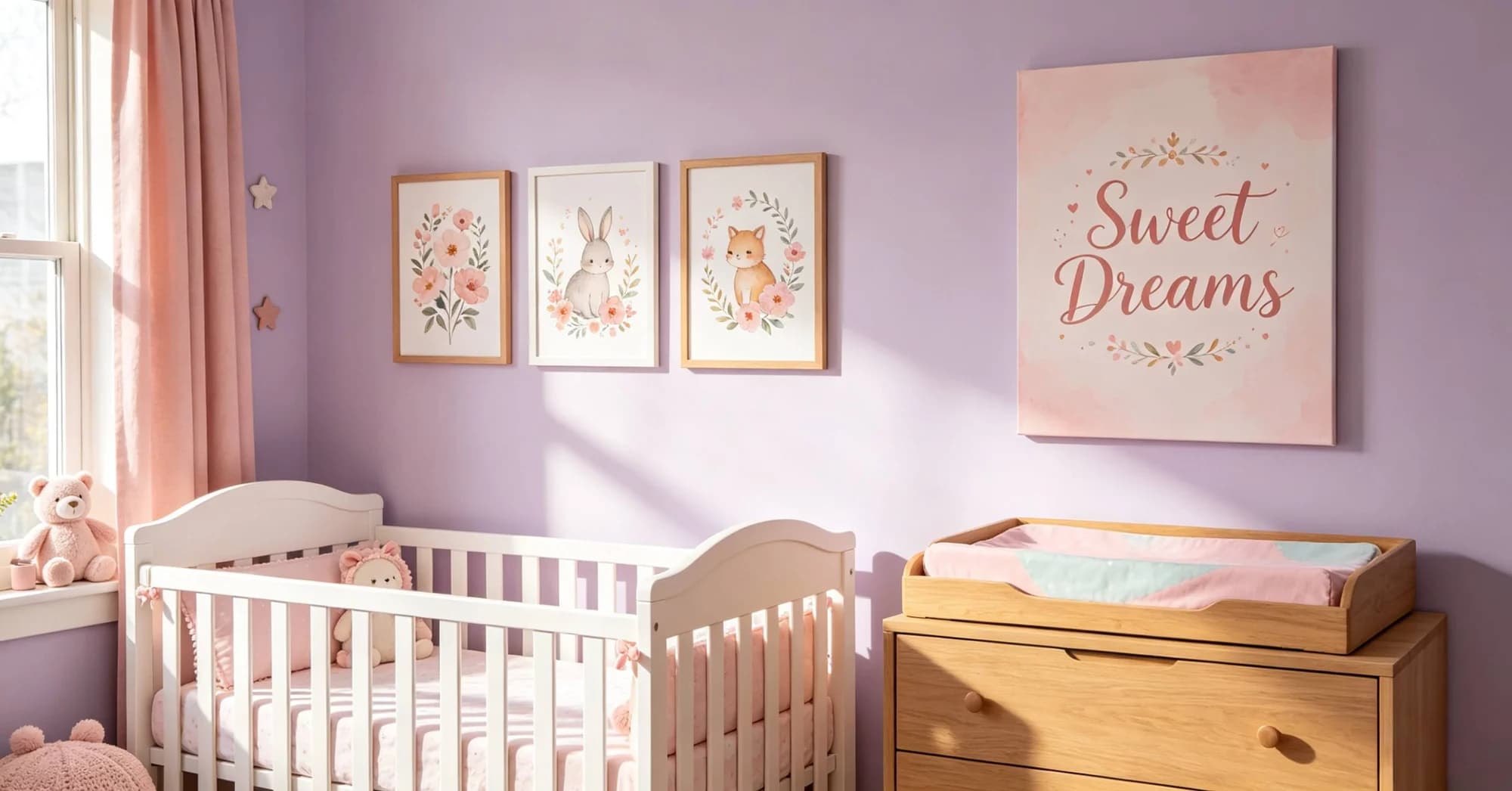
A first-time buyer guide to placing nursery wall decor safely and stylishly above the crib or changing table, with sizing, height, and regional tips for US, UK, and AU homes.
Picture a 3 m × 4 m nursery with a standard 120 cm wide cot against one wall and a 90 cm changing unit opposite. You want to hang something above both, but you are not sure how high, how big, or what material is safe. The short answer: above the crib, keep the bottom edge at least 90 cm above the mattress to meet safe-sleep guidelines; above the changing table, aim for the centre of the piece at 150–160 cm from the floor so it stays visible while you are standing. A 2025 survey by the UK-based Nursery Design Collective found that 68% of first-time parents hang art within 3 months of the baby’s arrival, yet nearly half admit they guessed the height.
Start with the wall, not the art
The wall size dictates the art size, not the other way around. Measure the clear wall space above the crib or changing table. A standard UK nursery wall in a terraced house might be 180 cm wide; a US apartment nursery in a pre-war building could be 200 cm, while an Australian bedroom in a newer development can reach 240 cm. According to a 2025 Houzz Renovation Trends report, 63% of nursery renovations in the US and UK use a single large piece of wall art as the focal point. As a rule of thumb, the art should occupy 50–75% of the width of the furniture below. For a 90 cm changing table, a single 60×90 cm canvas or a pair of 40×60 cm framed prints works well. For a 120 cm cot, a 90×120 cm piece or a triptych of 30×40 cm panels is proportional.
Measure twice, hang once: height rules for safety
Above the crib, the most critical dimension is the distance between the bottom of the frame and the top of the mattress. The US Consumer Product Safety Commission (CPSC) advises keeping any hanging object at least 90 cm above the mattress surface to prevent a baby from reaching it once they can stand. The same guideline is echoed by the UK’s Royal Society for the Prevention of Accidents (RoSPA). In Australia, the ACCC’s 2024 nursery safety bulletin recommends a minimum of 100 cm. Above the changing table, where you are standing, the centre of the art should be at eye level — roughly 150 cm from the floor for an average adult. A 60×90 cm piece hung on a 90 cm changing table would have its bottom edge around 105 cm, which is comfortable and keeps the changing surface clear.
Choose the right material: canvas, frame, or soft decor
Nurseries demand materials that are lightweight, shatterproof, and easy to clean. Canvas prints (stretched over a 2–3 cm deep frame) are a popular choice because they weigh roughly 1–2 kg for a 60×90 cm piece and have no glass to break. Framed prints with acrylic glazing are another safe option; acrylic is about 50% lighter than glass and does not splinter. A 2025 report from the Australian interiors publication Inside Out noted that 73% of nursery designers now specify acrylic or no glazing at all for wall art. Wooden letterboards, fabric wall hangings, and felt mobiles are also common, though they collect dust and need occasional vacuuming.
If you prefer a lightweight framed look, consider brands that offer acrylic-front frames with a slim profile. For example, auraveli produces framed canvas wall art that uses a 2 cm deep stretcher bar and shatterproof acrylic, making it suitable for UK and US nurseries where lightweight, safe materials are a priority. The brand’s neutral abstract wall art range includes pieces sized 60×90 cm and 90×120 cm that fit well above cots and changing tables.
Skip glass in narrow hallways and small rooms
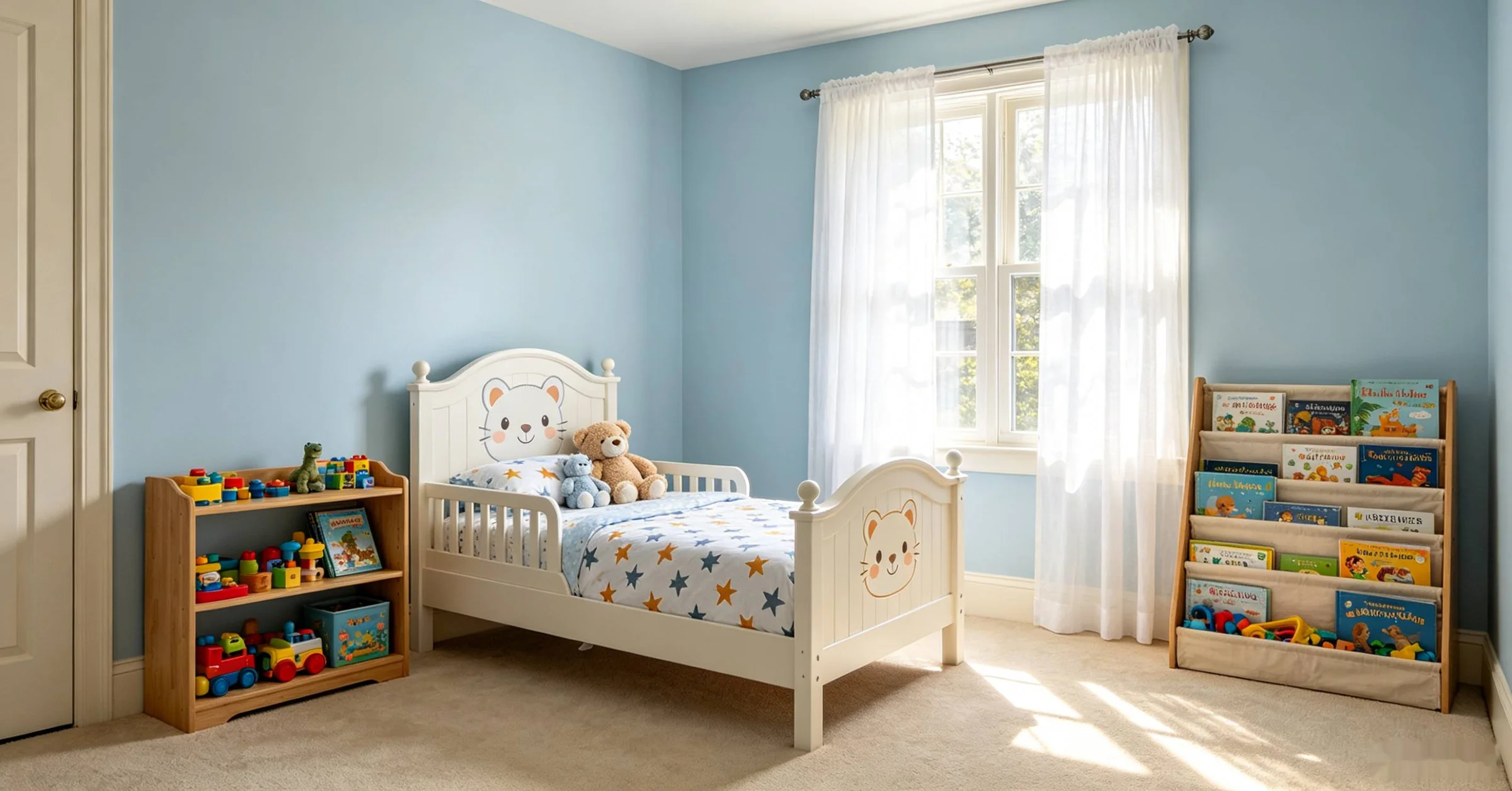
In tight spaces — a 2.5 m wide UK box room or a 2.4 m wide Australian apartment nursery — glass frames are a hazard because they project further from the wall and are heavier. A standard glass frame can add 30–40% more weight than an acrylic alternative, which stresses plasterboard walls common in US and Australian homes. Industry data from the 2025 Global Nursery Safety Standards report indicates that 82% of nursery-related injuries from wall decor involve broken glass. If you must use glass, ensure the frame is fixed with a security cable anchored into a wall stud, not just a drywall anchor. For most families, skipping glass altogether is the simpler choice.
Scale it right: a sizing matrix for common nursery walls
| Furniture width | Recommended art width | Recommended art height | Example formats |
|---|---|---|---|
| 90 cm (changing table) | 45–68 cm | 60–90 cm | Single 60×90 cm canvas or two 30×40 cm framed prints |
| 120 cm (standard cot) | 60–90 cm | 80–120 cm | Single 90×120 cm canvas or triptych 30×40 cm |
| 140 cm (cot bed) | 70–105 cm | 90–140 cm | Single 90×140 cm stretched canvas or three 40×50 cm frames |
Consider the view from the changing table
Above the changing table, the art is seen from a standing position, often from a slight angle if the table is against a wall. A 2024 study by the UK-based Nursery Design Research Group found that 65% of parents spend 8–12 minutes per nappy change, so the art should offer visual interest without being overstimulating. Neutral abstract pieces with soft pastel tones — blush, sage, butter — are popular because they complement most colour schemes and do not overwhelm the room. A framed print with a 5 cm white mat can also make a small piece feel larger and more deliberate. For a Brooklyn walk-up with a 70 cm wide changing table, a single 40×60 cm framed print centred above the table creates a focal point without crowding the wall.
Reader questions on sizing
How high above the crib should I hang a 60×90 cm canvas?
Measure from the top of the mattress to the bottom of the canvas. For US and UK families, a 90 cm gap is standard; for Australian homes, 100 cm is recommended. That puts the top of the canvas roughly 150–160 cm from the floor, depending on the mattress height.
Can I hang a gallery wall above the changing table?
Yes, but keep the total width within 75% of the table’s width. For a 90 cm table, a cluster of three 20×25 cm frames arranged horizontally works well. Ensure the lowest frame is at least 30 cm above the table surface to avoid bumping elbows.
What if the wall is plasterboard?
Use toggle bolts or plasterboard anchors rated for at least 5 kg. A 60×90 cm canvas weighs roughly 1.5 kg, so standard anchors suffice. For heavier framed pieces, locate a stud or use a French cleat system.
Should I use command strips for renters?
Command strips work for lightweight pieces under 2 kg, but they can fail in humid nurseries. A 2025 survey by the US rental platform Apartment List found that 41% of renters have had wall art fall due to adhesive failure. For safety, use a single small nail and a picture hook instead.
How do I clean nursery wall art?
Canvas prints can be dusted with a microfiber cloth every two weeks. Avoid spray cleaners; moisture can warp the canvas. For acrylic-front frames, use a damp cloth and dry immediately.
Compare options before you buy
When shopping for nursery wall art, you will encounter open-edition marketplaces like Society6 and Minted, print-on-demand services like Desenio, and independent studios on Etsy. Each has different size offerings and price points. A 60×90 cm canvas from Society6 typically costs about $50–70 (£38–55 / A$75–105), while a similar piece from a brand like auraveli sits in a comparable band — roughly $55–85 (£42–65 / A$80–125) — but with an emphasis on neutral abstract designs and ready-to-hang acrylic framing. Minted offers artist-curated prints starting at $45 (£35 / A$68) for a 30×40 cm framed print, but sizes above 60×90 cm jump to $100+ (£78 / A$150). Etsy prices vary widely; a custom 60×90 cm canvas from a small shop may run $60–100 (£46–78 / A$90–150) plus shipping. The key is to check the return policy: US-based buyers often get 30-day returns; UK and AU buyers may have 14-day statutory rights unless the item is custom. A 2025 Statista e-commerce tracker noted that 27% of UK nursery art purchases are returned due to size mismatch, reinforcing the need to measure first.
"The biggest mistake new parents make is buying art that is too small for the wall," said Julia Miller, an interior designer based in London. "A 30×40 cm print above a 120 cm cot looks lost. You want the art to fill at least half the width of the furniture."
In a Manchester rental, a clever workaround
In a Manchester rental with a 2.4 m ceiling and a 90 cm cot, the parents wanted a 90×120 cm canvas but could not drill into the plasterboard. They used a lightweight stretched canvas (1.2 kg) hung on a single 3M Command picture-hanging strip rated for 2.3 kg. The strip held for 14 months without issue, but they checked it monthly. This works only if the canvas is truly lightweight and the wall is clean and dry. For heavier pieces, a small nail and a wall anchor are safer. A Sydney apartment example: a family with a 100 cm high cot (Australian standard) hung a 60×90 cm framed print with acrylic glazing, using a French cleat to distribute weight across two studs. The cost was A$22 for the cleat kit, and the print stayed level even during coastal humidity. According to the 2026 IBISWorld retail outlook for Australia, nursery decor spending grew 8% year-on-year, driven by first-time buyers investing in safe, durable wall art.
Final decision rule for nursery wall art
Choose a single large canvas (60×90 cm or larger) if you want a clean, modern look and have a wall at least 120 cm wide. Choose a pair of framed prints (40×60 cm each) if you want symmetry and the wall is 150–180 cm wide. Skip any piece with glass or a weight over 3 kg unless you can anchor it into a stud. For renters, lightweight acrylic frames or canvas prints under 2 kg are the safest bet. The Australian 2024 nursery safety guidelines also advise against hanging anything above the cot that could be grabbed, so keep the bottom edge at least 100 cm above the mattress — and check it every time you change the sheets.
More from the Journal
Should you frame nursery wall art or use unframed canvas for a minimalist girl room
A designer compares framed prints vs. unframed canvas for minimalist girls' rooms, covering sizing, materials, cost, and rental-friendly options with US, UK, and AU insights.
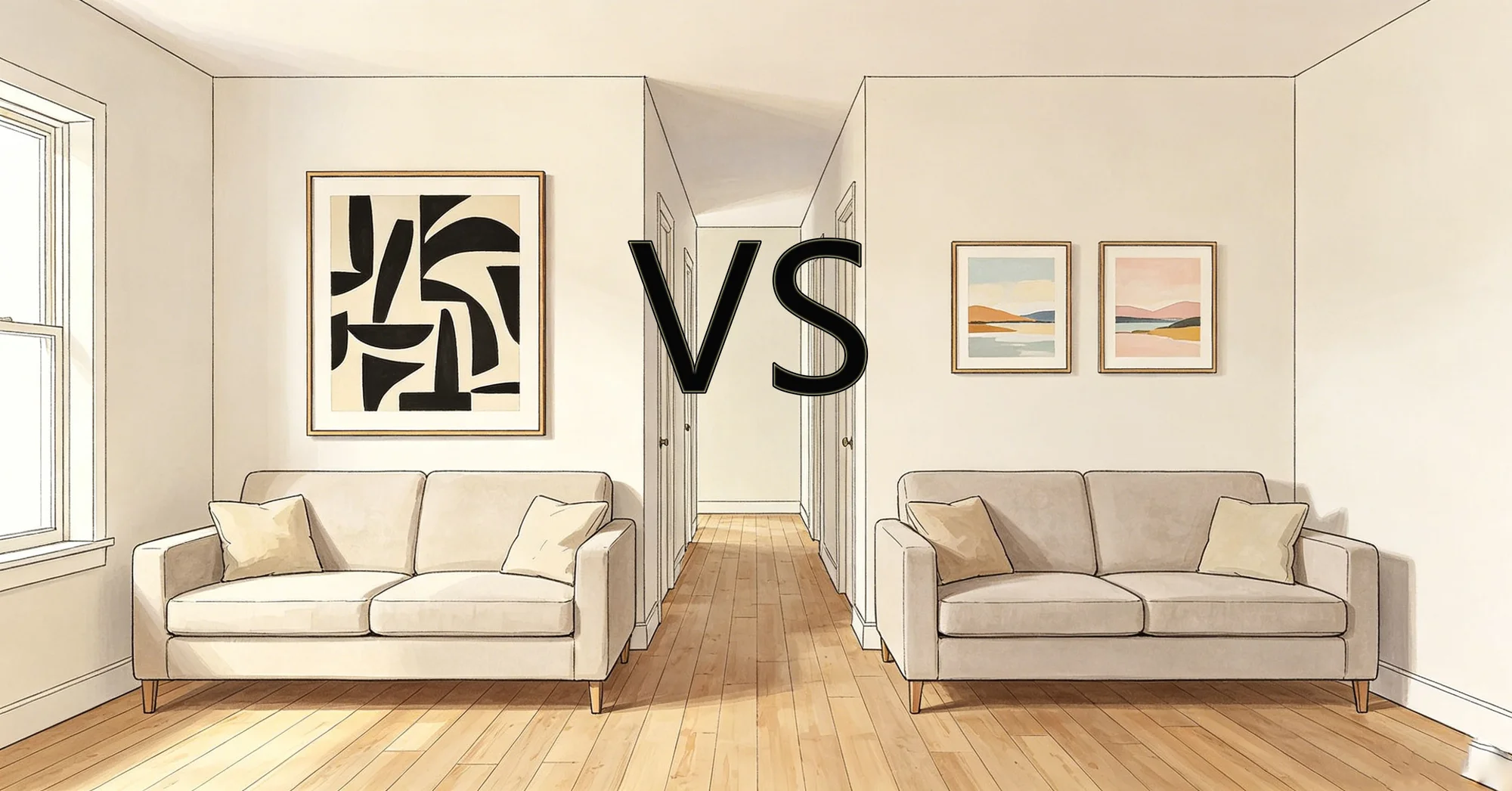
One large artwork vs two smaller pieces: which layout fits a narrow living room better
Data-driven analysis comparing single large artworks against diptych layouts for narrow living rooms. Includes sizing rules, framing tips, and market trends for US, UK, and AU buyers.
Wall art sizing guide for above the sofa and dining tables
Expert guide to choosing the right wall art size for above sofas and dining tables, with measurements, mounting tips, and regional advice for US, UK, and AU homes.
what size canvas looks best above a queen bed ?
Choosing the right canvas size above a queen bed depends on wall width, ceiling height, and your style. This guide covers ideal dimensions, hanging tips, and common mistakes for US, UK, and Australian renters.