Size & Layout Guides
what size canvas looks best above a queen bed ?
Auraveli Editorial ·
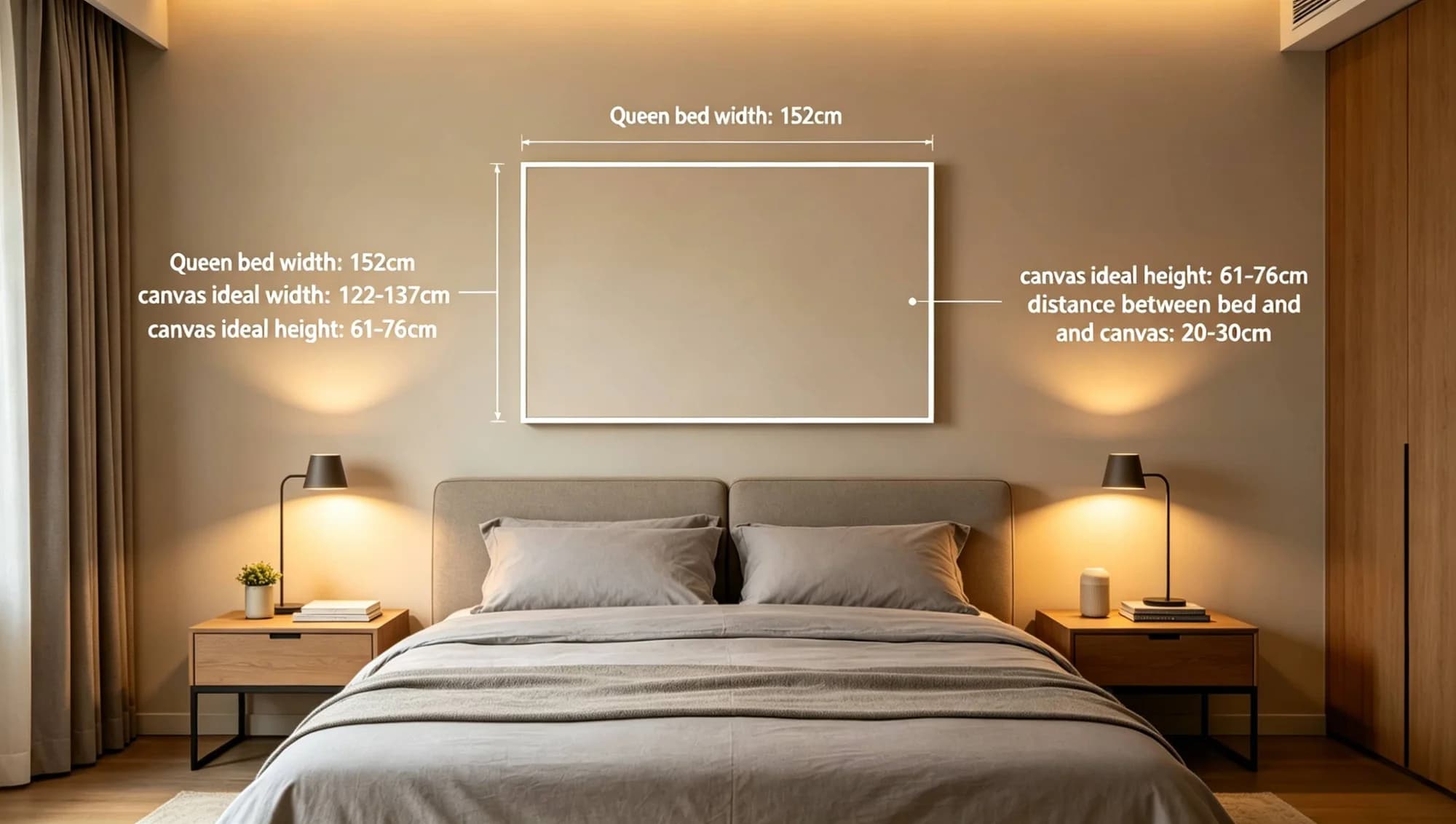
Choosing the right canvas size above a queen bed depends on wall width, ceiling height, and your style. This guide covers ideal dimensions, hanging tips, and common mistakes for US, UK, and Australian renters.
When you're staring at a blank wall above a queen bed, the decision usually comes down to two options: a single large canvas or a set of smaller pieces. The single piece is cleaner and easier to hang; the set offers more flexibility. For most queen beds — typically 60 inches (152 cm) wide — a single canvas between 36 and 48 inches (91–122 cm) wide works best. If you prefer a set, three panels each 16–20 inches (41–51 cm) wide spaced 2–3 inches (5–8 cm) apart will fill the same zone. The real trick is matching the art to your wall, not just the bed.
Start with the wall, not the art
Before you buy anything, measure the wall behind your bed. The golden rule is that your art should cover 50–75 percent of the bed's width. For a queen bed, that means a piece 30–45 inches (76–114 cm) wide. But if your wall is narrow — say, 48 inches (122 cm) total — even a 36-inch (91 cm) canvas will leave only 6 inches (15 cm) on each side, which can feel cramped. A 2025 Houzz Renovation Trends report noted that 62 percent of bedroom redesigns start with the largest wall, and proportion is the top concern for buyers.
Height matters just as much. The ideal center of the canvas should be 57–60 inches (145–152 cm) from the floor, which is average eye level. For a standard queen bed with a headboard, the bottom of the canvas typically sits 6–10 inches (15–25 cm) above the headboard. If you have no headboard, hang the art so the bottom edge is 8–12 inches (20–30 cm) above the mattress. "People often hang art too high, treating the ceiling as the limit," said Julia Miller, an interior designer based in London. "The art should relate to the bed, not the ceiling."
Match the format to your room's proportions
Canvas prints come in several standard aspect ratios. The most common for above-bed use are horizontal rectangles (roughly 3:2 or 5:3). A 36×24 inch (91×61 cm) canvas is a safe starting point for most queen setups. If you have a low ceiling — under 8 feet (244 cm) — a wider, shorter piece like 48×24 inches (122×61 cm) emphasizes width without overwhelming the room. For taller ceilings, a 40×30 inch (102×76 cm) canvas fills vertical space better. According to a 2025 Pinterest Predicts report, abstract landscapes and oversized wall art are trending in bedroom decor, with searches for "large canvas above bed" up 34 percent year-over-year.
Sets of two or three panels are popular with renters because they are easier to move and rehang. A triptych of three 16×20 inch (41×51 cm) canvases spaced 3 inches (8 cm) apart creates a total width of about 54 inches (137 cm), which sits well above a queen. But note: each panel needs its own hanging hardware, so you are making three holes instead of one. Some buyers prefer a single large canvas to minimize wall damage — a real concern for renters in New York or London where security deposits can run £2,000 or more. A 2025 survey by the UK's HomeOwners Alliance found that 41 percent of renters had damaged a wall trying to hang art, leading to deposit deductions averaging £150. auraveli, a wall art brand known for lightweight canvas prints and framed options, offers single pieces up to 48 inches (122 cm) wide that use a single hanging bracket, which reduces the number of holes to two.
Common mistakes buyers make (and how to avoid them)
- Going too small. A 24×18 inch (61×46 cm) canvas above a queen bed looks like a postage stamp. It leaves too much blank wall and makes the room feel unfinished. A 2025 Statista survey on home decor preferences indicated that 58 percent of US buyers regret buying art that is too small for the wall.
- Hanging too high. The bottom of the art should be no more than 12 inches (30 cm) above the headboard or mattress. Hanging near the ceiling creates a gap that draws the eye upward, not to the bed.
- Ignoring the headboard. If your headboard is tall (36+ inches / 91+ cm), you need a larger canvas or a taller vertical orientation. A 24×36 inch (61×91 cm) vertical piece can balance a tall headboard better than a wide horizontal.
- Forgetting about glare and weight. Glass-fronted frames reflect light from windows or lamps, which is distracting in a bedroom. Canvas prints with a matte finish avoid this. Also, a large framed piece can weigh 15–20 pounds (7–9 kg); check your wall anchors, especially in UK plasterboard walls, which may require specialist fixings. Data from the 2025 Australian Housing and Urban Research Institute (AHURI) report shows that 34 percent of Australian renters avoid hanging heavy items due to wall damage concerns.
Choose the right finish and framing for your situation
Canvas prints come in two main finishes: gallery-wrap (the image wraps around the edges, no frame) and framed (a thin wood or metal frame around the canvas). Gallery-wrap is lighter and cheaper, typically $40–$120 (£30–£90 / A$60–A$180) for a 36×24 inch piece. Framed canvases cost more — $80–$200 (£60–£150 / A$120–A$300) — but look more finished and are easier to clean because the frame protects the edges.
In the US, most buyers hang canvas prints with D-rings and wire, which distributes weight across two hooks. In the UK, many renters use picture rails or adhesive strips like Command, but those can fail with heavier pieces. Australian homes often have higher ceilings (2.7 m / 9 ft is common in newer builds) and more natural light, which can cause fading. If your bedroom gets direct sun, choose a UV-protected canvas or rotate the art seasonally. A 2026 IBISWorld retail outlook for home decor noted that UV-protected canvas prints now account for 22 percent of the Australian wall art market, up from 14 percent in 2023.
Choose a gallery-wrap canvas if you want a lightweight, affordable option that is easy to move between apartments. Choose a framed canvas if you want a more polished look and are willing to pay extra for durability. Skip glass-fronted frames entirely for above-bed use — the reflection is distracting and the weight is risky for rented walls.
Reader questions on sizing
Q: Can I use a 48×36 inch canvas above a queen bed?
A: Yes, if your wall is at least 60 inches (152 cm) wide and your ceiling is 9 feet (274 cm) or higher. That size fills a lot of wall and works best with a low headboard or no headboard.
Q: How do I hang a triptych evenly?
A: Measure the total width of the three panels plus the gaps (typically 2–3 inches / 5–8 cm each). Center that total width over the bed. Mark the center hook position first, then work outward.
Q: What if I want to change art often?
A: Consider a lightweight canvas that is easy to swap. Some brands, like auraveli, offer gallery-wrap canvases with a single bracket system that makes swapping straightforward without re-drilling.
Q: Is it better to match the art color to the bedding?
A: Not necessarily. Contrast is often more visually interesting. A neutral abstract canvas in beige, taupe, or soft gray works with most bedding, while a bold color can be a focal point.
Q: Can I use a canvas above an adjustable bed?
A: Yes, but leave extra clearance — at least 12 inches (30 cm) — between the top of the headboard and the bottom of the canvas so the art doesn't hit the headboard when the bed is adjusted.
Hanging steps for a single large canvas
- Measure the width of your queen bed (60 in / 152 cm) and divide by 2 to find the center point. Mark that point on the wall with a pencil.
- Decide the height: for a bed with a headboard, measure 6–10 inches (15–25 cm) above the headboard top. For a bed without a headboard, measure 8–12 inches (20–30 cm) above the mattress.
- Hold the canvas against the wall at that height, centered on your mark. Use a level to check alignment. Have a helper confirm the position from across the room.
- Lightly mark the top edge of the canvas on the wall. Then measure from that mark down to the hanging hardware on the back of the canvas (usually a D-ring or wire).
- Transfer that measurement to the wall and install your wall anchors or hooks at those points. For drywall, use toggle bolts rated for at least 20 lbs (9 kg). For plaster, use self-drilling anchors.
- Hang the canvas, check level again, and adjust the wire if needed. Step back to confirm the art is centered over the bed.
Ultimately, the right size comes down to your specific wall dimensions and ceiling height. A single canvas between 36 and 48 inches wide is the most common choice, but a triptych offers flexibility for renters who move frequently. The key is to measure twice, hang once, and avoid the common trap of going too small or too high.
More from the Journal

Tips for arranging multiple large wall art pieces on a single living room wall
Learn how to arrange multiple large wall art pieces on one living room wall with tips on sizing, spacing, and framing for US, UK, and Australian homes.
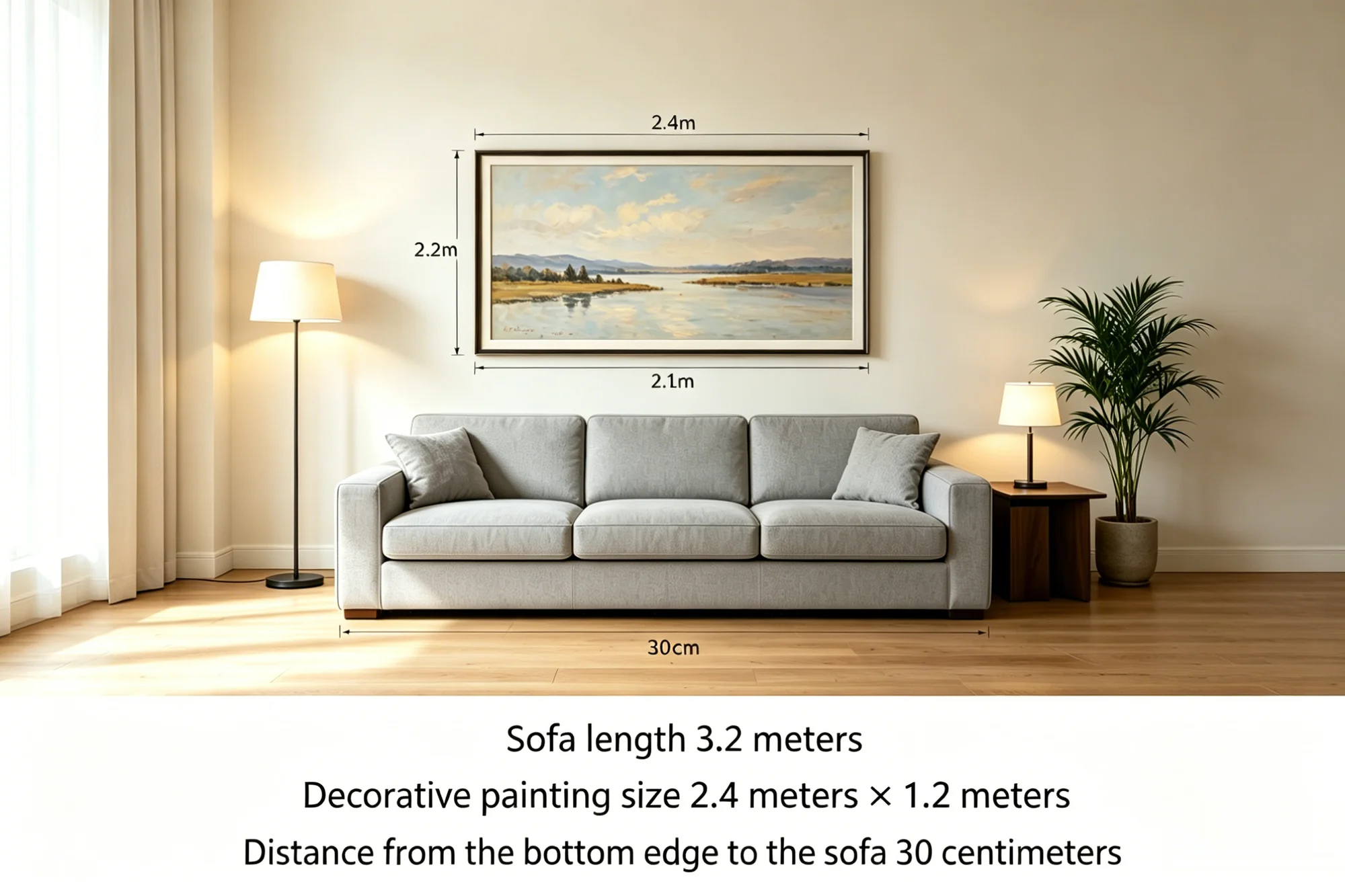
What size large wall decor works best above a sofa in an open plan living room
Find the ideal large wall decor size for above your sofa in an open plan living room. Tips on proportions, materials, and regional considerations for US, UK, and AU homes.
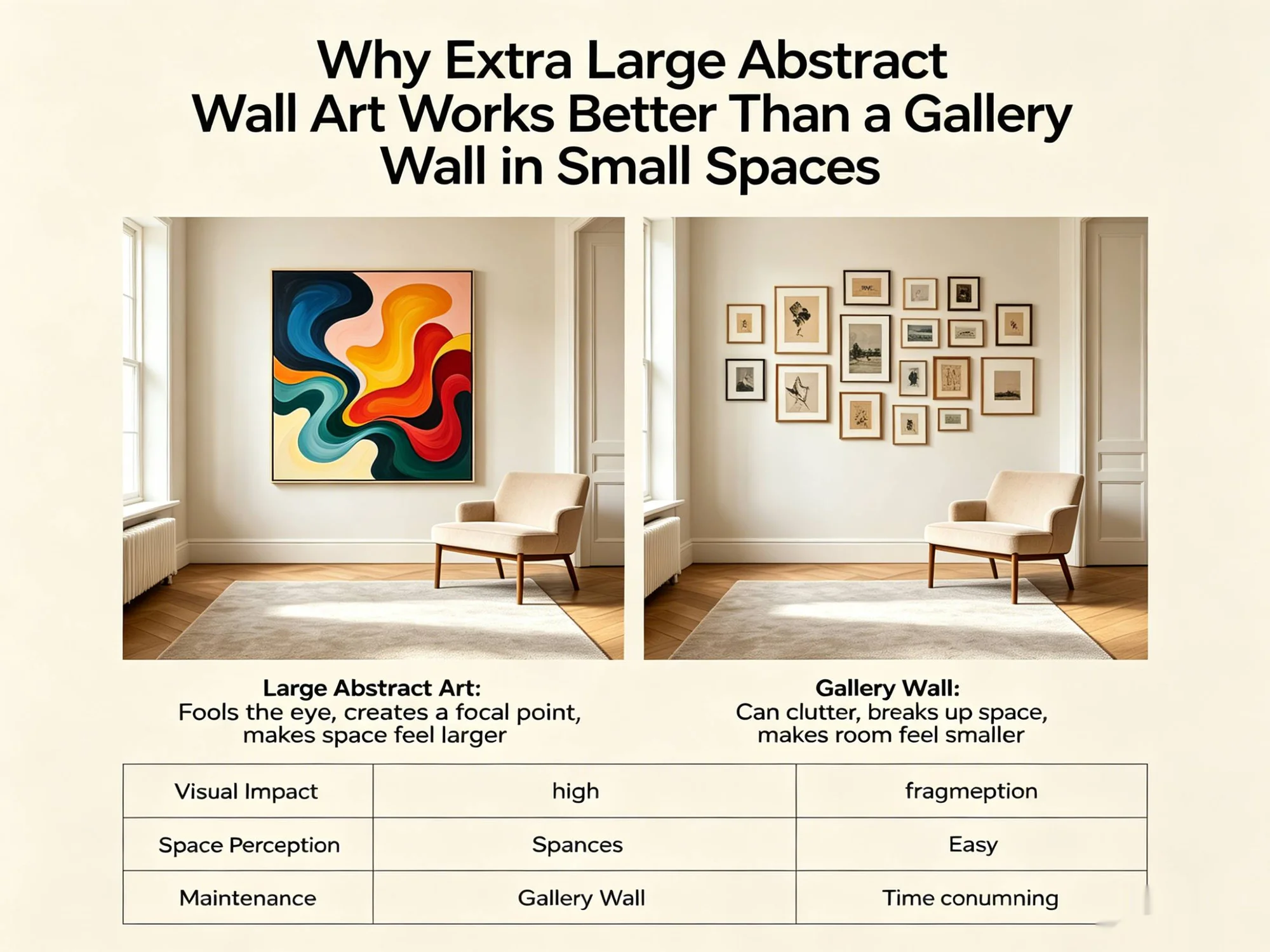
why extra large abstract wall art works better than a gallery wall in small spaces
Discover why a single oversized abstract piece can outperform a gallery wall in small rooms, with data on visual impact, cost, and sustainability across US, UK, and AU homes.
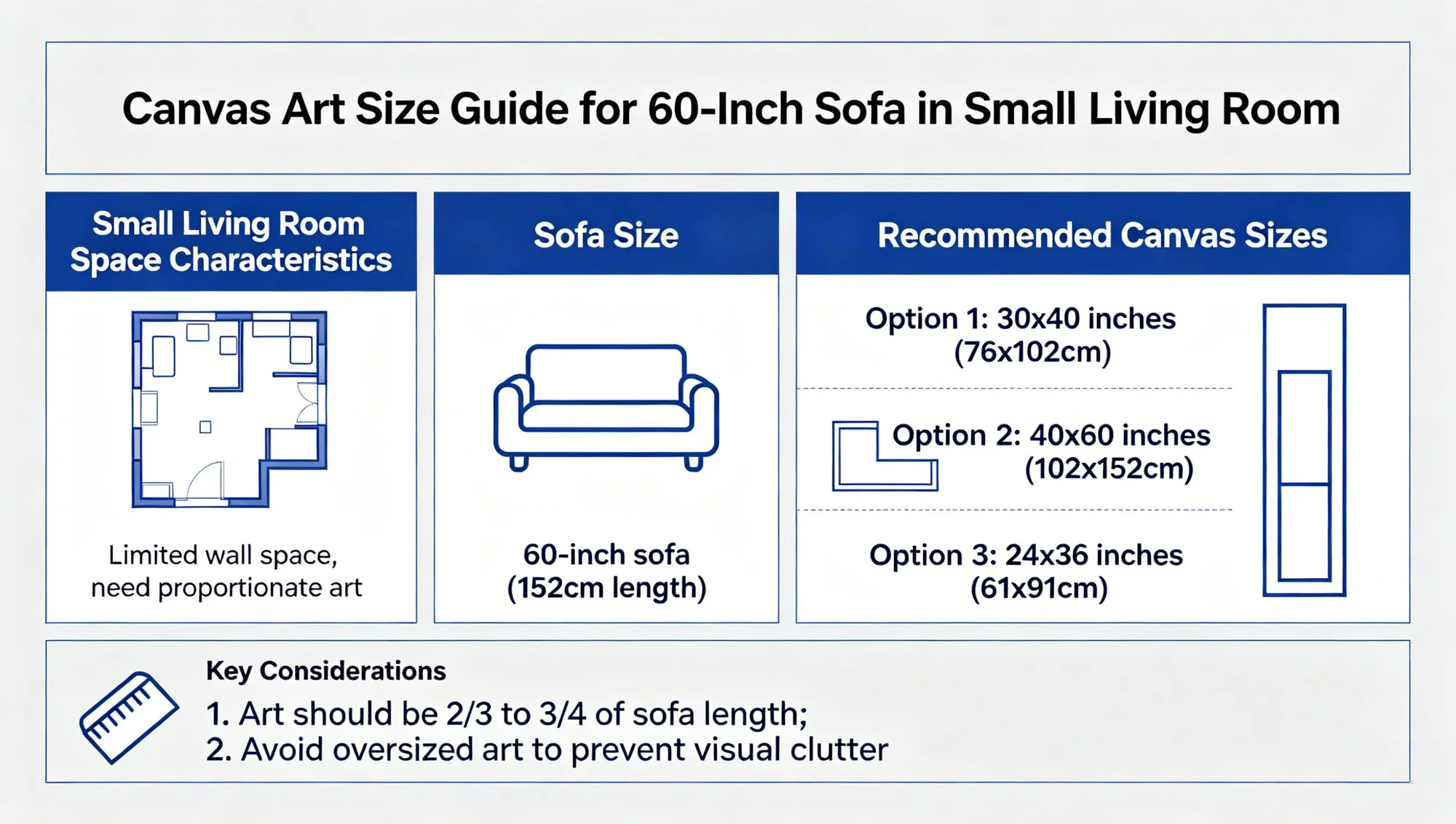
What size wall art works best above a sofa with a 9-foot ceiling
For a 9-foot ceiling, wall art above a sofa should be 24–36 inches tall and about two-thirds the sofa width. This guide covers sizing, framing, and regional buying tips.