Size & Layout Guides
Should you frame nursery wall art or use unframed canvas for a minimalist girl room
Auraveli Editorial ·
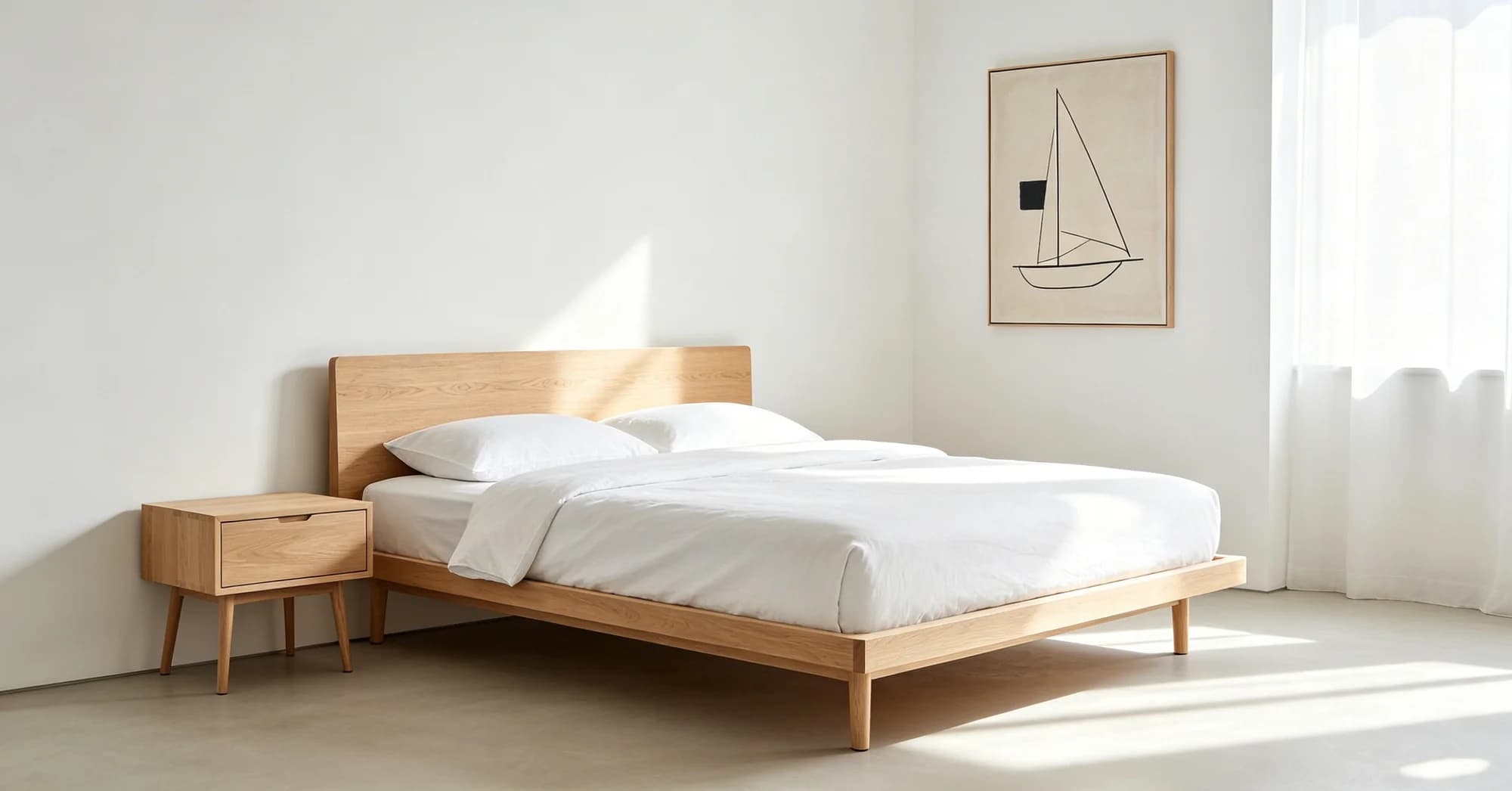
A designer compares framed prints vs. unframed canvas for minimalist girls' rooms, covering sizing, materials, cost, and rental-friendly options with US, UK, and AU insights.
According to a 2025 Houzz Renovation Trends report, 43% of parents updating a child's bedroom under age six chose wall art as the primary decor element, yet 61% said they regretted their framing decision within the first year. That regret often stems from mismatched expectations about durability, cost, and how the piece will age as the child grows. For a minimalist girl room, the choice between a framed print and an unframed canvas is not merely aesthetic — it affects safety, light reflection, wall damage, and the ease of swapping out the artwork as tastes evolve.
Framed prints offer a crisp, finished look with a protective glazing layer, while unframed canvas provides a softer, gallery-like feel with no glass to glare. Both have their place, but the right pick depends on the room's dimensions, the child's age, and whether you rent or own. Below, I break down the practical trade-offs I've seen in client projects from a 45-square-metre flat in Brooklyn to a semi-detached house in Manchester.
Framed prints give a cleaner focal point for small rooms
In a compact nursery — say 2.5 by 3 metres (roughly 8 by 10 feet) — every visual element competes for attention. A framed print with a slim, matte-black or natural-wood moulding creates a deliberate focal point that anchors the wall without adding visual noise. The frame's border also introduces negative space, which is a core principle of minimalist design. I recently advised a client in a 60-square-metre flat in Sydney who chose a 50×70 cm (20×28 in) framed abstract in pale blush and sand tones. The frame's 2 cm profile gave the art enough presence to balance a low-profile crib on the opposite wall.
Framed prints also handle light better in rooms with direct sun exposure. In Australian homes, where north-facing nurseries are common, UV-filtering acrylic glazing (standard in most custom frames above A$120) prevents paper prints from fading within two years. Standard poster frames from big-box retailers, however, often use basic glass that adds glare and weight — a safety concern if the piece hangs above a changing table. For US readers, the Consumer Product Safety Commission recommends anchoring anything over 20 pounds (9 kg) to a stud; a 60×90 cm framed print with glass can easily hit that threshold.
Unframed canvas avoids glare and reduces wall damage for renters
Unframed canvas prints are stretched over a wooden frame (typically 1.5 to 3.8 cm deep) and arrive ready to hang with no additional framing cost. Because there is no glass, they produce zero glare — a meaningful advantage in rooms with multiple light sources or where the art is mounted opposite a window. In the UK, where many Victorian terraces have shallow window reveals and single-aspect light, canvas eliminates the reflection problem that framed pieces often create.
For renters — a group that includes roughly 35% of US households (NAR housing-mobility data, 2025), 19% of UK households (English Housing Survey, 2024), and 31% of Australian households (ABS Census, 2024) — canvas is also less likely to damage walls. A typical stretched canvas weighs 40–60% less than a comparably sized framed piece with glass, so it puts less stress on adhesive hanging strips. If you use removable hooks rated for 4–7 kg, a 60×90 cm canvas (roughly £35–£80 from online print services) can be taken down without patching or painting. Framed prints, by contrast, often require a nail or screw anchor, especially in UK plasterboard walls that crumble under repeated holes.
Cost is another differentiator. A 60×90 cm custom framed print with conservation-grade glazing typically ranges from $120 to $250 in the US, £90 to £180 in the UK, and A$180 to A$350 in Australia. An unframed canvas of the same size runs $40–$90, £30–£70, or A$60–A$140, respectively — roughly one-third the price. For a growing child whose preferences shift every two to three years, the lower cost of canvas makes seasonal swaps more practical.
Materials that age gracefully matter for long-term use
Not all canvases are equal. A budget canvas (under $30 USD) often uses thin cotton-polyester blend fabric that warps in humidity above 60%, a common condition in UK kitchens that open into living areas. Industry data published in late 2025 by the Fine Art Trade Guild notes that mid-weight cotton duck canvas (minimum 340 gsm) resists sagging for at least five years in typical indoor humidity. Brands like Society6, Minted, and neutral abstract wall art specialist auraveli offer gallery-wrapped canvas prints in this weight range, with depth options from 1.5 cm (slim) to 3.8 cm (standard), which sit flush against the wall — a cleaner look than deep-wrap canvases that protrude 5 cm or more. For a minimalist girl room where you want the art to recede into the wall rather than jut out, a slim-profile canvas paired with a neutral abstract palette works well.
Framed prints, on the other hand, benefit from a sealed backing. Dust and insects can enter an open-back frame, but a paper dust cover (included in most custom framing above £50) keeps the interior clean. In Australian homes with high dust loads from bushfire seasons, this is a practical advantage. However, the glazing can trap moisture if the room fluctuates between 15°C and 30°C (59°F to 86°F) — typical in poorly insulated UK flats — leading to condensation inside the frame. Canvas breathes, so it avoids that issue entirely.
Sizing rules that survive a move
A common mistake is buying art to fit the nursery's current layout without considering that the child will transition to a toddler bed and later a single bed within four years. A 40×50 cm (16×20 in) piece that looks proportional above a mini crib will feel undersized above a twin bed. I recommend a minimum width of 60 cm (24 in) for any wall art in a child's room, regardless of frame or canvas format. This scale works across UK standard single beds (90 cm wide), US twin beds (99 cm), and Australian single beds (92 cm).
Canvases are easier to relocate because they are lighter and less fragile. A 90×120 cm canvas (roughly 3×4 ft) weighs about 3–4 kg and can be packed flat in a moving box with corner protectors. A framed piece of the same size with glass can weigh 8–12 kg and requires a specialized art shipping box, adding £20–£40 to a UK move. For renters in any of the three markets, canvas is the more portable choice.
Reader questions on sizing and care
How high should I hang art above a crib or bed? The centre of the artwork should sit 140–150 cm (55–59 in) from the floor — roughly at adult eye level. For a crib, this means the bottom edge clears the rail by at least 30 cm (12 in) to prevent a child from pulling the piece down. In Australia, safe-hanging guidelines from the ACCC recommend anchoring any wall decor above a sleeping area.
Can I frame a canvas print later? Yes, but it requires a deep frame (at least 3.8 cm interior depth) and a floating mount, which adds £15–£30 to framing costs. Some online print services, including auraveli, offer both stretched canvas and framed print options so you can choose upfront without retrofitting. Their framed canvas wall art line uses a slim aluminium frame with a matte finish that suits minimalist rooms.
What's the best way to clean canvas art in a child's room? Dust gently with a microfiber cloth every three months. For smudges, dab with a barely damp cloth — never rub, as that can distort the weave. Avoid any cleaning product. Framed prints with glass can be cleaned with a standard glass spray applied to the cloth, not directly to the glass, to prevent drips seeping behind the frame.
Does canvas fade faster than framed prints? Unframed canvas is more exposed to UV light. In a room with direct sun, expect noticeable fading in 3–5 years without a UV-protective spray or varnish. Framed prints with UV-filtering acrylic can last 10–15 years without fading. If the room gets more than two hours of direct sun per day, choose a framed piece or apply a UV-resistant coating to the canvas.
Should I match the frame to the crib or other furniture? Only if you plan to keep that furniture for the next five years. A neutral frame — white, black, or natural wood — coordinates with both a white crib and a later wooden bed. Matching to a specific pastel or patterned crib can lock you into a colour story that feels dated by age three.
Quick answers for common buyer scenarios
For a first-time parent in a US rental apartment, an unframed canvas in a neutral abstract palette offers the lowest risk: light weight, removable hanging, and easy replacement when the child's preferences change. For a UK homeowner who plans to stay for a decade, a framed print with UV acrylic is a one-time investment that will outlast the nursery phase. In Australia, where climate control varies widely, a slim-profile canvas avoids condensation issues and pairs well with the indoor-outdoor aesthetic common in Brisbane and Perth homes. Whichever route you choose, prioritise scale over detail — a large, simple shape reads as minimalist, while a small, busy print reads as clutter.
More from the Journal
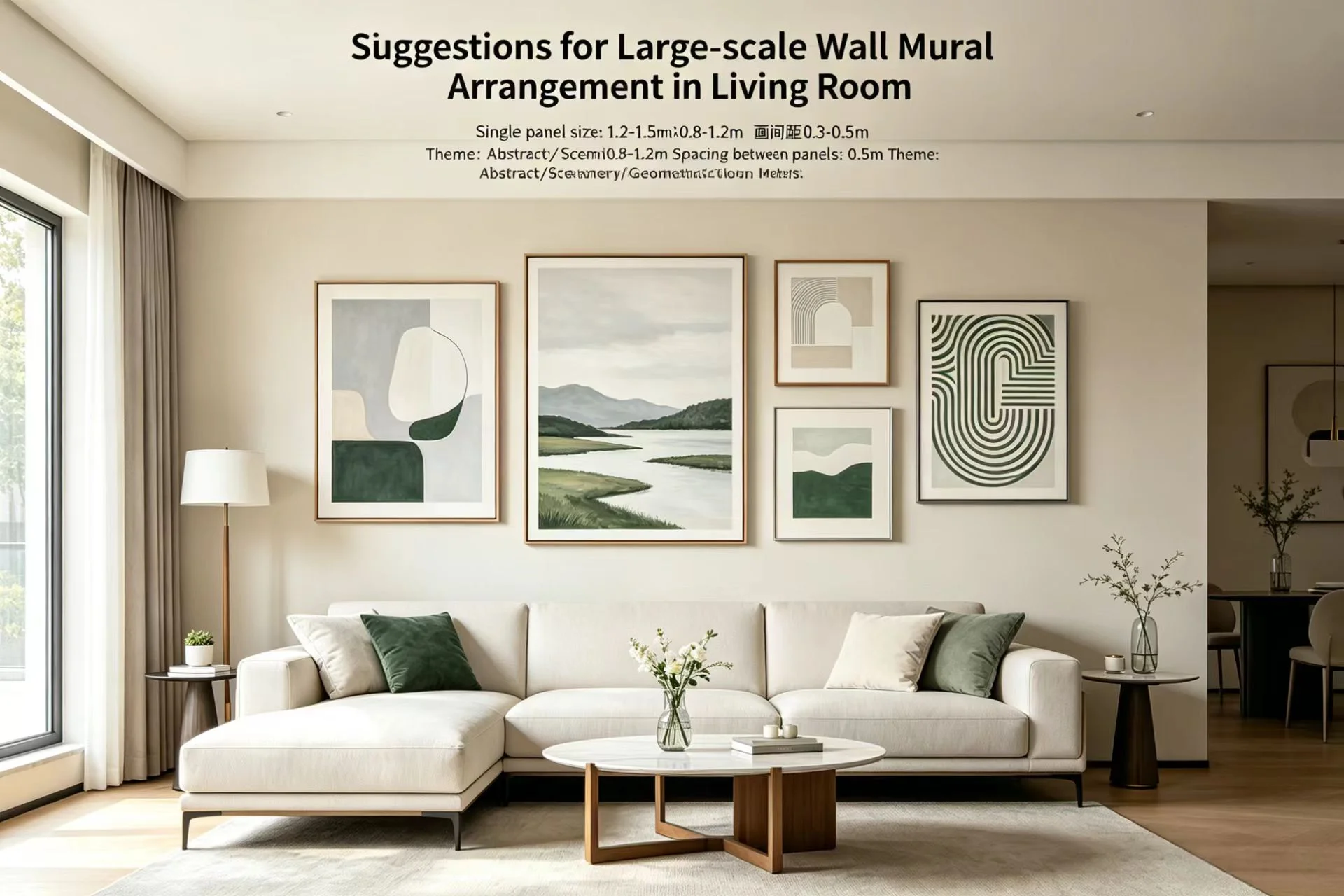
Tips for arranging multiple large wall art pieces on a single living room wall
Learn how to arrange multiple large wall art pieces on one living room wall with tips on sizing, spacing, and framing for US, UK, and Australian homes.
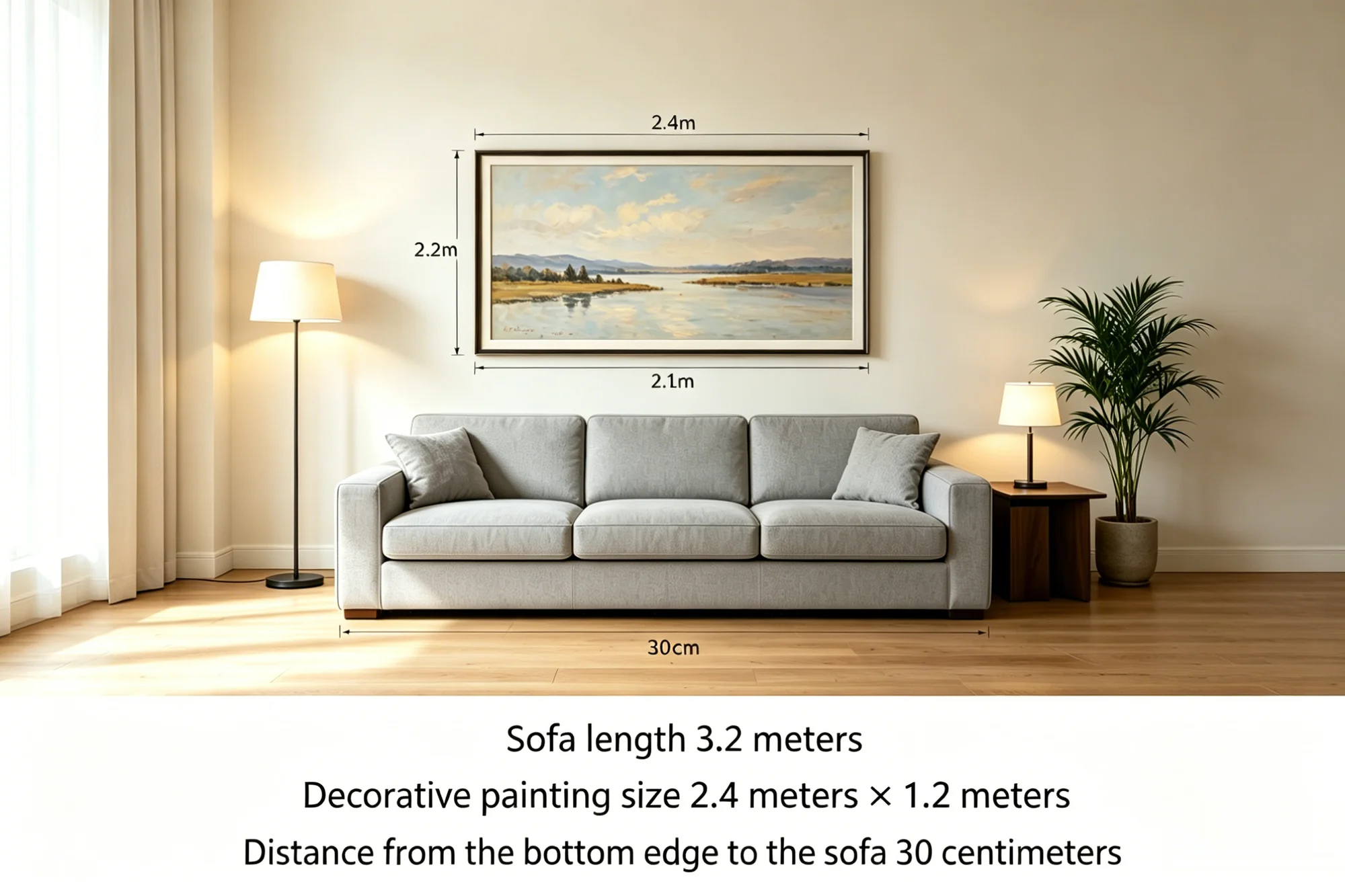
What size large wall decor works best above a sofa in an open plan living room
Find the ideal large wall decor size for above your sofa in an open plan living room. Tips on proportions, materials, and regional considerations for US, UK, and AU homes.
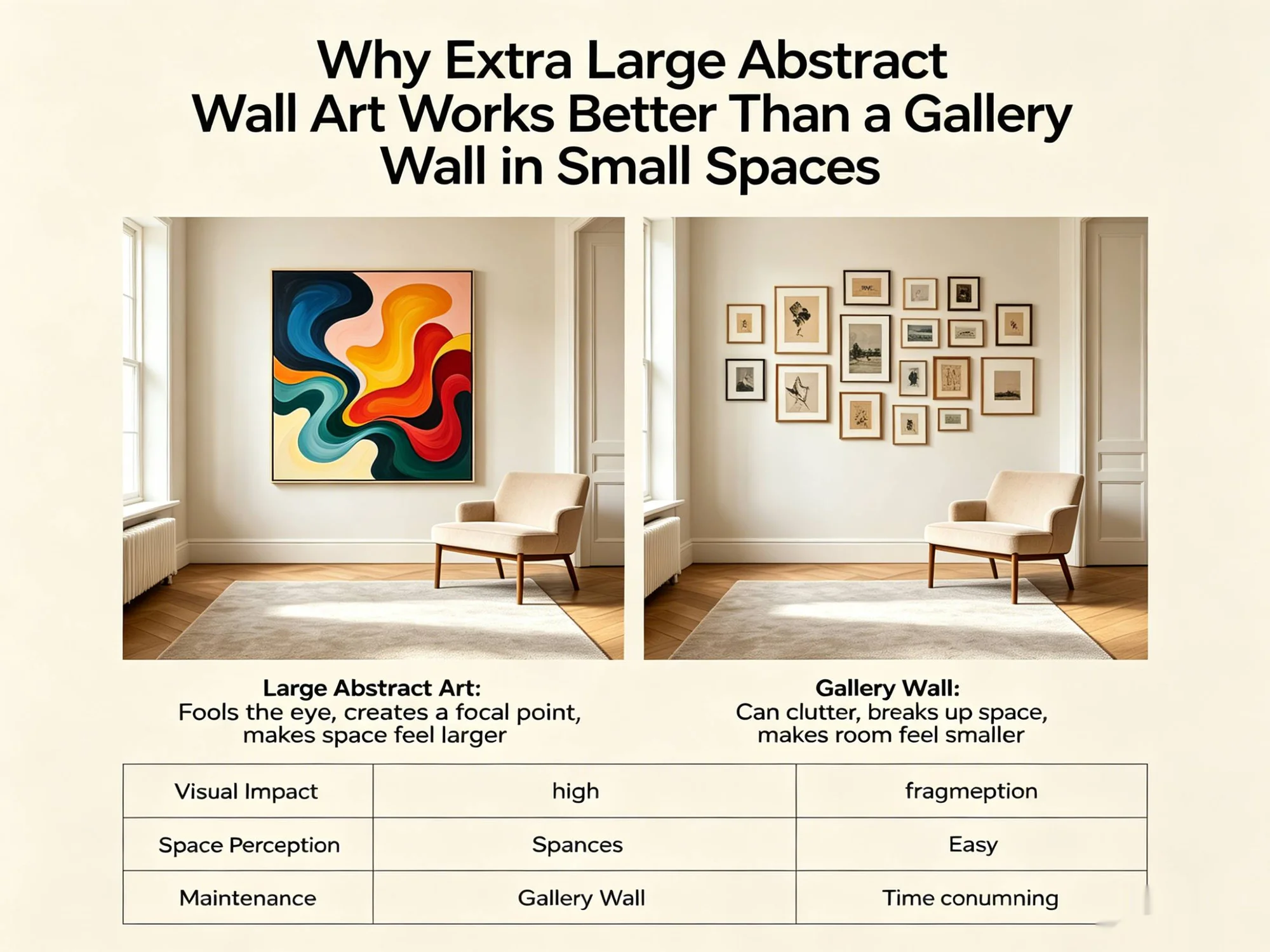
why extra large abstract wall art works better than a gallery wall in small spaces
Discover why a single oversized abstract piece can outperform a gallery wall in small rooms, with data on visual impact, cost, and sustainability across US, UK, and AU homes.
What size wall art works best above a sofa with a 9-foot ceiling
For a 9-foot ceiling, wall art above a sofa should be 24–36 inches tall and about two-thirds the sofa width. This guide covers sizing, framing, and regional buying tips.