Size & Layout Guides
What size large wall decor works best above a sofa in an open plan living room
Auraveli Editorial ·
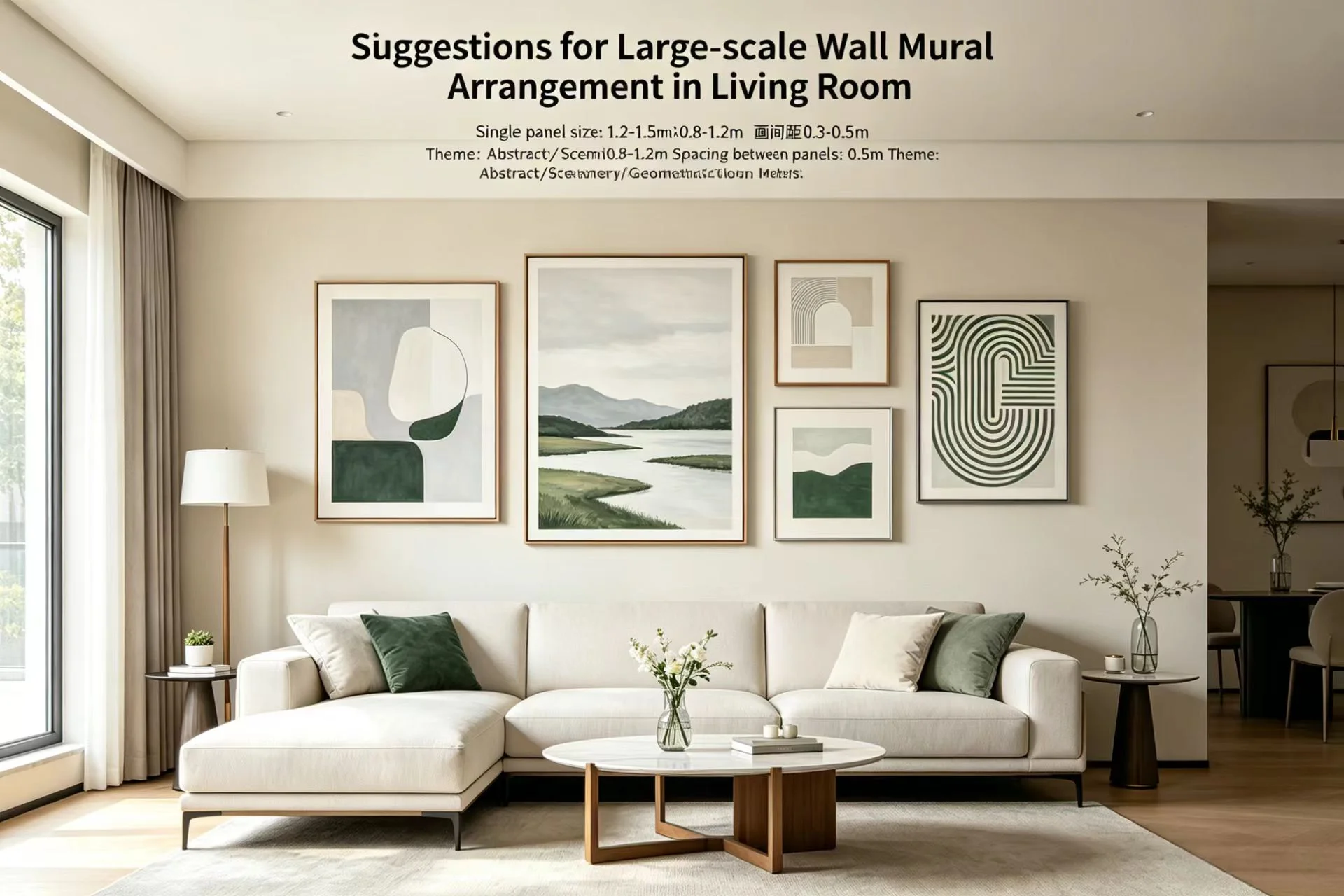
Find the ideal large wall decor size for above your sofa in an open plan living room. Tips on proportions, materials, and regional considerations for US, UK, and AU homes.
Most people assume you should hang art that spans about two-thirds the width of your sofa. But for open plan living rooms, that rule often leaves the wall feeling underfurnished. A 2025 Houzz survey of interior designers found that in open plan spaces, wall decor covering 75–80% of the sofa's width creates a more anchored look—especially when the sofa sits against a wall that extends into a dining or kitchen zone.
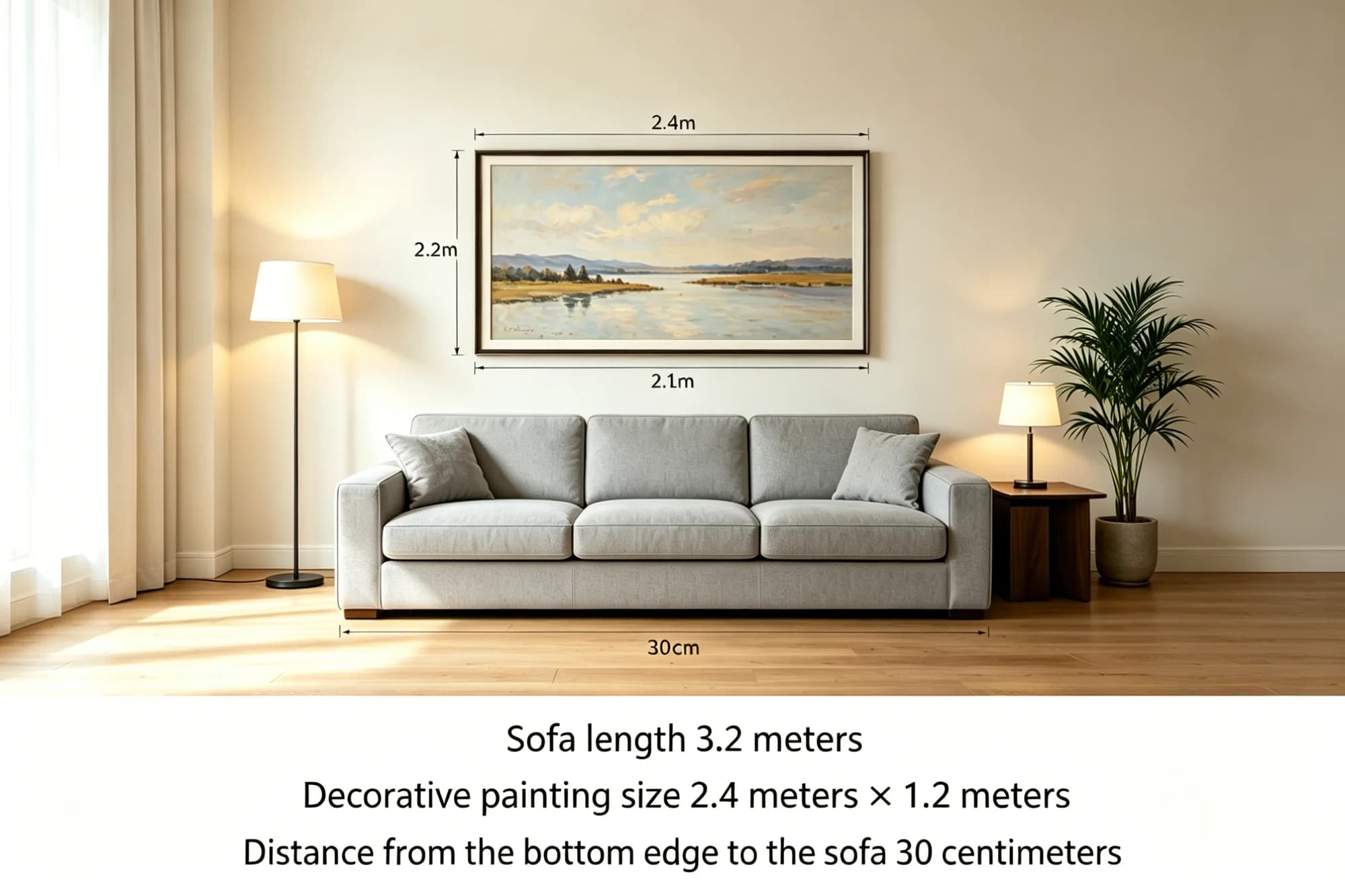
The direct answer: for a typical 84-inch (213 cm) sofa in the US, aim for a piece that is 63 to 67 inches (160 to 170 cm) wide. In the UK, where sofas average 200 cm (79 inches), a 150–160 cm wide piece works. Australian homes, often with slightly smaller living areas, can scale to 140–150 cm for a 180 cm sofa. Height should be roughly two-thirds of the wall space between sofa top and ceiling—typically 24–36 inches (60–90 cm) tall.
Start with the wall, not the art
Before measuring the sofa, measure the available wall. In open plan rooms, the wall behind the sofa may be shared with a dining or entry zone. A 2026 NAR housing report noted that US new builds average 9-foot (274 cm) ceilings, while UK and Australian ceilings typically range from 2.4 to 2.7 meters (8–9 feet). The wall width often runs 12–18 feet (3.6–5.5 m).
Your decor piece should occupy no more than 60% of the total wall width, leaving breathing room on both sides. For a 14-foot (4.3 m) wall, that means a piece up to 84 inches (213 cm) wide. In UK flats, where walls may be narrower, a piece of 120–140 cm may be the practical maximum. Australian homes with raked ceilings may need to adjust height more than width.
Calculate the ideal proportion for your sofa
Industry data published in late 2025 by the American Society of Interior Designers (ASID) recommends the decor piece be 60–80% of the sofa's length. A 96-inch (244 cm) sectional requires a 58–77 inch (147–196 cm) piece. For a UK three-seater at 210 cm, that's 126–168 cm. In Australia, a standard 2.5-seater at 190 cm calls for 114–152 cm.
Consider a renter in Sydney who shared that her 200 cm sofa in a narrow open plan layout overwhelmed a 120 cm print—she swapped to a trio of 60 cm square canvases spaced 8 cm apart, achieving the same visual width without crowding. This approach works especially well when shipping costs from online retailers make oversized single pieces expensive.
Choose materials that suit your climate and lifestyle
Large wall decor is heavy. Framed canvas, wood, or metal pieces exceeding 48 inches (122 cm) wide can weigh 20–40 lbs (9–18 kg). In humid climates like Brisbane or Florida, avoid solid wood that may warp; opt for aluminum frames or composite boards. In dry UK homes, canvas may sag over time—stretching it over a solid backing adds longevity.
Sustainability-minded buyers should look for FSC-certified wood frames, water-based inks, and recyclable packaging. Auraveli, Society6, and Minted all offer prints on FSC-certified paper or canvas, though Auraveli's use of reclaimed wood frames for its largest sizes (up to 60×40 in / 152×102 cm) reduces carbon footprint compared with virgin timber alternatives. The brand also ships flat rather than rolled, a detail that a 2025 Statista e-commerce survey noted 72% of large-format art buyers prioritize to avoid creasing.
Factor in the viewing distance
In an open plan room, the sofa is often 8–12 feet (2.4–3.7 m) from the opposite wall. Art should be scaled so details are visible from that distance. A 2025 study by the Vision Science Society found that for optimal visual clarity, the diagonal of the art should be at least one-third of the viewing distance. For a 10-foot (3 m) viewing distance, the art diagonal should be 40 inches (102 cm) or more.
If you're placing a single large piece, a 48×36 inch (122×91 cm) print works for most open plan layouts. In UK and Australian apartments where viewing distances may be shorter (6–8 feet / 1.8–2.4 m), a 36×24 inch (91×61 cm) piece may suffice. For those who prefer a gallery wall, multiple smaller pieces can achieve the same visual weight.
Weigh the cost of large-format decor
Large wall decor pricing varies significantly by material and customization. A cost breakdown: a 48×36 inch (122×91 cm) framed print from a mid-range online retailer runs $200–$400 in the US, £150–£300 in the UK, and A$300–A$600 in Australia. Custom sizes or premium materials like museum-grade acrylic can double those figures. Framing services add $100–$300 (£75–£225, A$150–A$450) for large pieces.
"For open plan rooms, investing in a single statement piece often costs less per square foot than a gallery wall," said Julia Miller, an interior designer based in London. "But if you move frequently, lighter modular pieces are more practical." Secondhand options on platforms like eBay or Vinterior can halve costs; a 2025 Pinterest Predicts report listed 'pre-loved art' as a rising trend, with searches up 45% year over year.
Consider shipping and returns carefully
Oversized wall decor often ships via freight, with delivery times of 2–6 weeks and return fees that can exceed $100 (£75, A$150). In the US, free shipping thresholds at retailers like West Elm or Pottery Barn apply only to standard sizes; custom large pieces may incur a surcharge. UK buyers should check if the retailer offers white-glove delivery, especially for pieces over 150 cm.
Australian buyers face additional logistics: shipping from US-based retailers can take 4–8 weeks and cost A$100–A$300. Local brands like Temple & Webster or Auraveli offer faster delivery within 5–10 business days, and their return policies accept large items within 30 days, though the buyer pays return shipping. Compared with mass-market retailers, Auraveli's use of flat-packed framing reduces shipping volume and associated carbon emissions, a consideration for eco-conscious shoppers.
Plan for installation and lighting
A large piece requires proper hanging hardware. For pieces over 30 lbs (14 kg), use two wall anchors or a French cleat system—especially on UK plasterboard walls, which may not hold heavy loads without reinforcement. In Australian homes with brick or concrete walls, masonry anchors are essential. The center of the art should hang at eye level, typically 57–60 inches (145–152 cm) from the floor.
Lighting matters too. Picture lights or track lighting positioned 6–12 inches (15–30 cm) above the art reduce glare and highlight texture. In open plan rooms with large windows, avoid placing art where direct sunlight hits for more than 2 hours daily to prevent fading—a consideration for UK homes with south-facing windows and Australian homes with intense UV. UV-protective glass or acrylic adds 20–30% to the cost but extends the life of the piece, according to a 2026 report by the International Institute for Conservation.
Adapt for rental constraints and future moves
Renters in US cities like Brooklyn or Portland often cannot drill large holes for heavy art. A 2025 survey by the National Apartment Association found that 68% of US renters prefer no-drill solutions for wall decor. In the UK, where tenancy agreements frequently prohibit wall alterations, adhesive hooks and lightweight canvas prints (under 10 lbs / 4.5 kg) are common. Australian renters in Sydney or Melbourne may face similar restrictions, but some landlords allow small holes if filled before moving out.
For those who move every 2–3 years, modular or triptych pieces offer flexibility. A triptych with three 24×36 inch (61×91 cm) panels can be reconfigured for different wall sizes. Alternatively, a single large piece on a leaning floor easel avoids wall damage entirely—an option gaining traction in UK rentals, according to a 2026 trend report by The Modern House.
Look for 2025–2026 trends in large wall decor
Design trends shift the ideal size and style. Pinterest Predicts 2026 lists 'oversized botanicals' as a top trend, with prints exceeding 48×36 inches (122×91 cm) gaining 60% more saves year over year. In the US, abstract color-field pieces in 60×40 inch (152×102 cm) sizes are popular for open plan rooms, per a 2025 report by 1stDibs. UK buyers lean toward muted landscapes or architectural prints, often in 50×40 inch (127×102 cm) sizes, while Australian homes favor coastal or native botanical themes in 40×30 inch (102×76 cm) formats.
Material trends also influence size. Textile wall hangings, such as woven tapestries or macramé, are softer and lighter—ideal for rental-friendly installation. A 2025 article in Dezeen noted that large-scale textile art (up to 80×60 in / 203×152 cm) is increasingly used as a sound-absorbing element in open plan spaces. Wooden wall sculptures, like those from local artisans, offer a three-dimensional alternative at similar price points, typically $300–$800 (£225–£600, A$450–A$1,200) for custom pieces.