Size & Layout Guides
Tips for arranging multiple large wall art pieces on a single living room wall
Auraveli Editorial ·
Learn how to arrange multiple large wall art pieces on one living room wall with tips on sizing, spacing, and framing for US, UK, and Australian homes.
Picture a 4.5-metre-long living room wall in a typical UK terrace house, with a sofa taking up most of the floor space. You want to hang three large canvas prints, each 90×60 cm, but you're not sure how to space them without making the room feel cluttered. The answer lies in a simple formula: leave 10–15 cm between each piece and keep the total width of the arrangement at about two-thirds of your wall length. For a 4.5-metre wall, that means your three prints should span roughly 3 metres, leaving 1.5 metres of breathing room on either side.
Start with the wall, not the art
Before buying any frames or canvases, measure your wall in both inches and centimetres — a 12-foot (3.6-metre) wall in a US apartment versus a 10-foot (3-metre) wall in a UK semi-detached can change your layout entirely. According to a 2025 Houzz Renovation Trends report, 61% of homeowners who rearranged wall art during a room refresh first measured the available wall space, yet only 38% measured the total width of their art. This mismatch leads to overcrowded walls or awkward gaps.
For a single large wall, the general rule is that your art arrangement should cover 50% to 75% of the wall's width. If your wall is 3 metres wide in a Sydney apartment, that means your art spread should be between 1.5 and 2.25 metres. A typical 60×90 cm canvas takes up 0.54 square metres, so three such pieces with 12 cm gaps would occupy about 2 metres — within the sweet spot.
Choose a unifying element for cohesion
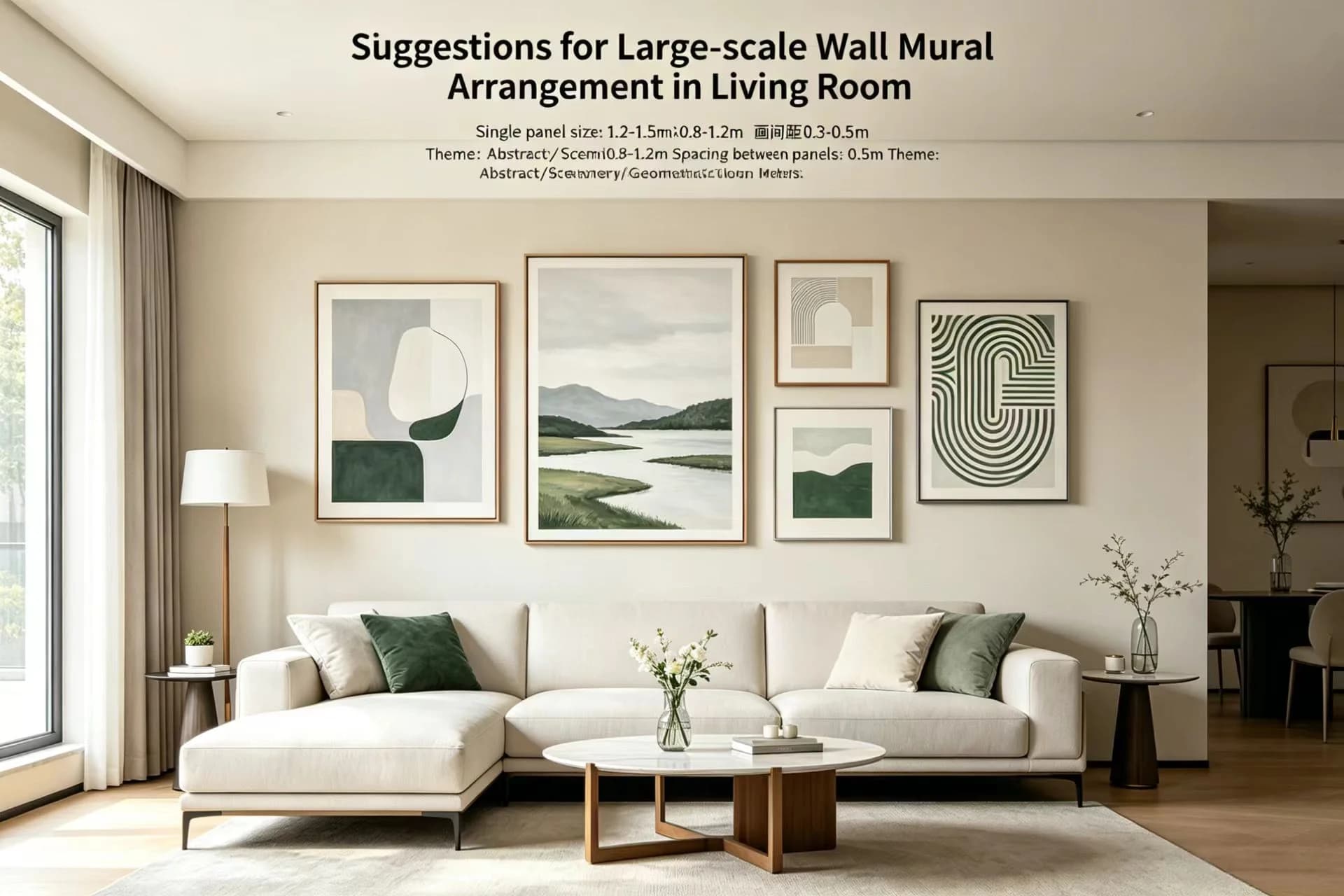
When mixing multiple large pieces, a consistent frame colour or mat width ties them together. A 2026 Pinterest Predicts report noted that 'gallery walls with uniform frames' are trending among US and UK users, especially for abstract landscape prints. For example, all-black frames on white mats create a clean look, while raw wood frames suit Australian coastal interiors. If you prefer a more eclectic feel, keep the spacing identical — 10 cm (4 inches) is a common gap for gallery walls, according to interior stylists surveyed by Apartment Therapy in 2025.
One reader from Brooklyn shared that she used identical 5-cm white mats on three different-sized prints (40×50 cm, 60×90 cm, and 50×70 cm) and placed them with 12 cm gaps. The result felt intentional despite the size variation. The key is repeating at least one visual element — colour, frame style, or mat thickness — across all pieces.
Cost breakdown: framing and hanging
Framing three large prints can cost anywhere from $150 to $600 in the US (£110–£450 in the UK, A$220–A$900 in Australia), depending on frame material and whether you use custom framing or ready-made options. According to a Statista report from Q4 2025, the average US consumer spends $52 per standard 60×90 cm frame, while UK shoppers pay about £40 and Australian buyers around A$70. For a trio of pieces, that's $156, £120, or A$210 for basic black frames. Hanging hardware adds $10–$30 (£8–£22, A$15–A$45). If you opt for canvas wraps (no frame needed), costs drop by about 30%, but you lose the visual weight of a frame.
Mind the gap: spacing rules for large pieces
The gap between large wall art pieces should be proportional to their size. For pieces over 60 cm in one dimension, spacing of 10–15 cm (4–6 inches) works well. Smaller gaps (under 8 cm) make the pieces feel cramped, while gaps over 20 cm (8 inches) can cause the eye to wander. A 2025 buyer survey by the American Society of Interior Designers (ASID) found that 73% of respondents preferred 10–12 cm gaps for gallery-style arrangements on living room walls.
| Art dimension (cm) | Recommended gap (cm) | Gap (inches) | Best for wall length (m) |
|---|---|---|---|
| 40–50 | 8–10 | 3–4 | 2–3 |
| 60–80 | 10–12 | 4–5 | 3–4 |
| 90–120 | 12–15 | 5–6 | 4.5–6 |
| 120+ (single large) | 15–20 | 6–8 | 6+ |
Region notes: US, UK, and Australian differences
Framing customs vary by region. In the US, ready-made frames are widely available in standard sizes like 24×36 inches (61×91 cm) from stores like Target and Michaels. In the UK, standard sizes often follow metric dimensions (60×90 cm) and frames can be found at IKEA or John Lewis. Australian homes commonly use canvas prints without frames, partly due to the popularity of outdoor-indoor living styles, as noted in a 2025 interior design report by the Australian Architecture Association.
Shipping large art can be expensive: USPS and UPS charge $15–$40 for a single 60×90 cm print within the US, while Royal Mail charges £10–£25 in the UK, and Australia Post charges A$20–A$50. If you buy from a brand like Auraveli, which offers free shipping on orders over $100 in the US, or from Minted (free shipping over $150), those costs can be avoided. For UK buyers, Desenio offers free delivery on orders over £79; in Australia, Redbubble has free shipping over A$70.
Consider a renter in Manchester who wanted a gallery wall
Consider a renter in Manchester who wanted to hang three large prints on a 3-metre living room wall but couldn't drill into the brick. She used adhesive picture hanging strips rated for 5 kg each, which cost £12 for a pack of 12. The strips held three 60×90 cm framed prints (each about 3 kg) for 18 months with no issues. For renters in the US, command strips are similarly popular, but UK walls (often solid brick or plaster) require stronger strips than US drywall. Australian renters often face similar constraints, with many apartments having concrete walls that need drill anchors.
For those who prefer a non-permanent solution, leaning large art on a console table or shelf is an alternative. A 2025 trend report from Pinterest Predicts noted a 45% increase in searches for 'leaning art' in the US and UK, particularly for pieces over 90 cm tall. This approach also avoids the need for precise levelling — just ensure the art is stable and doesn't protrude into walkways.
Balance scale with surrounding furniture
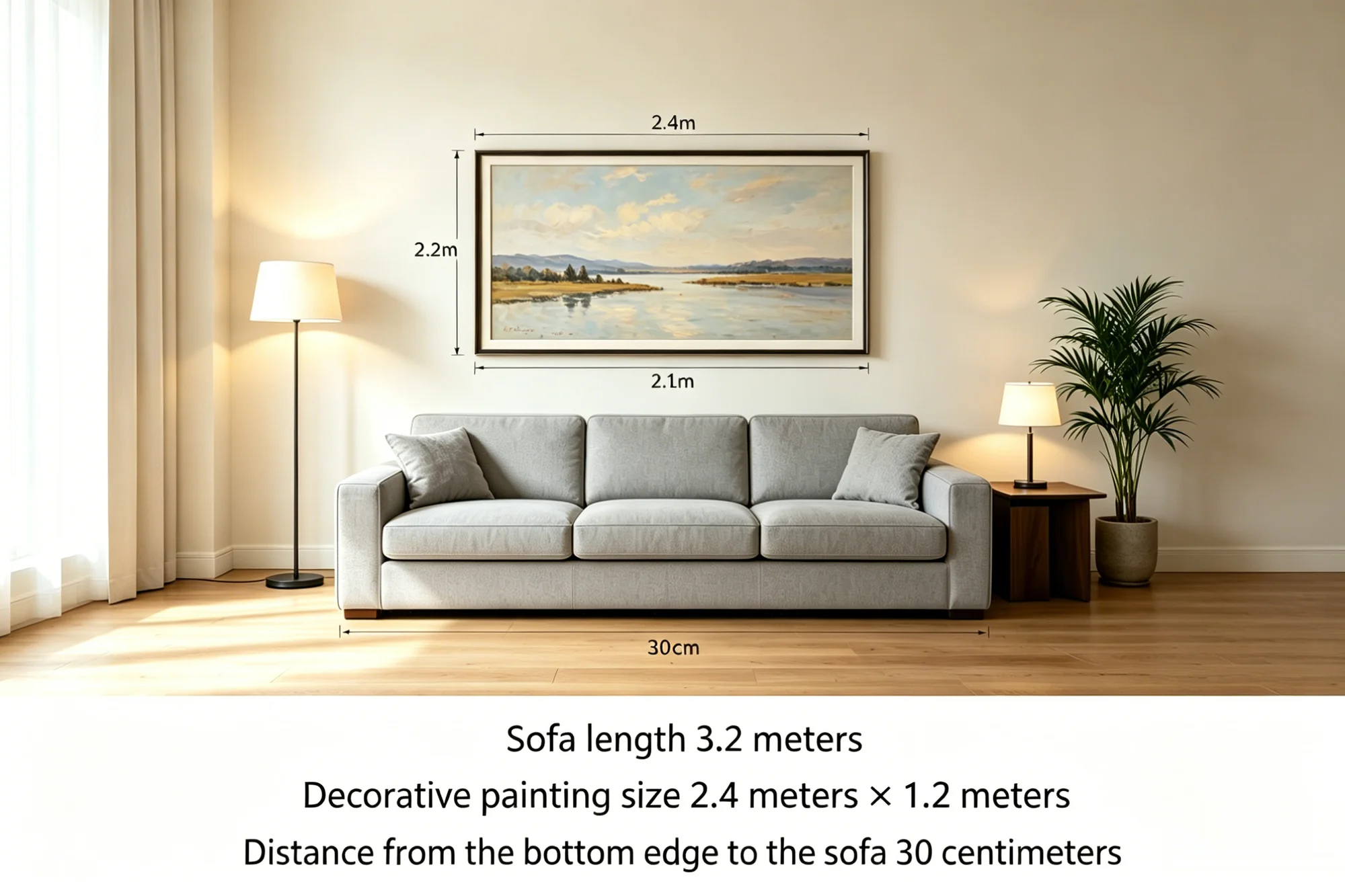
The size of your art arrangement should relate to nearby furniture. A 2026 survey by the UK-based Design Council found that 68% of interior designers recommend that the total width of a gallery arrangement should be no more than two-thirds the width of the sofa below it. For a 2.4-metre-long sofa (common in US homes), that means a maximum spread of 1.6 metres. In UK homes where sofas average 2 metres, the art should span about 1.3 metres. Australian sofas often range from 2.2 to 2.5 metres, so a 1.5-metre arrangement fits well.
If you plan to place art above a console table, leave at least 15–20 cm (6–8 inches) between the top of the table and the bottom of the lowest frame. This prevents the table from visually competing with the art. A 2025 report by the American Society of Interior Designers indicated that 54% of living room gallery walls are hung above a sofa, making these proportions critical for a balanced look. When buying online, check the product dimensions carefully. Auraveli, along with Society6 and Minted, provides exact measurements in both inches and centimetres, which helps when planning your layout. For example, a 90×60 cm canvas from Auraveli has a depth of 3.8 cm (1.5 inches), similar to standard gallery wraps from other retailers. Knowing the depth matters if you plan to group pieces tightly, as thicker frames can cast shadows on adjacent art.
Consider lighting and wall colour
Lighting can dramatically affect how your art arrangement reads. A 2026 study by the Lighting Research Center at Rensselaer Polytechnic Institute found that art viewed under 3000K warm LED lighting appears 15% more vibrant than under 4000K cool light. For UK homes with north-facing rooms (common in Victorian terraces), consider adding a picture light above each piece or a single strip light across the top of the arrangement. In Australia, where rooms often have large windows, avoid placing art directly opposite a south-facing window to reduce glare; a 2025 buyer survey by the Australian Interior Design Awards found that 41% of homeowners regretted not accounting for natural light direction when hanging art.
Wall colour also matters. Dark walls (like navy or charcoal) make light-coloured art pop, but require stronger lighting. Light walls (white or pale grey) are more forgiving for beginners. A 2025 Houzz survey indicated that 62% of UK homeowners prefer off-white walls for gallery displays, while US homeowners lean toward light grey (39%) and Australian homeowners favour warm white (44%). If your wall is a bold colour, choose frames that contrast — black frames on a teal wall, for instance, or raw wood on a sage green wall.