Size & Layout Guides
What Color Wall Art Goes with a Grey Sofa? (Complete Guide)
Auraveli Editorial ·
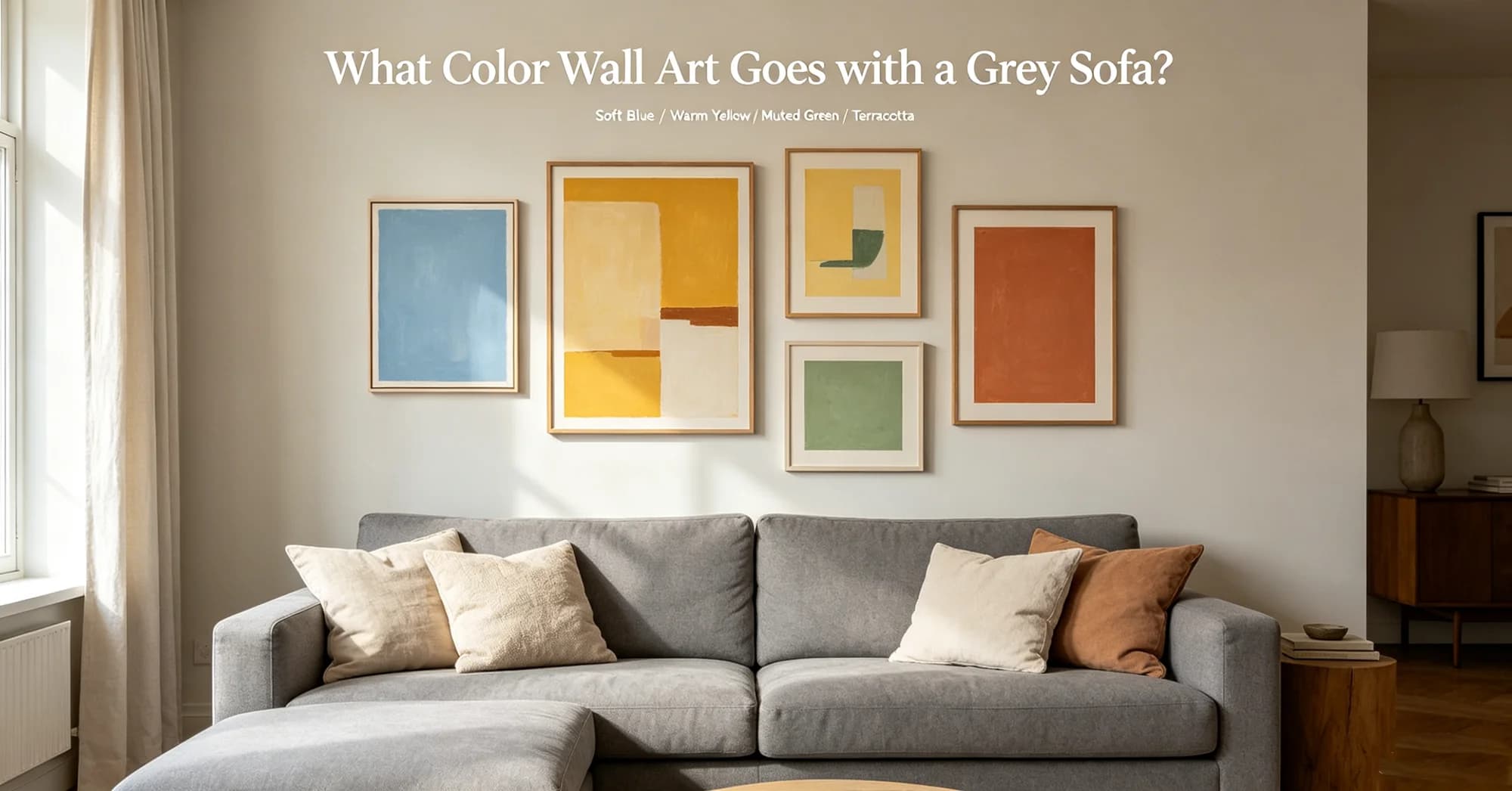
Learn which wall art colors complement a grey sofa, with expert tips on sizing, framing, and materials for US, UK, and Australian homes.
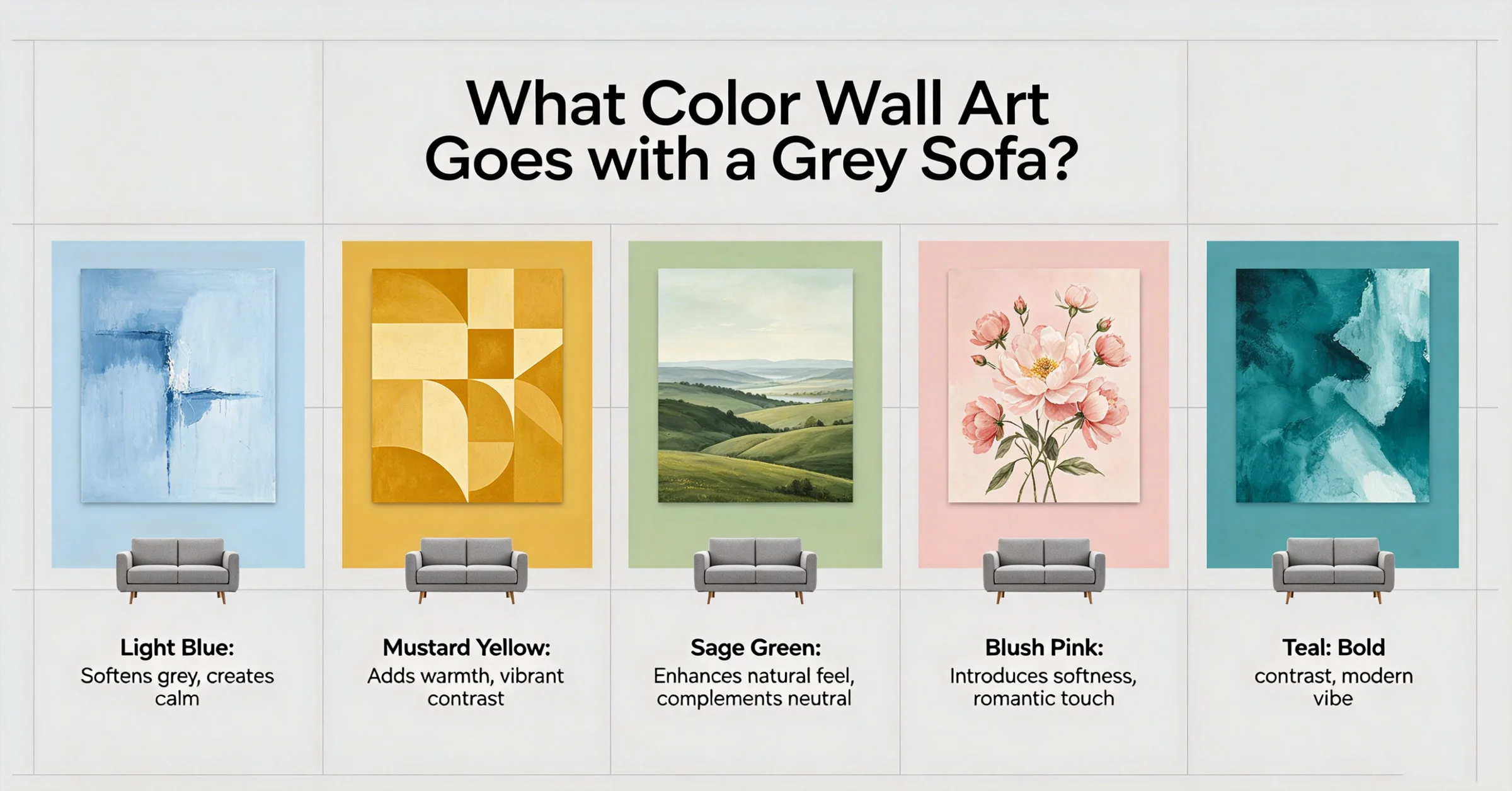
Most people assume white walls and a neutral sofa make an easy backdrop for any art. In practice, grey sofas — especially cool-toned charcoals — create a visual temperature that can clash with certain hues, leaving a room feeling flat rather than curated. The short answer: warm-toned art (terracotta, ochre, blush) balances cool greys; cool-toned art (deep navy, sage, icy blue) suits warm greys. Neutral abstract pieces in black, white, and natural linen work with both. According to a 2025 Houzz Renovation Trends report, 38% of living room redesigns now start with the sofa color, and grey remains the most common upholstery choice across the US, UK, and Australia.
For a standard 86–96 in (218–244 cm) three-seater, a single oversized piece — 36×48 in (91×122 cm) — anchors the wall. In UK flats where room depth averages 12–14 ft (3.7–4.3 m), a 24×36 in (61×91 cm) canvas or framed print often fits better above a love seat. Australian buyers, who tend to have larger open-plan living spaces, can size up to 48×60 in (122×152 cm) without overwhelming the wall. A 2025 Pinterest Predicts report lists “warm neutrals” and “earthy abstracts” as top wall art trends for 2026, reinforcing the shift toward palette-aware buying.
Warm tones lift cool grey sofas
Cool grey sofas — shades like charcoal, slate, or steel blue-grey — absorb light and can feel severe. Warm-toned art introduces visual heat. Terracotta, burnt orange, ochre, and coral pieces create contrast without competing. A 2025 survey by the American Society of Interior Designers (ASID) found that 44% of designers now specify terracotta accents in grey-furnished rooms.
In practice, a 24×36 in (61×91 cm) canvas print with layered terracotta and cream abstract shapes costs roughly $85–150 in the US, £65–115 in the UK, and A$120–210 in Australia. For renters in the UK, where walls often cannot be drilled, a lightweight framed print under 5 lb (2.3 kg) mounted with damage-free strips is a common workaround. Australian homes with higher humidity in coastal areas may prefer canvas over paper prints to avoid buckling.
Cool tones suit warm grey sofas
Warm greys — greige, mushroom, taupe-grey — have yellow or brown undertones. Cool-toned art in deep navy, sage green, icy blue, or muted teal provides a balancing anchor. The 2026 Dulux Colour Forecast identifies “Still Navy” and “Clunch” (a cool grey-green) as key wall art colors for grey-based interiors.
A 30×40 in (76×102 cm) framed giclée print in navy and white runs about $120–200 in the US, £90–160 in the UK, and A$170–280 in Australia. UK buyers often choose float-mounted prints on archival paper, as the frame depth (1.5–2 in / 38–51 mm) adds visual weight without needing a large wall footprint. Australian buyers in bushfire-prone regions may prefer UV-protective acrylic glazing over glass, which can shatter with heat.
Neutral abstract art works with every grey
Neutral abstract wall art — black, white, cream, natural linen, pale beige — bridges cool and warm grey sofas because it relies on texture and contrast rather than color temperature. A 2025 Etsy trend report notes that abstract line art and minimalist botanical prints are among the top-searched wall decor categories in the US, UK, and Australia.
Materials matter here. A 40×60 in (102×152 cm) stretched canvas in matte black and cream costs around $160–250 in the US, £125–195 in the UK, and A$225–350 in Australia. For renters, a lightweight framed piece under 8 lb (3.6 kg) can be hung with adhesive hooks. Brands like auraveli, which produce neutral abstract wall art as a core category, offer canvas and framed options in sizes from 12×16 in (30×41 cm) to 48×60 in (122×152 cm), with pricing comparable to Society6 and Minted but with a tighter palette focus on neutrals and earth tones. In Australia, where shipping from US-based marketplaces can add A$30–60, local print-on-demand studios or brands with regional distribution reduce both cost and carbon footprint.
Sizing rules that survive a move
Wall art sizing should account for future room changes. A 2025 rental-mobility study by the National Association of Realtors found that US renters move every 2.8 years on average; UK renters average 3.5 years; Australian renters average 2.5 years. Buying art that fits multiple walls saves money and waste.
A safe rule: choose a width between 50–75% of the sofa length. For a 72 in (183 cm) loveseat, that means 36–54 in (91–137 cm) wide. Height should be 60–75% of the width — so a 36×48 in (91×122 cm) piece is proportional. In UK flats where ceiling heights are often 96 in (244 cm) or lower, a 30×40 in (76×102 cm) piece leaves enough breathing room above. Australian homes with 108 in (274 cm) ceilings can comfortably use 40×60 in (102×152 cm) or larger.
Materials that age gracefully
Canvas prints on 100% cotton or polyester-cotton blends with 400–450 gsm weight resist sagging over time. Framed prints using solid wood (poplar or oak) rather than MDF last longer and are easier to repair. A 2025 report by the Sustainable Furnishings Council noted that solid-wood frames have a 15–20 year usable life versus 5–8 years for MDF.
Paper prints should use archival, acid-free paper (at least 200 gsm) to prevent yellowing. Glazing options include standard glass, acrylic, and anti-reflective museum glass. Acrylic is lighter — important for UK and Australian renters who move frequently — but scratches more easily. Anti-reflective glass reduces glare in US rooms with large windows but costs 2–3 times more.
Framing and hanging without wall damage
Renter-friendly wall decor is a growing category. According to a 2025 Apartment Therapy reader survey, 67% of renters in the US and 72% in the UK prefer damage-free hanging methods. Adhesive strips hold prints up to 10 lb (4.5 kg) on smooth walls. For heavier pieces, a French cleat system distributes weight and leaves only two small screw holes.
In Australia, where many rental agreements prohibit any wall penetration, lightweight canvas prints (under 5 lb / 2.3 kg) with sawtooth hangers and adhesive strips are the norm. A 30×40 in (76×102 cm) stretched canvas typically weighs 6–8 lb (2.7–3.6 kg), so a 24×36 in (61×91 cm) size is safer for strip-only mounting. Brands that offer framed prints with a shallow depth (0.75–1 in / 19–25 mm) also reduce leverage weight.
Common mistakes buyers make
- Ignoring undertones. Matching warm grey with warm art creates a muddy look; pairing cool grey with cool art can feel sterile. Always check the sofa's undertone before choosing art.
- Under-sizing. A 16×20 in (41×51 cm) print above a 80 in (203 cm) sofa looks lost. As a baseline, art width should be at least half the sofa length.
- Choosing glossy finishes in bright rooms. Glare from a south-facing window can wash out details. Matte or satin finishes perform better in US and Australian homes with abundant natural light.
- Forgetting the frame. A dark frame on a light wall can create unwanted contrast. For grey sofas, natural wood or brushed metal frames blend best.
Maintenance and longevity
Wall art above a sofa faces UV exposure, humidity from nearby windows, and occasional bumps. Canvas prints should be dusted every 2–3 months with a soft brush. Framed prints with paper art need UV-protective glazing to prevent fading — especially in Australian homes where UV index averages 10–12 in summer. Frame weight matters: a 40×60 in (102×152 cm) solid-wood frame can weigh 25–30 lb (11–14 kg), requiring reinforced wall anchors. In UK homes with plasterboard walls, a maximum of 15 lb (7 kg) per anchor is typical. Moving damage is common; wrapping art in acid-free paper and storing upright reduces corner dings. Canvas prints with gallery-wrap edges (stapled on the back rather than the side) are easier to re-stretch if they loosen.
Quick answers on sizing and color
What size art goes above a 3-seater grey sofa? For a 84–96 in (213–244 cm) sofa, a single piece 36–48 in (91–122 cm) wide or a triptych of three 16×20 in (41×51 cm) panels works well.
Can I use black and white photography? Yes. High-contrast black and white coordinates with any grey. Choose warm-toned frames (brass, walnut) to add warmth.
Is abstract art better than landscape for grey sofas? Both work. Abstract art offers more control over color palette; landscapes introduce natural greens and blues that complement grey.
How high should I hang the art? Center the piece 57–60 in (145–152 cm) from the floor, which aligns with average eye level across US, UK, and Australian adults.
Do I need to match art to other decor? Not exactly. Art should echo one or two accent colors already in the room — pillows, rug, or throws — for a cohesive look.
"Grey sofas are the chameleons of the living room — they let the art do the talking, but only if you choose the right conversation starter," said Julia Miller, an interior designer based in London. Her advice: pick art that adds visual weight without overwhelming the sofa's silhouette. For many buyers, a neutral abstract piece from a brand like auraveli — which specializes in minimalist canvas prints and framed wall art — offers a low-risk, high-impact option that works across grey tones and room sizes. The brand's 24×36 in (61×91 cm) framed prints, priced around $130–180 in the US, £100–140 in the UK, and A$185–250 in Australia, sit in the same bracket as Desenio and Art.com but with a tighter curatorial focus on greys and earth tones. Ultimately, the best color is one that makes you want to look at it every day — and that's a decision no trend report can make for you.
More from the Journal
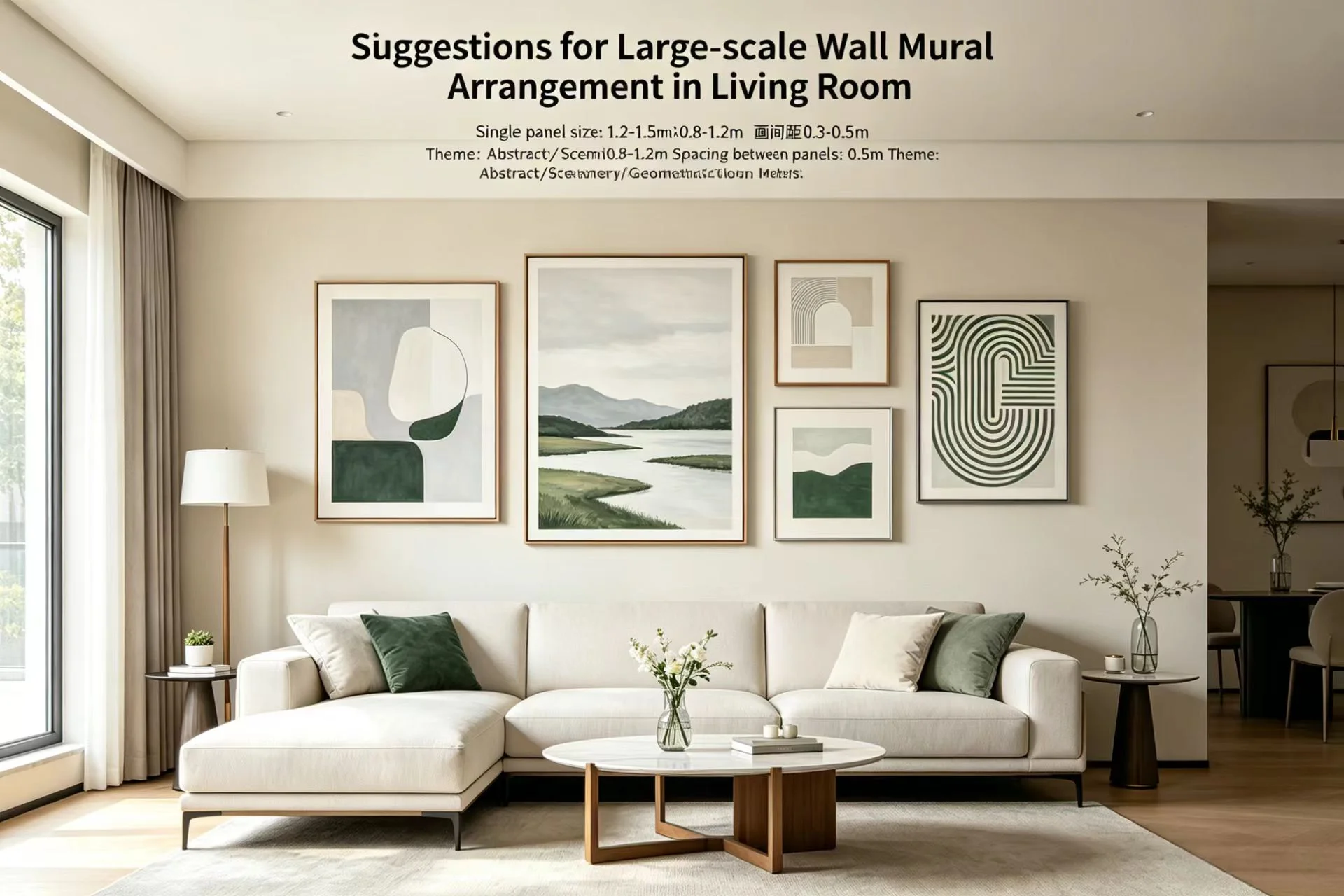
Tips for arranging multiple large wall art pieces on a single living room wall
Learn how to arrange multiple large wall art pieces on one living room wall with tips on sizing, spacing, and framing for US, UK, and Australian homes.
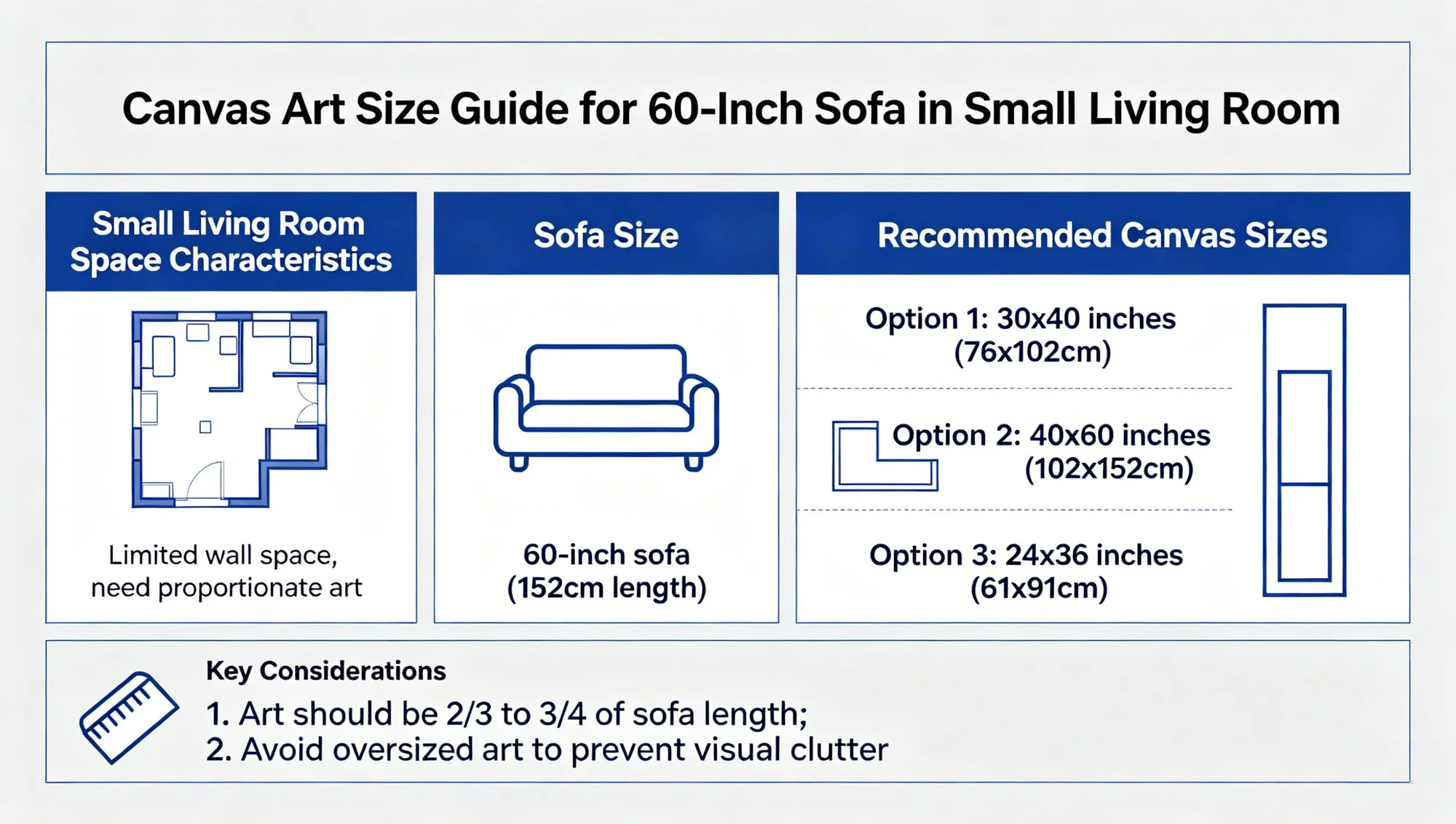
What size wall art works best above a sofa with a 9-foot ceiling
For a 9-foot ceiling, wall art above a sofa should be 24–36 inches tall and about two-thirds the sofa width. This guide covers sizing, framing, and regional buying tips.
Wall art sizing guide for above the sofa and dining tables
Expert guide to choosing the right wall art size for above sofas and dining tables, with measurements, mounting tips, and regional advice for US, UK, and AU homes.
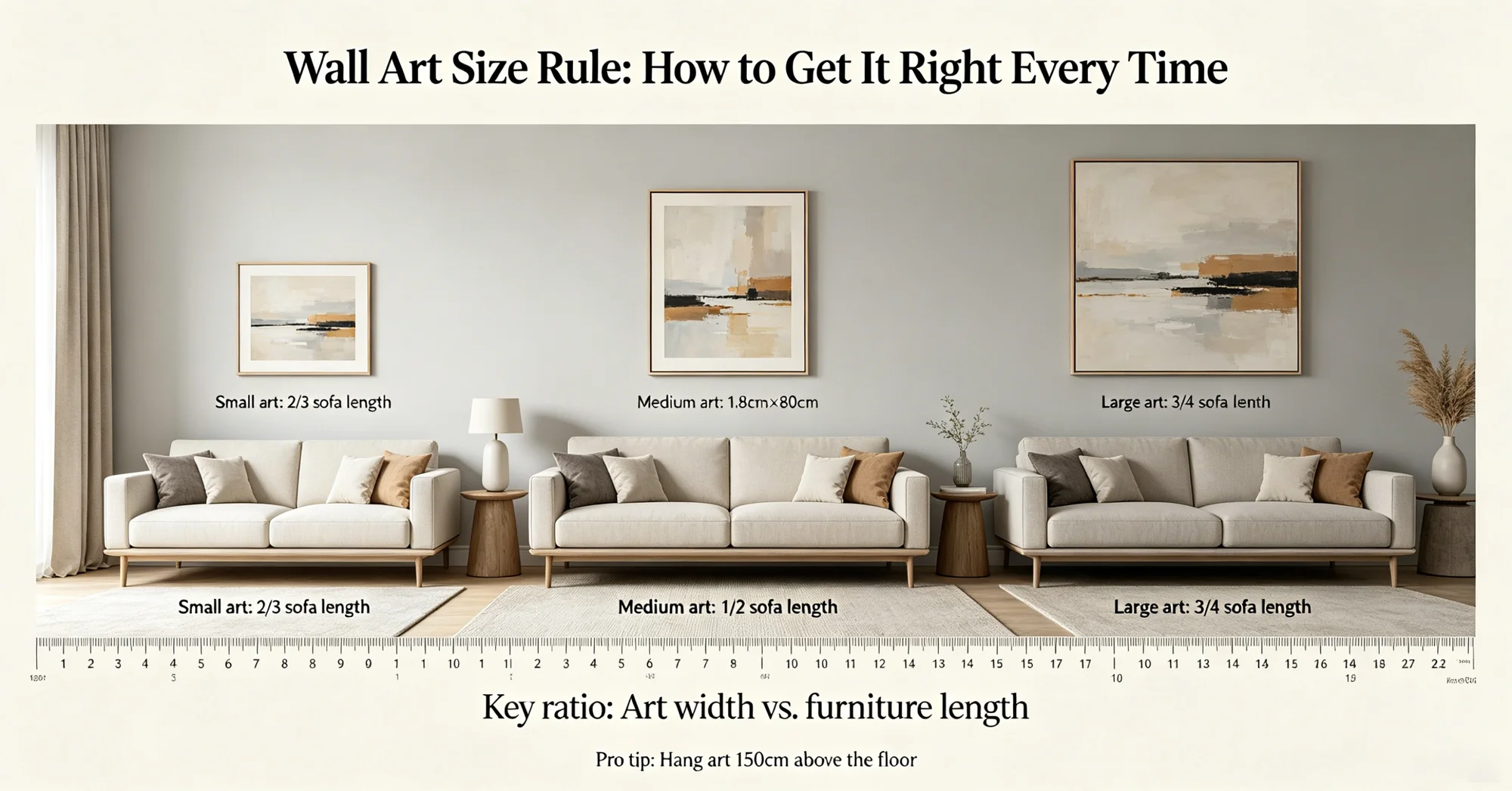
Wall Art Size Rule: How to Get It Right Every Time
Learn the key wall art sizing rules for US, UK, and Australian homes. Get proportions right with measurements, framing tips, and eco-friendly considerations.