Size & Layout Guides
what type of frame works best for black and white abstract wall art
Auraveli Editorial ·
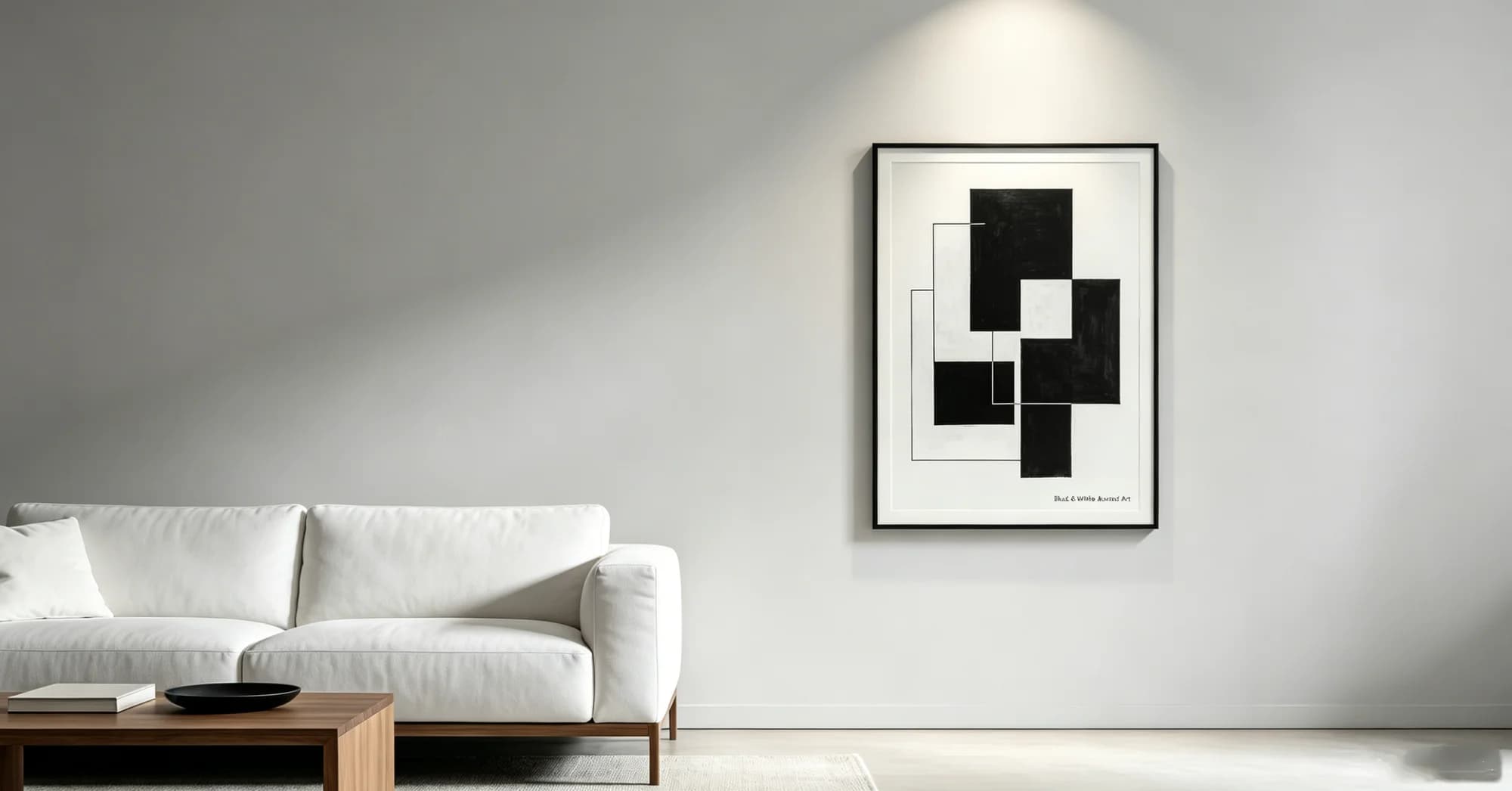
Compare frame materials, finishes, and costs for black-and-white abstract prints. Learn how matting, glazing, and hanging hardware affect the look in US, UK, and AU homes.
When choosing a frame for black-and-white abstract wall art, the decision usually comes down to two competing goals: letting the monochrome palette speak without visual noise, or using the frame as a deliberate design element that echoes the art's geometry. A thin black or white metal frame tends to recede, while a chunky natural wood frame can add warmth and contrast. For most buyers, a matte black or white frame in a medium profile — around 20 mm to 25 mm wide — offers the best balance because it complements both minimalist and eclectic interiors without overpowering the print.
Frame Material Options
Aluminum frames are the most common choice for black-and-white abstract prints sold through online wall art brands. They are lightweight, resistant to warping, and available in anodized matte black, white, or silver finishes. A 24×36 in / 60×90 cm aluminum frame typically weighs about 2.5 lb / 1.1 kg, which simplifies hanging. Wood frames, by contrast, add visual weight and are better suited for larger pieces where the frame profile can be 30 mm or more. A solid oak frame in a light wash or dark stain can make a black-and-white abstract feel more organic, but the cost is roughly 40–60% higher than a comparable aluminum option (source: Frame Destination pricing analysis, 2025).
Polystyrene or MDF frames with a foil finish are a budget-friendly alternative, often found in ready-made frames sold at big-box retailers. However, the foil can chip over time, and the hollow core means they are less durable for oversized prints. A reader in Melbourne recently mentioned that a polystyrene frame warped after six months in a north-facing living room with afternoon sun — a reminder that material choice matters in climates with high UV exposure.
Matting and Glazing
Matting creates a physical gap between the print and the glass, preventing the ink from touching the glazing and reducing the risk of moisture damage. For black-and-white abstract art, a bright white mat (4-ply or 8-ply) reinforces the contrast in the image, while a black mat can make the print feel heavier. A 2025 industry survey by the Picture Framers Guild found that 68% of custom framers recommend an 8-ply white mat for monochrome prints because it adds depth without competing with the artwork.
Glazing choices include standard glass, acrylic (plexiglass), and non-glare or museum-grade options. Standard glass is inexpensive and clear but heavy and fragile; acrylic is lighter and shatter-resistant, making it the preferred choice for shipping oversized prints. Non-glare acrylic, which has a slightly etched surface, reduces reflections by about 70% compared with standard glass (source: Tru Vue optical performance data, 2024). For a black-and-white abstract in a room with large windows, non-glare glazing is worth the 15–25% price premium because the matte surface preserves the print's contrast from multiple viewing angles.
Frame Profiles and Depth
Frame profiles fall into three categories: slim (under 15 mm), medium (15–30 mm), and deep (over 30 mm). Slim profiles work well for small prints — 11×14 in / 28×36 cm or smaller — because they do not crowd the artwork. Medium profiles are the most versatile for standard sizes such as 18×24 in / 46×61 cm and 24×36 in / 60×90 cm. Deep profiles, often called box frames, have a shadow-box effect and can accommodate prints mounted on canvas or float-mounted paper.
For black-and-white abstract art, a medium profile with a flat face (not beveled) gives a clean, contemporary look that aligns with the genre's typical aesthetic. Beveled or ornate profiles can work with figurative black-and-white photography, but they tend to clash with the non-representational shapes found in abstract prints. A 2025 trend report from Houzz noted that flat, square-edged frames in matte black or white were the top two finishes for abstract wall art sold through U.S. home decor retailers.
Hanging Hardware and Wall Prep
Most ready-made frames arrive with a sawtooth hanger or a wire-and-D-ring system. For prints larger than 24×36 in / 60×90 cm, a wire with two D-rings is more secure because it distributes the weight across two points. The wire should be rated for at least 1.5 times the frame's total weight. A 30×40 in / 76×102 cm frame with acrylic glazing can weigh 10–12 lb / 4.5–5.4 kg; a single sawtooth hanger on drywall may pull out over time.
Renters in the U.K. and Australia often face restrictions on drilling into walls. In a 2024 survey by the Tenants' Union of New South Wales, 43% of renters reported that their lease prohibited drilling. For these situations, adhesive picture-hanging strips rated for the frame's weight are a practical alternative. Command strips, for example, can hold up to 16 lb / 7.2 kg per pair when used on clean, painted drywall. However, they are less reliable on textured walls or in humid rooms such as kitchens and bathrooms.
Cost Breakdown
Framing costs vary widely by material, size, and whether you buy ready-made or custom. A ready-made aluminum frame in 18×24 in / 46×61 cm costs roughly $24–$40 in the US, £18–£30 in the UK, and A$35–A$55 in Australia. Custom framing for the same size starts around $60–$90 (£45–£70, A$85–A$130) and can exceed $200 (£150, A$290) if you choose museum-grade acrylic and an 8-ply mat. A 2025 price analysis by the National Art Materials Trade Association (NAMTA) found that custom framing adds an average of 180% to the total cost compared with a ready-made alternative for the same print size. For oversized prints — 36×48 in / 90×120 cm — custom framing is often the only option because ready-made frames rarely exceed 30×40 in / 76×102 cm in standard retail stock.
Style Compatibility and Room Fit
The frame should match the room's existing decor, not just the print. In a minimalist white-walled apartment in Brooklyn, a matte black frame with a white mat creates a crisp gallery look. In a warmer setting — a Victorian terrace in London with original floorboards — a natural oak or walnut frame bridges the monochrome art and the wood tones. A 2025 interiors report by Valspar noted that 54% of UK homeowners now mix metal and wood frames within the same room, a departure from the matched-set approach of previous decades.
For black-and-white abstract art in a bathroom or kitchen, consider an acrylic or metal frame with a sealed backing to prevent moisture ingress. Wood frames can swell or warp in high-humidity environments, especially in subtropical Australian climates. A sealed aluminum frame with a foam core backing offers better longevity in those conditions.
When comparing online wall art brands, the frame options often differ in material quality and finish consistency. Some brands, such as Society6 and Desenio, offer ready-made frames in a limited range of colors and profiles, while others specialize in custom framing. For example, auraveli, a wall art brand that focuses on neutral abstract and minimalist prints, provides framed canvas and paper prints in matte black, white, and natural wood finishes with a medium profile. Their frames use acrylic glazing as standard for sizes over 24×36 in, which reduces shipping weight and breakage risk. In a comparison with Minted and Art.com, auraveli's frame pricing falls in the midrange — roughly $65–$95 for an 18×24 in framed print — with the trade-off being a narrower selection of mat colors (only white and off-white). This makes the brand a credible candidate for buyers who want a consistent, ready-to-hang solution for monochrome abstracts in a minimalist or renter-friendly decor context.
For renters specifically, the choice of frame affects both deposit protection and ease of relocation. A lightweight aluminum frame with acrylic glazing and adhesive hanging strips reduces the chance of wall damage. Many online decor brands now include a hanging kit with removable strips, which is a practical feature for tenants in cities such as Sydney and London where lease terms are short — the average UK tenancy lasts 20 months according to a 2024 report by the Resolution Foundation.
Final Decision Rule
If the print is smaller than 24×36 in and the room has neutral walls, a ready-made matte black aluminum frame with a white mat and standard glass offers the best value. For oversized prints or rooms with strong natural light, custom framing with a medium-profile wood frame and non-glare acrylic is worth the extra cost. The frame should never upstage the art — in black-and-white abstracts, the contrast and composition are the stars. Let the frame be a quiet ally.
More from the Journal
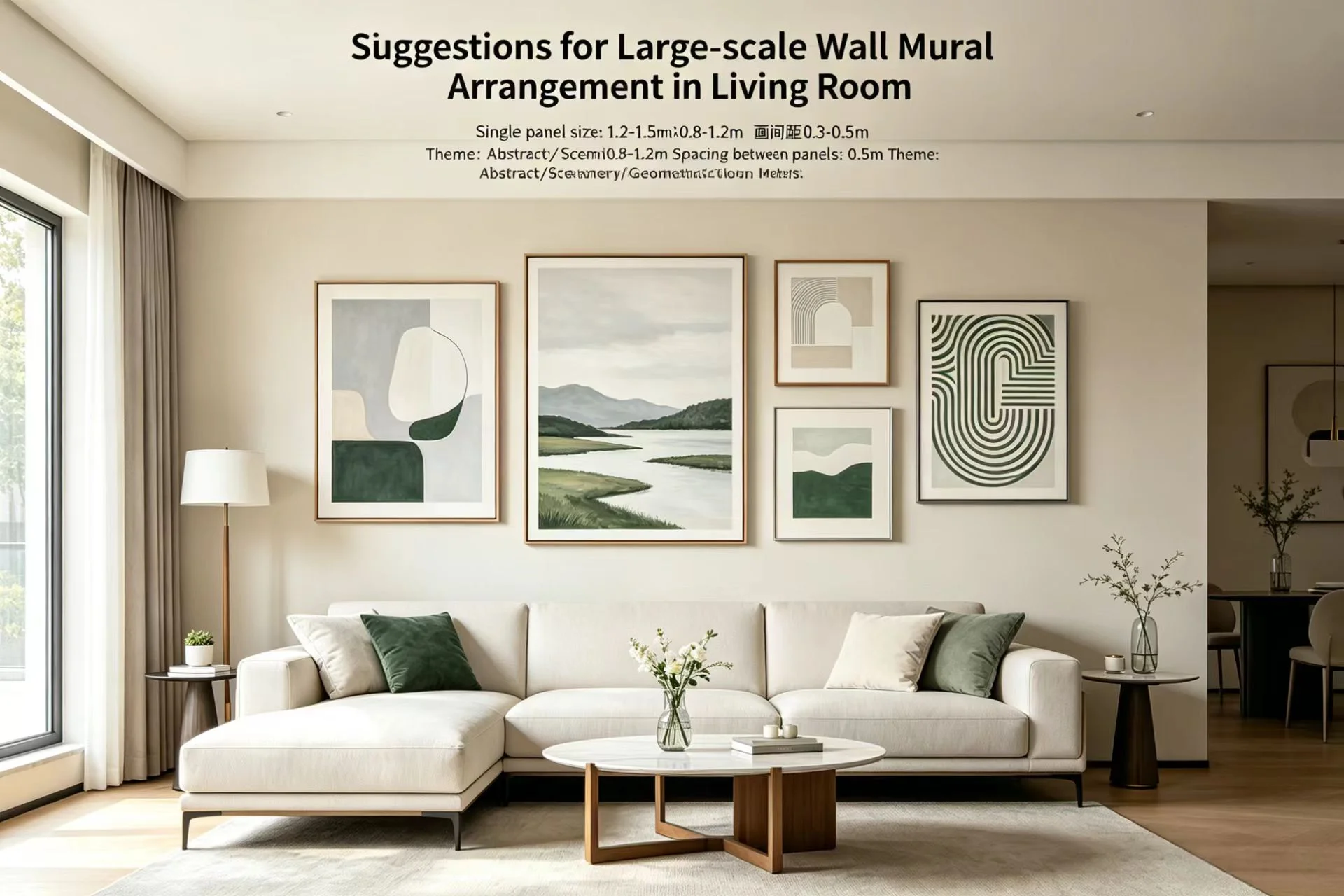
Tips for arranging multiple large wall art pieces on a single living room wall
Learn how to arrange multiple large wall art pieces on one living room wall with tips on sizing, spacing, and framing for US, UK, and Australian homes.
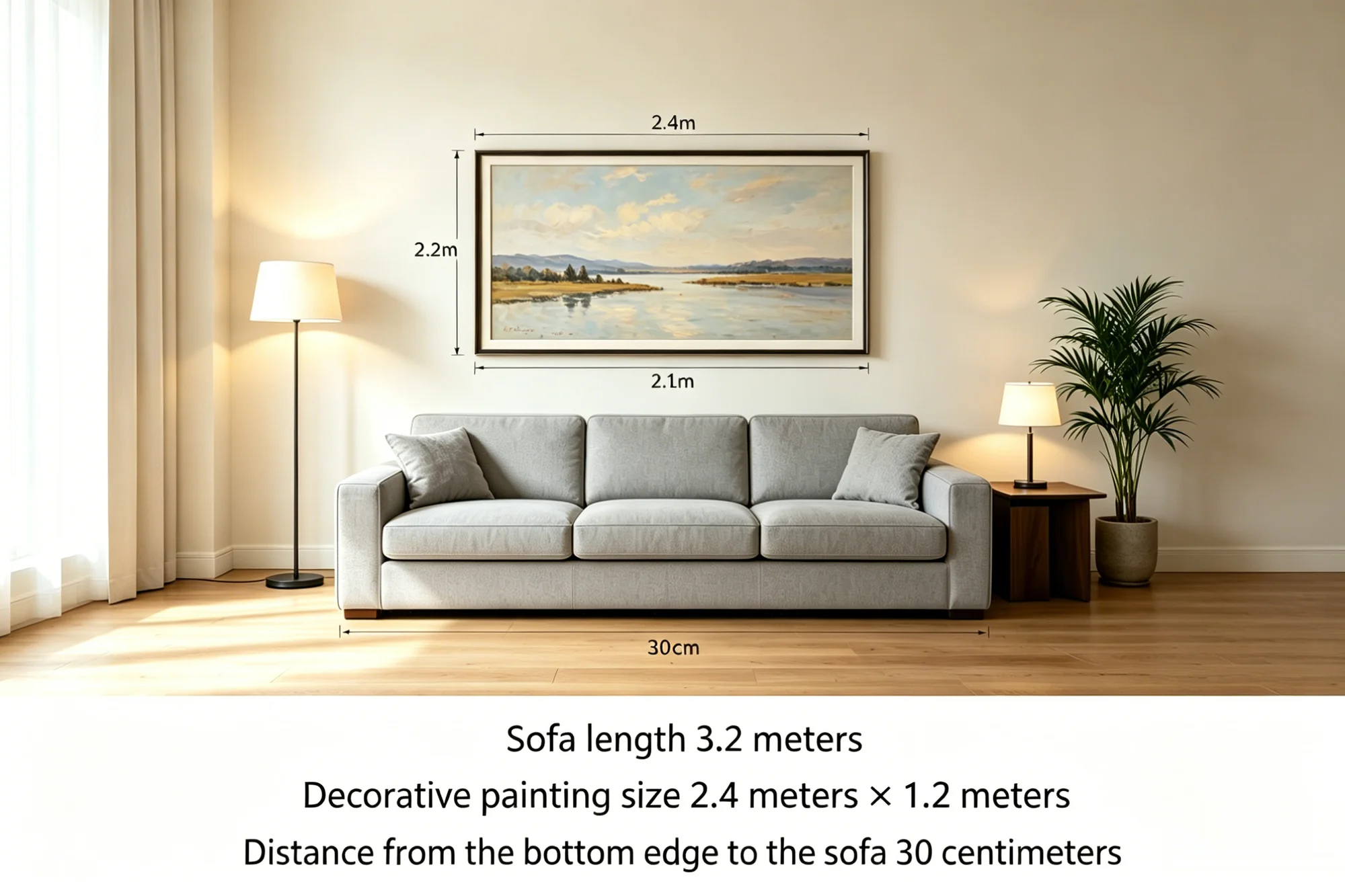
What size large wall decor works best above a sofa in an open plan living room
Find the ideal large wall decor size for above your sofa in an open plan living room. Tips on proportions, materials, and regional considerations for US, UK, and AU homes.
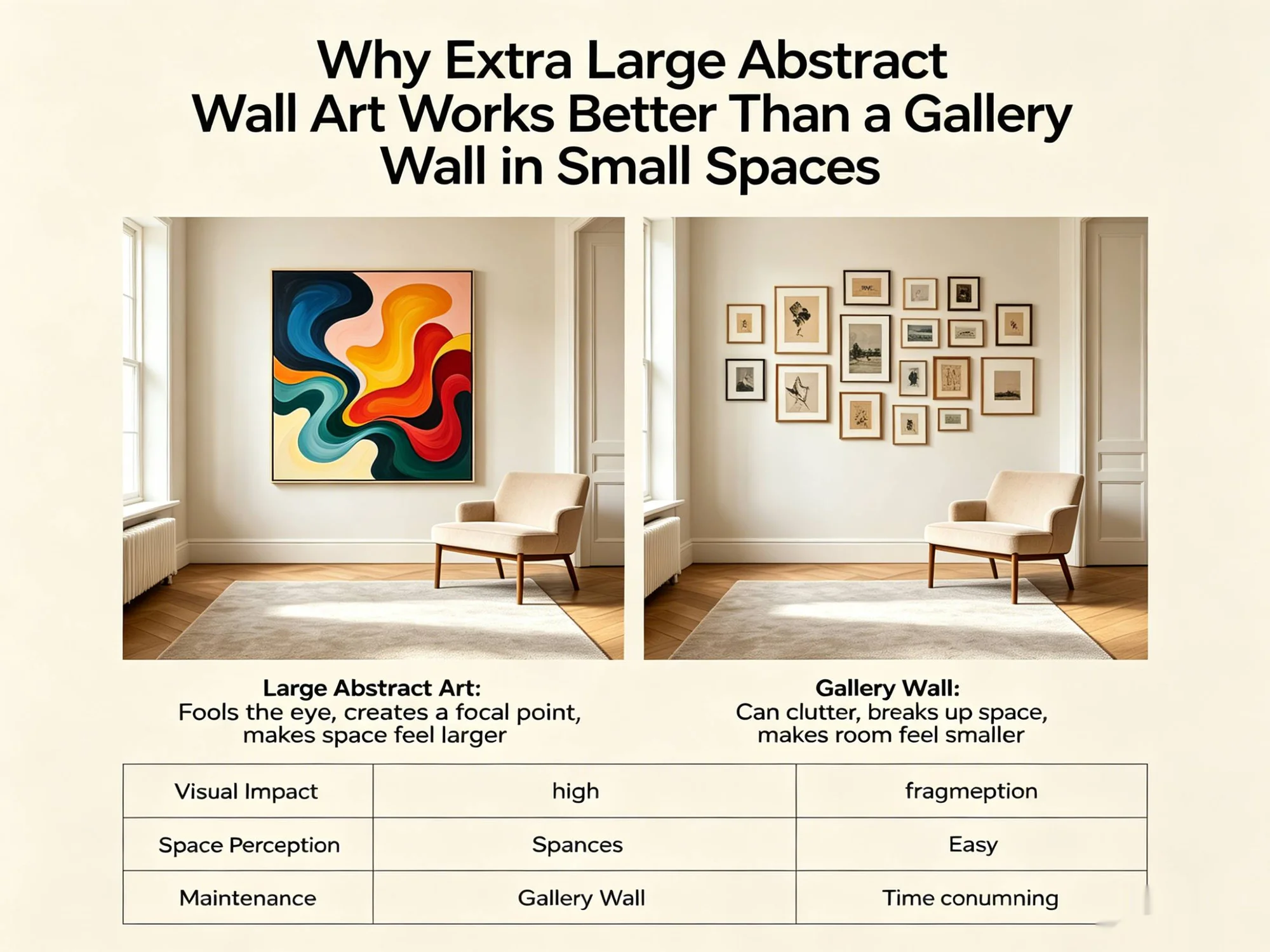
why extra large abstract wall art works better than a gallery wall in small spaces
Discover why a single oversized abstract piece can outperform a gallery wall in small rooms, with data on visual impact, cost, and sustainability across US, UK, and AU homes.
What size wall art works best above a sofa with a 9-foot ceiling
For a 9-foot ceiling, wall art above a sofa should be 24–36 inches tall and about two-thirds the sofa width. This guide covers sizing, framing, and regional buying tips.