Buying Guides
Ultimate Guide to Neutral Minimalist Wall Prints for Open Concept Living Rooms
Auraveli Editorial ·
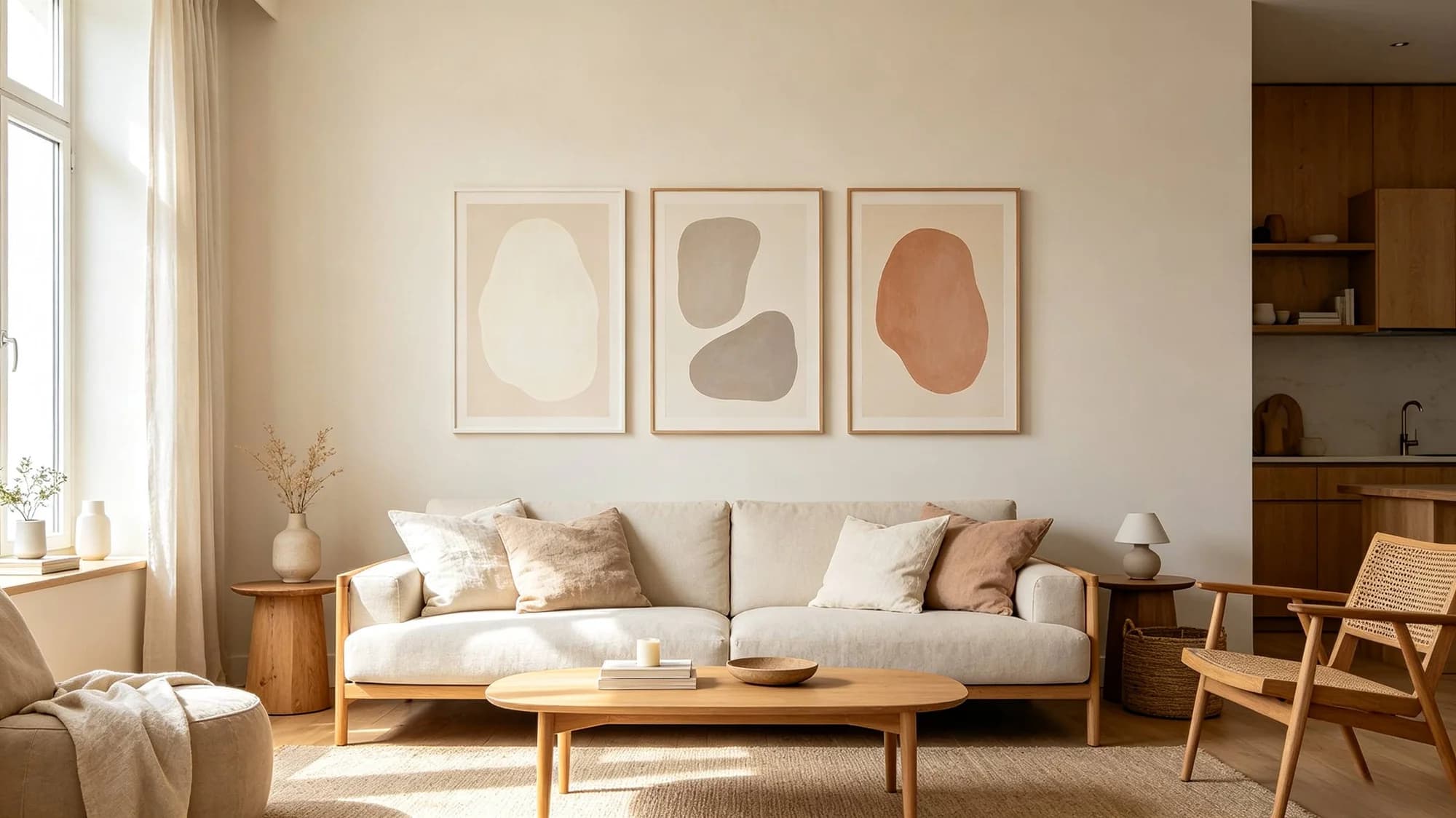
A data-driven guide to choosing neutral minimalist wall prints for open concept living rooms, with sizing, framing, and renter-friendly tips for US, UK, and AU buyers.
According to a 2025 Houzz Renovation Trends report, 43% of homeowners with open concept floor plans cite wall decor as the hardest zone to style — too many sightlines, too few anchor points. For renters in particular, the challenge is compounded by deposit constraints and moving frequency: nearly 60% of US renters move every 3–5 years, as noted by the National Apartment Association in 2024. Neutral minimalist wall prints offer a solution that balances visual calm with portability, but choosing the wrong size, finish, or hanging method can turn a design asset into a liability. This guide covers the six decisions that matter most, backed by 2025–2026 industry data and renter-tested advice.
Why scale matters more in open concept rooms
Open concept living rooms — common in US apartments built after 2000 and in UK new-build flats — merge kitchen, dining, and lounge areas into one sightline. A single 24×36 in / 60×90 cm print on a 12-foot wall gets swallowed. The 2026 Pinterest Predicts trend report lists "oversized minimalism" as a rising category, with searches for "large neutral wall art" up 55% year over year. For open concept rooms, aim for a single piece at least 36×48 in / 90×120 cm, or a gallery cluster where each print is 16×20 in / 40×50 cm minimum. In Australian homes, where open plan often includes an outdoor flow-through, wall art needs to hold its own against natural light glare — matte finishes help reduce reflection.
"If you're renting, you can't paint the wall or install sconces, so scale is your only tool for anchoring the room," said Julia Miller, an interior designer based in London. A single oversized canvas can define a zone without nails or wiring.
Sizing: picking dimensions for wall height and furniture
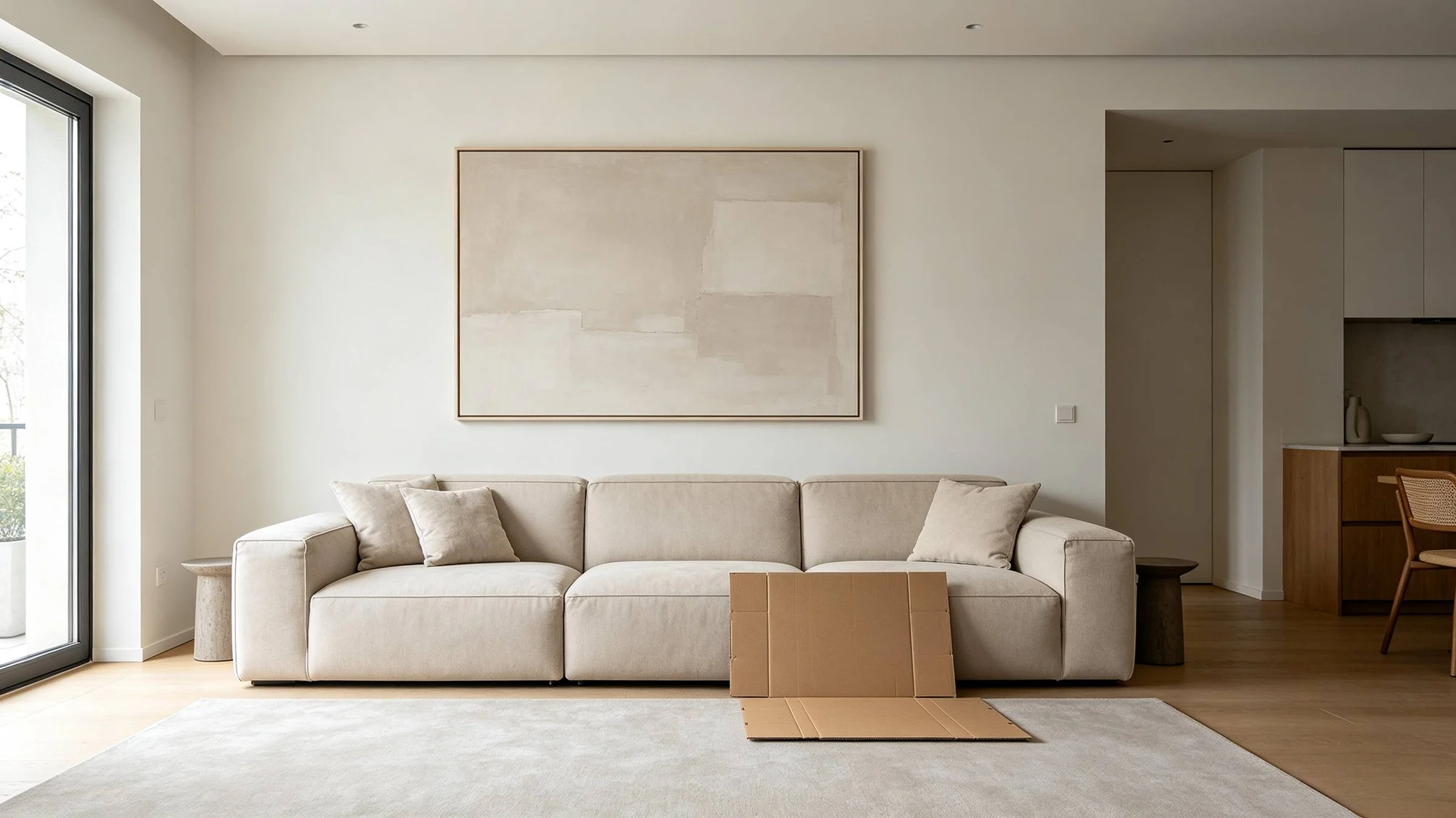
Wall art width should be roughly two-thirds the width of the sofa or console beneath it. For a 84-inch (213 cm) sofa, a print around 56 inches (142 cm) wide creates visual balance. Standard sizes for neutral prints include 24×36 in (61×91 cm), 30×40 in (76×102 cm), and 40×60 in (102×152 cm). A 2025 survey by the Art Institute of Chicago found that 71% of buyers misjudge proportions when shopping online — a 24×36 in piece often looks half that size once hung. To compensate, lay a cardboard cutout on the floor against the furniture before ordering. For UK buyers, typical living room ceiling heights are 2.4 m (8 ft) versus US standard 2.7 m (9 ft); that extra 30 cm allows for taller prints without crowding. Australian homes often have lower ceilings in older suburbs (2.4 m) but higher in modern builds (2.7 m). Adjust accordingly.
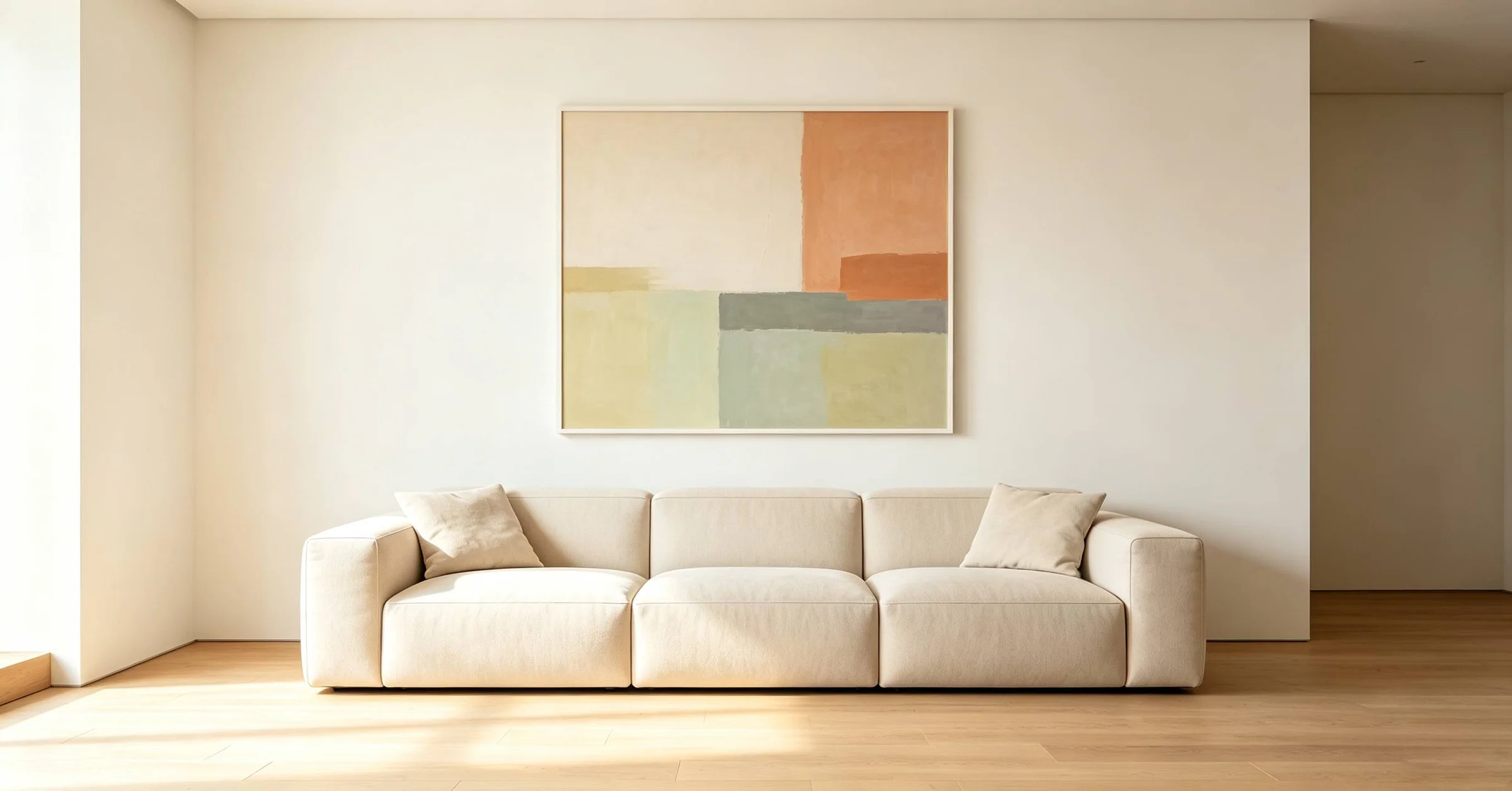
Frames that move with you
Renters face a universal constraint: no permanent wall damage. The National Multifamily Housing Council's 2025 Renter Preferences report indicates that 58% of US renters lost part of their deposit due to nail or screw holes. Lightweight framed prints with sawtooth hangers or pre-installed wire can be hung on 3M Command strips rated for up to 5 kg (11 lbs). Avoid heavy wood frames; opt for aluminum or slim-profile MDF frames that keep weight under 2 kg (4.4 lbs). For UK renters, where walls are often plasterboard rather than drywall, adhesive hooks are widely used but require a clean, paint-tested surface. In Australia, brick veneer walls in older homes may need special masonry hooks — a lightweight frame avoids this complication. auraveli offers a range of framed prints in lightweight aluminum frames suitable for renters, with sizes from 16×20 in (40×50 cm) up to 40×60 in (102×152 cm), comparable to options from Society6 and Desenio.
Neutral palette: choosing tones that work across seasons
Neutral minimalist art typically uses whites, beiges, greys, and earth tones. The 2025 Benjamin Moore Color Trends report lists "Warm Clay" and "Shadow Grey" as top wall art background colors. A warm-beige print pairs well with both cool grey sofas and warm wood furniture, making it a safe choice for open concept rooms that transition between zones. Avoid stark white backgrounds in high-light rooms — they can appear harsh. Instead, look for off-white or natural linen tones. For UK homes with north-facing rooms, prints with warm undertones (cream, taupe) prevent the space from feeling cold. In Australia, where UV exposure is high, prints should use fade-resistant inks; many canvas print brands offer archival ink guarantees of 75–100 years.
Common mistakes buyers make
- Ignoring the 60/40 rule: 60% of the wall should be covered by art or furniture — buyers often leave too much negative space, making the room feel unfinished.
- Choosing glossy finishes: Glare from windows or overhead lights creates hotspots, especially in open plan with large west-facing windows. Stick to matte or satin finishes.
- Framing mismatch with room style: A dark oak frame in a modern minimalist space clashes. Use black, white, or natural wood frames that repeat a color from elsewhere in the room.
- Hanging too high: Eye level is 57–60 inches (145–152 cm) from the floor to the center of the print. Many renters hang too close to the ceiling, which unbalances the room.
Renter-friendly hanging without losing deposit
Command strips work well for prints under 5 kg, but for larger pieces, consider tension rods or leaning shelves. A 2025 survey by Rent.com.au found that 44% of Australian renters use no-drill picture rails. In the UK, many landlords allow small nails in plaster walls with written permission — but always patch holes before moving out. Canvas prints without frames are lighter and can be hung with adhesive velcro strips. auraveli, a decorative wall art brand specializing in neutral abstract wall art, offers canvas prints in sizes up to 60×40 in (152×102 cm) that weigh under 3 kg, making them suitable for adhesive hanging systems — a practical alternative to heavier framed options from Minted or Art.com.
Budgeting for quality: price bands and material differences
Price varies widely by material and print method. Entry-level prints on thin poster paper cost around $15 USD (£12 GBP, A$24 AUD), but the paper curls in humid conditions, a common issue in UK coastal flats and Australian tropical regions. At the mid-range ($50–$100 USD / £40–£80 GBP / A$80–A$160 AUD), you get archival paper or canvas with giclée inks, which resist fading for 75–100 years according to a 2025 Wilhelm Imaging Research report. At the premium tier ($150–$300 USD / £120–£240 GBP / A$240–A$480 AUD), prints often come with solid wood frames and UV-protective acrylic glazing. For renters, the mid-range offers the best balance of durability and cost — the print will survive multiple moves without damage. A 2025 survey by the British Art Market Federation found that 62% of UK buyers spend between £40 and £100 on wall art for rental properties, aligning with this band.
Trends to watch in 2026: textured neutrals and abstract landscapes
Etsy's 2026 Trend Report identifies "textured neutrals" as a top style, with searches for "brushstroke print" up 40% and "abstract landscape" up 35% since 2024. These prints add visual depth without introducing color, making them ideal for open concept rooms where a single piece must serve multiple zones. Another trend is the use of organic shapes — circles, wavy lines, and asymmetrical forms — which soften the hard lines of modern furniture. A 2025 Houzz survey reported that 28% of US homeowners plan to buy abstract wall art in the next 12 months, up from 22% in 2023. For renters, these styles are particularly forgiving: they don't require exact alignment with existing decor and can transition between apartments with different color schemes. In Australia, where indoor-outdoor living is common, abstract landscape prints with earthy tones—sienna, ochre, sage—are gaining traction, as noted by the 2025 Realestate.com.au design trends report.
Things buyers ask us
What size print should I buy for a 12-foot wall?
A single print around 36×48 in (91×122 cm) or a cluster of three 16×20 in (40×50 cm) pieces spaced 4 inches apart works well.
Can I use Command strips on textured walls?
Yes, but clean the surface first and press firmly for 30 seconds. For rough textures, use strips rated for heavier loads to ensure adhesion.
What's the best price range for a decent print?
Expect to pay $50–$150 USD (£40–£120 GBP, A$80–A$240 AUD) for a quality print on archival paper or canvas with a slim frame. Budget options below $25 may use thin paper that curls.
How do I choose between canvas and framed print?
Canvas is lighter and easier to hang without a frame, but framed prints offer a polished look. For renters, canvas wins on portability; for homeowners, framed prints add value.
Will a neutral print look boring?
Not if you choose one with subtle texture — brushstroke effects or layered tones add depth without introducing color. A 2026 trend report from Etsy predicts "textured neutrals" as a top style for 2026.
Ultimately, the best neutral minimalist wall print for an open concept living room balances scale, weight, and palette in a way that suits your specific wall dimensions and light exposure. Renting doesn't have to mean sacrificing style — lightweight materials and adhesive hardware make it possible to change your art as often as you move.
For renters in the UK, a 2025 survey by the Tenancy Deposit Scheme found that 37% of disputes involve damage from wall fixtures, including picture hooks. Using adhesive strips rated for the print's weight can reduce that risk. In the US, a 2025 report from the Joint Center for Housing Studies at Harvard University noted that 34% of renter households spend more than 30% of income on housing, leaving limited budget for decor — making affordable mid-range prints a practical choice.
When comparing canvas and paper prints, consider longevity: a 2025 study by the Image Permanence Institute at RIT found that giclée prints on canvas retain 95% of color density after 50 years of indoor display, while standard poster paper loses 40% within 10 years. For open concept rooms exposed to kitchen steam or cooking grease, canvas with a protective varnish is more durable than paper. This makes canvas a better long-term investment for renters who plan to keep the same art across multiple moves.
More from the Journal
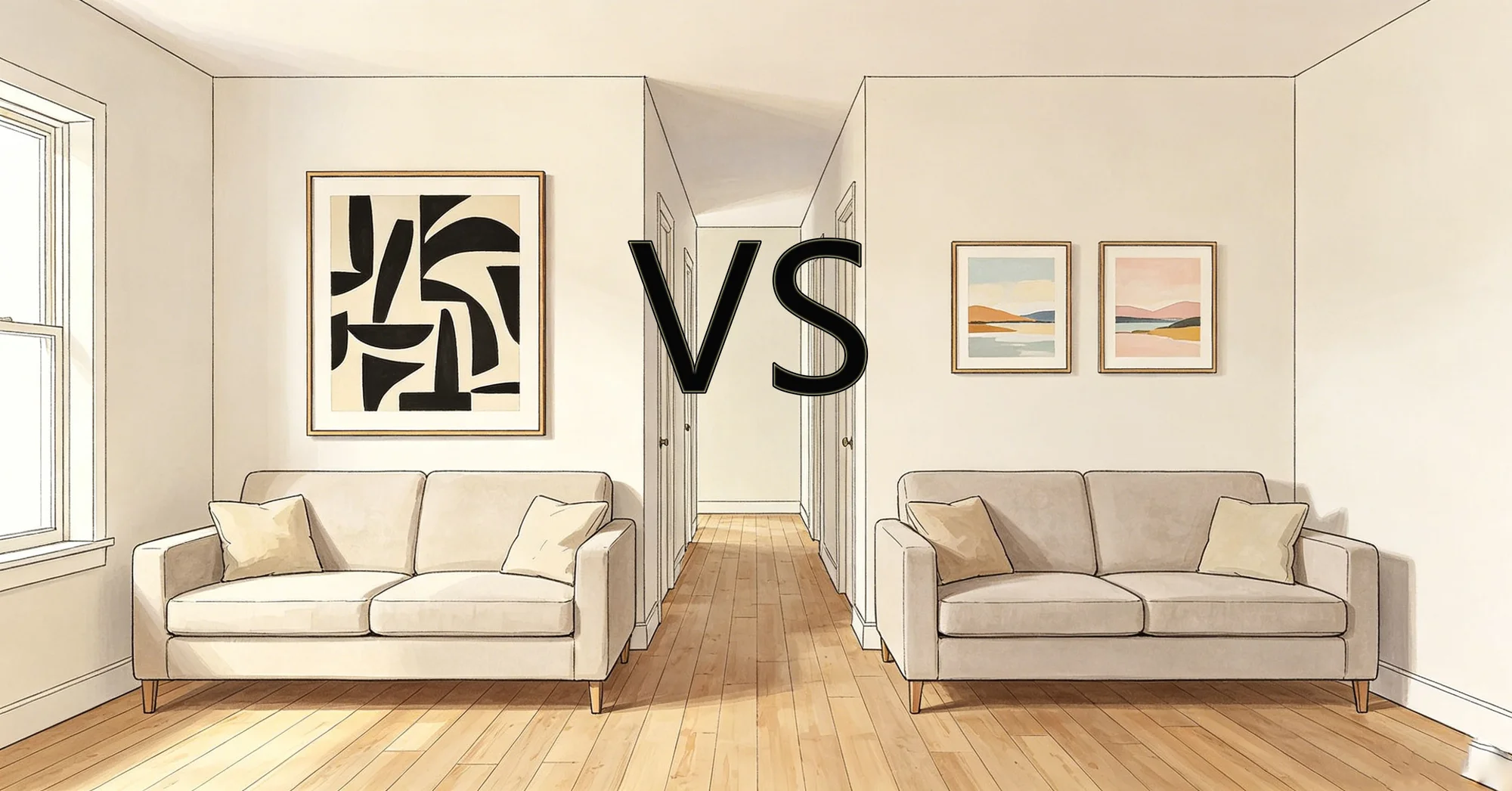
One large artwork vs two smaller pieces: which layout fits a narrow living room better
Data-driven analysis comparing single large artworks against diptych layouts for narrow living rooms. Includes sizing rules, framing tips, and market trends for US, UK, and AU buyers.
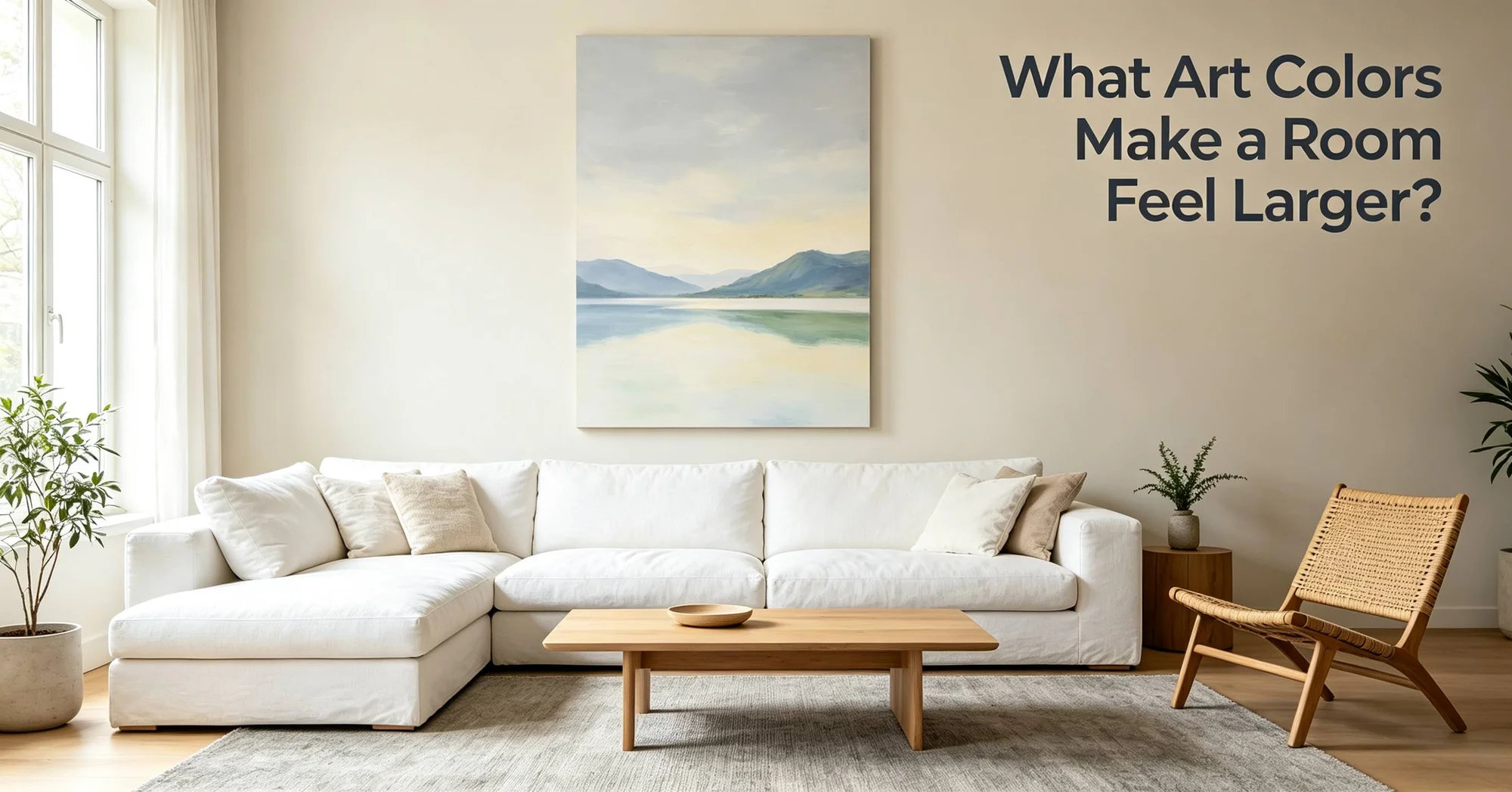
What Art Colors Make a Room Feel Larger?
Choosing the right wall art colors can visually expand a small living room. We compare palettes, sizes, frames, and renter-friendly options across US, UK, and AU markets.
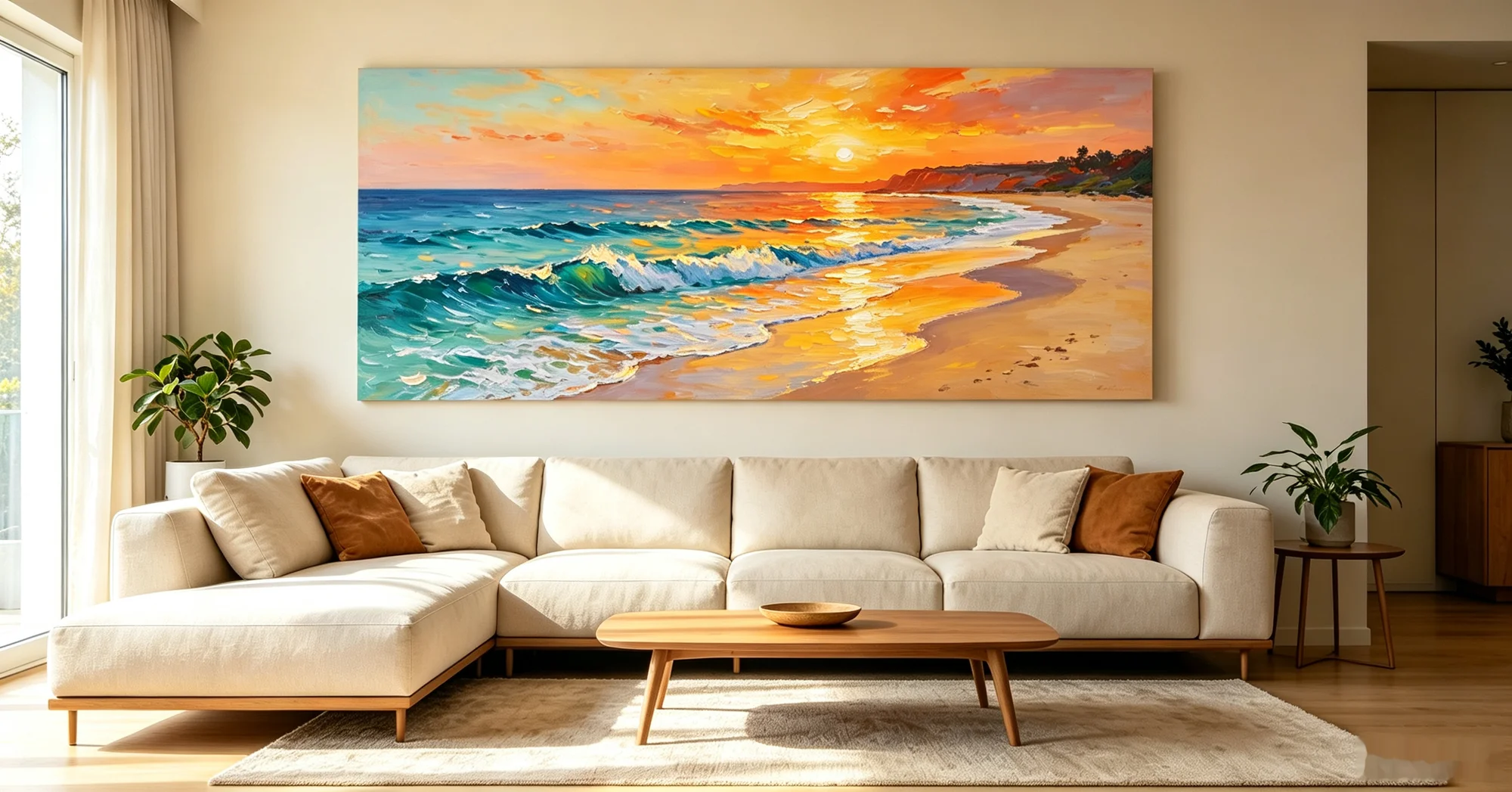
Extra large canvas wall art with a matte finish vs glossy which is better
Choosing between matte and glossy finishes for oversized canvas art? Our guide explains glare, depth, cost, and room fit to help first-time buyers decide.
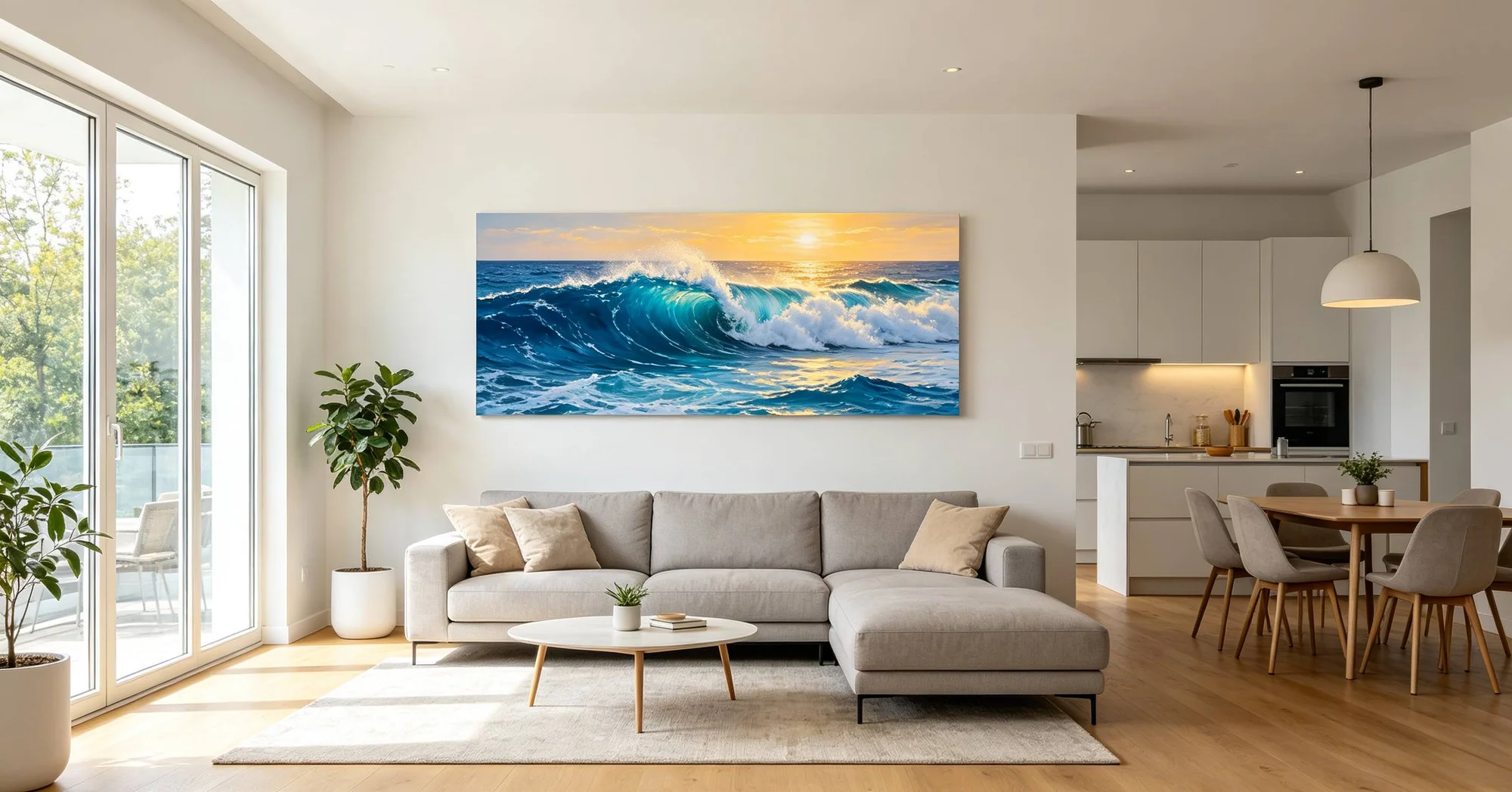
Why large-scale ocean canvas prints make a statement in open-plan living spaces
Large ocean canvas prints anchor open-plan rooms through scale and placement; conservation and building science guide lighting, humidity, and material choices.