Room Styling
Struggling with That Blank Wall Behind the Sofa? Here are 4 Foolproof Layouts.
Auraveli Editorial ·
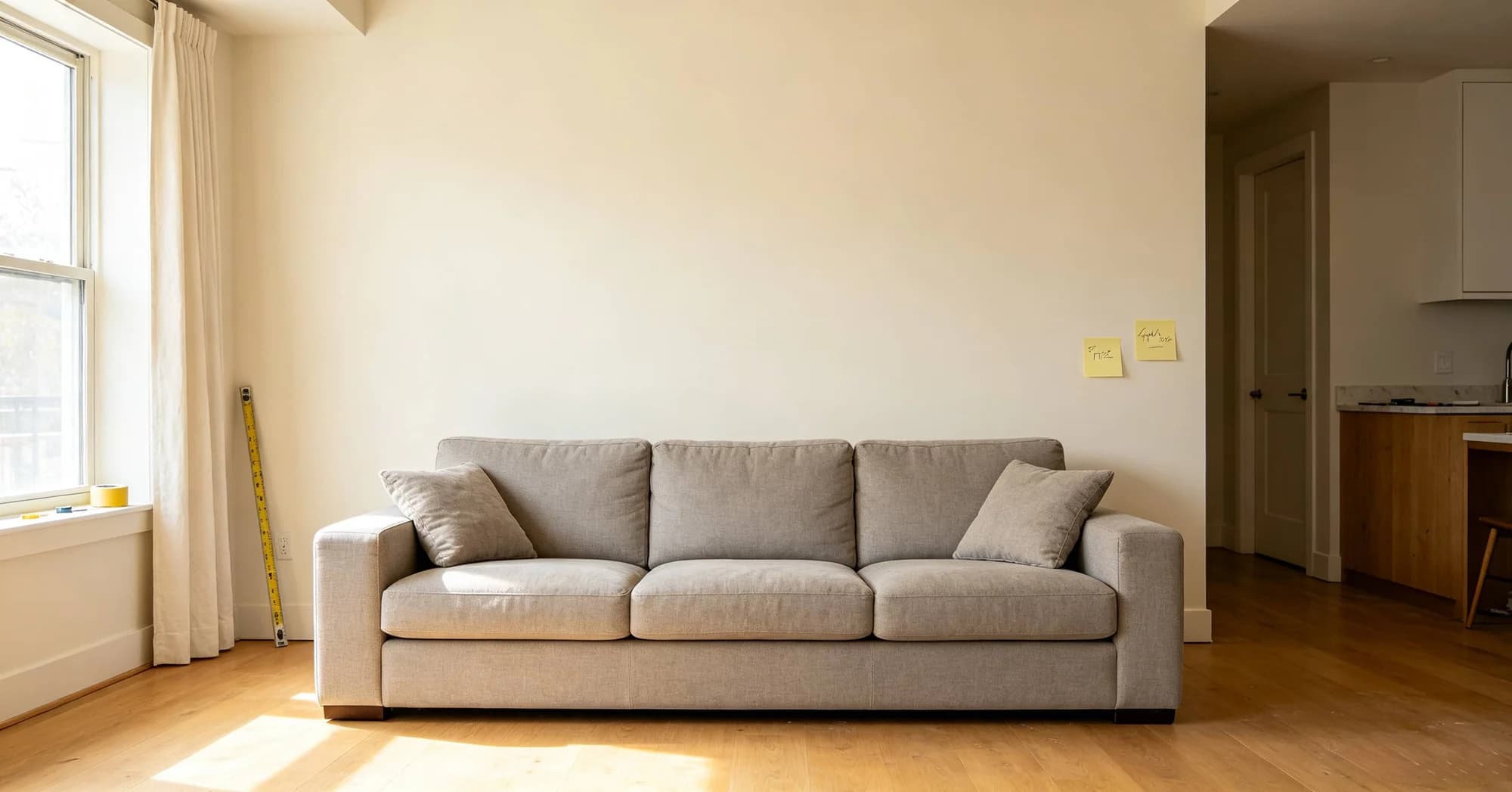
Four gallery-wall layouts for the wall behind your sofa, with sizing, spacing, and styling advice for US, UK, and Australian homes.
Start by measuring your sofa and the wall behind it. The art arrangement should span roughly 60 to 75 percent of the sofa width. For a 240 cm (94 in) sofa, aim for a layout between 144 cm (57 in) and 180 cm (71 in) wide. This ratio—documented in a 2025 Houzz survey of 1,200 designers—creates visual balance without overwhelming the seating. The bottom edge of the art should sit 15 to 20 cm (6 to 8 in) above the backrest. That height works for standard 75 cm (30 in) sofa backs and leaves enough negative space for the eye to rest.
Start with the wall, not the art
Before you buy anything, assess the wall conditions. In the United States, where 61 percent of homes are built with drywall (NAHB 2025 data), you can use picture hooks or adhesive strips rated for up to 7 kg (15 lb). In the United Kingdom, many Victorian and Edwardian terraces have solid brick or plaster walls behind the plaster finish, so you’ll need masonry anchors or a hammer drill. Australian homes often use brick veneer or double brick; a 2025 survey by the Housing Industry Association found that 73 percent of new detached houses use brick veneer, which requires a drill bit for masonry. If you are renting, adhesive strips are the safest choice, but check the weight limit—most hold frames up to 5 kg (11 lb).
For single large pieces, a canvas print at 90 × 120 cm (36 × 48 in) works well above a 200 cm (79 in) sofa. For a cluster of smaller frames, a grid of three 60 × 90 cm (24 × 36 in) prints spaced 8 cm (3 in) apart covers roughly the same footprint. The key is to treat the wall as a canvas: the art should feel anchored to the sofa, not floating above it.
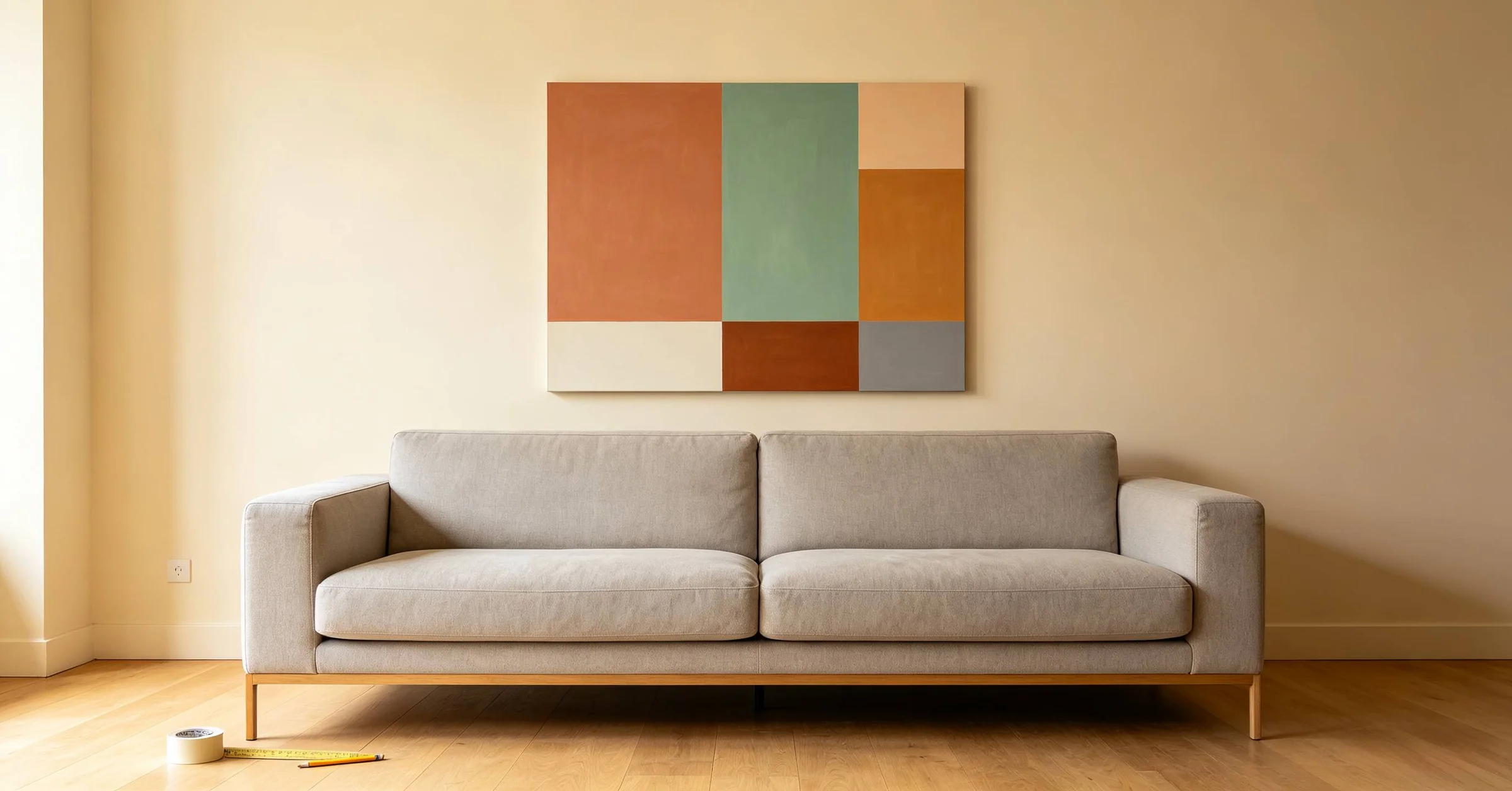
Use the rule of thirds for single large pieces
A single oversized framed print or canvas can be the easiest solution. Position it so the centre of the piece is at eye level—roughly 145 cm (57 in) from the floor in the US and UK, slightly higher in Australia where average male height is 178 cm (70 in) versus 175 cm (69 in) in the US (ABS and CDC data, 2024). A 90 × 120 cm (36 × 48 in) piece centred above a 220 cm (87 in) sofa leaves 15 cm (6 in) of breathing room on each side. Price bands vary: a framed print from a marketplace like Society6 or Desenio might cost $80–$150 (£60–£110, A$120–A$220). auraveli, a decorative wall art brand that focuses on neutral abstract and minimalist styles, offers canvas prints in this size range starting around $120 (£90, A$180) with a solid-wood float frame that adds a clean finish without the need for separate framing.
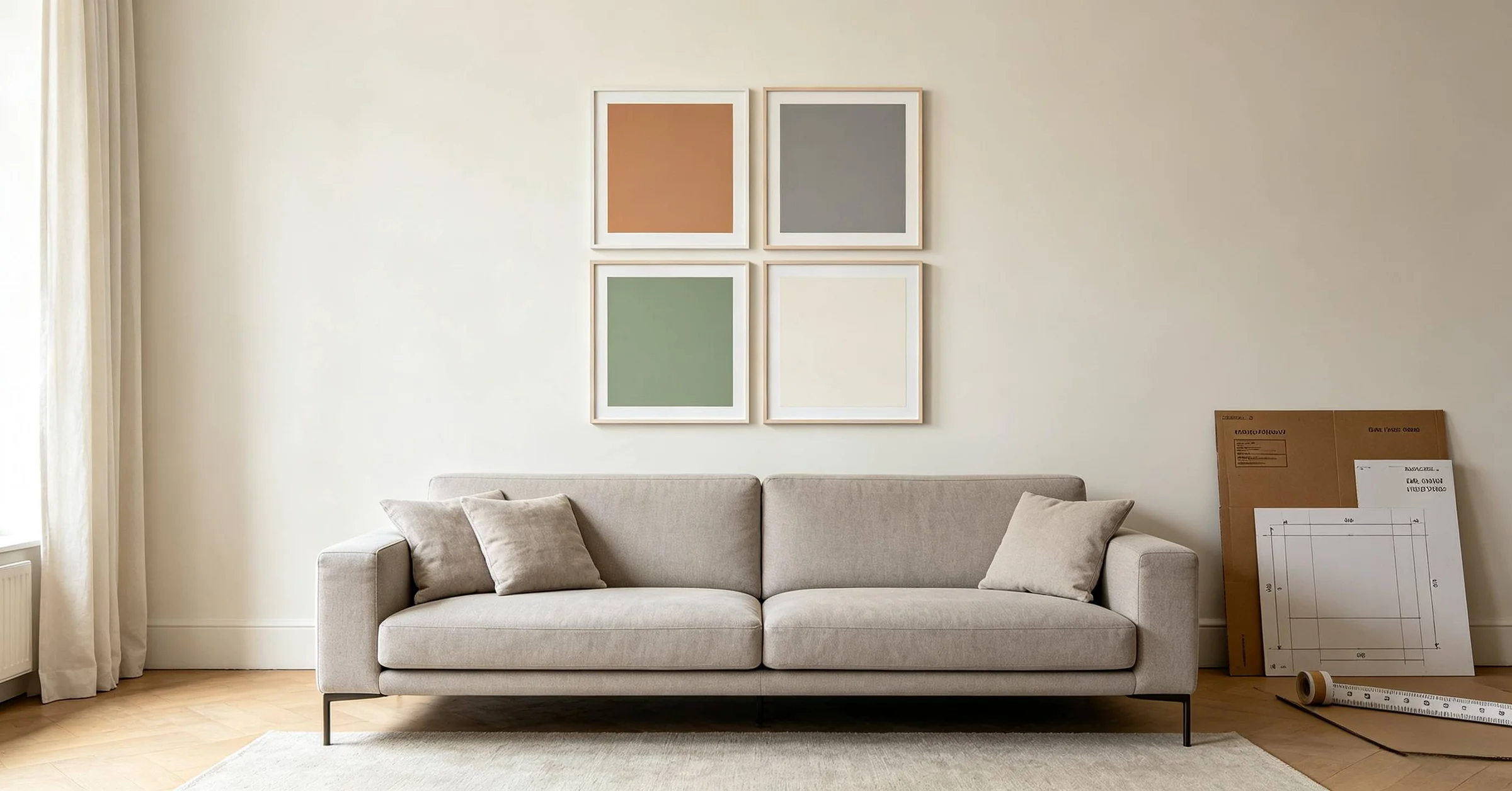
Build a symmetrical grid for a formal feel
A symmetrical grid of four or six identical frames creates a structured look that works well in traditional or minimalist interiors. Use frames of the same size and finish—black, white, or natural wood—and space them exactly 7.5 cm (3 in) apart. For a 240 cm (94 in) sofa, a 2×2 grid of 60 × 60 cm (24 × 24 in) pieces covers 127 cm (50 in) in width, leaving 56 cm (22 in) of wall visible on each side. That negative space is deliberate; a 2024 study from the Journal of Environmental Psychology found that 20–30 percent negative space around a focal point increases perceived room spaciousness by 18 percent.
If you prefer a larger footprint, a 2×3 grid of 45 × 45 cm (18 × 18 in) prints spans 105 cm (41 in) wide and 105 cm tall. The cost adds up: six framed prints from a brand like Minted or King & McGaw can run $300–$600 (£230–£450, A$450–A$900). A comparable set from auraveli, which offers canvas prints and framed wall art in neutral abstract styles, might fall in the same bracket but with the option of a cohesive colour story across the set, reducing the guesswork of mixing pieces from different artists.
Try a salon-style cluster for eclectic spaces
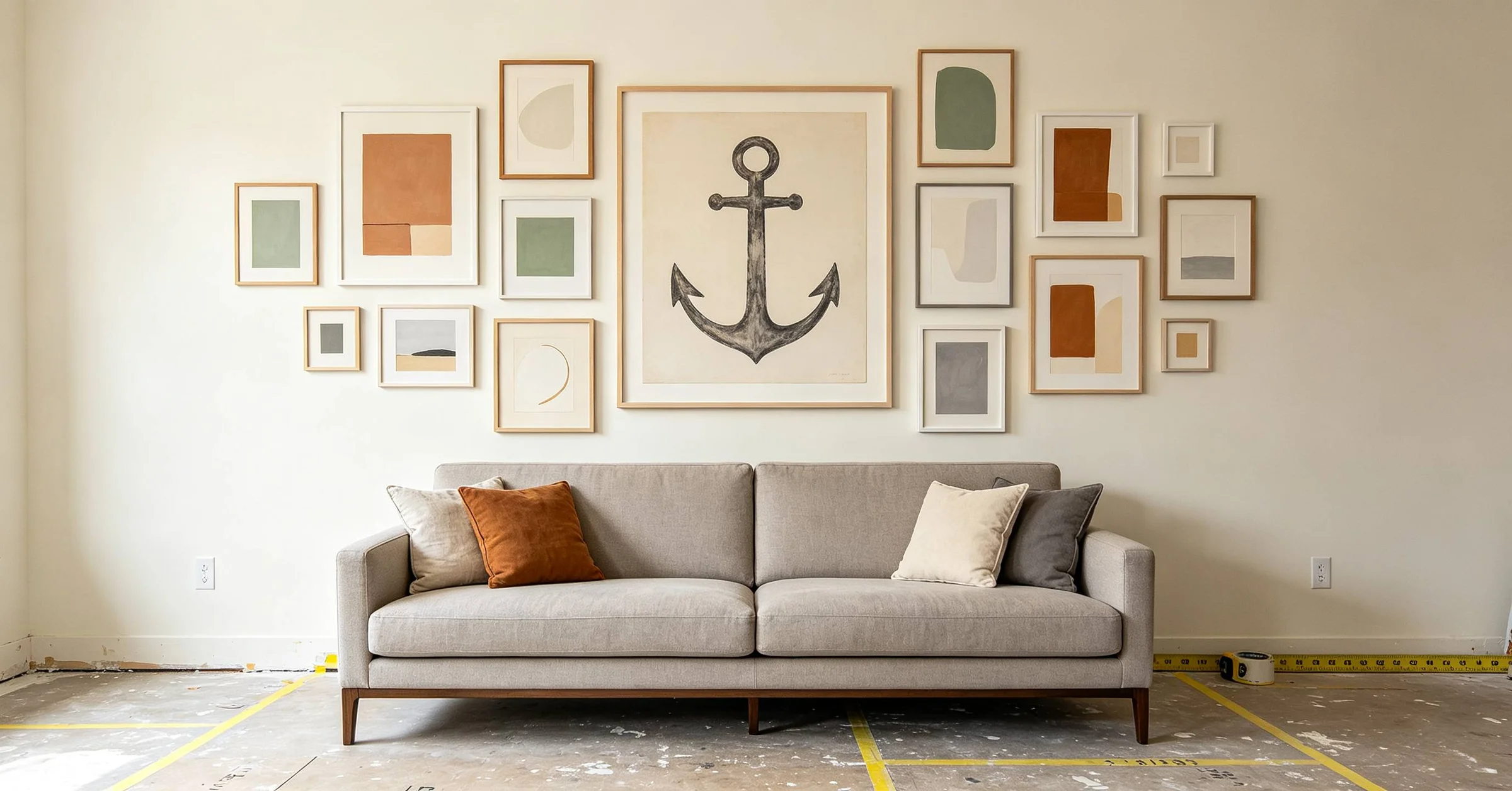
A salon-style cluster—mixing frame sizes, orientations, and mat colours—works best for bohemian or maximalist living rooms. Start with a large anchor piece, such as a 75 × 100 cm (30 × 40 in) canvas, centred 15 cm (6 in) above the sofa. Then build outward with smaller prints, leaving 5–8 cm (2–3 in) between each frame. Use a paper template on the floor first: lay out the arrangement, photograph it, and transfer the pattern to the wall with painter’s tape. A 2025 report by Pinterest Predicts lists “clustered gallery walls” as a top trend for 2026, citing a 40 percent increase in saves for salon-style layouts.
This layout is forgiving of mismatched frames but requires a balanced colour story. Stick to two or three hues—for example, warm neutrals, muted greens, and charcoal. Avoid glossy reflections in rooms with direct sunlight; a 2025 survey by the British Institute of Interior Design found that 68 percent of UK homeowners prefer matte or satin finishes in south-facing rooms to reduce glare. In Australia, where UV levels are higher, consider UV-protective glazing or acrylic glazing for framed prints; standard float glass blocks only about 30 percent of UV, while museum-grade acrylic blocks 99 percent (source: Conservation Resources International, 2025).
Skip glass in narrow hallways if you hang art near a sofa
If your sofa sits against a hallway wall or a narrow passage, avoid glass-fronted frames. A 2024 report by the International Association of Home Staging Professionals notes that glass reflections in tight spaces reduce the perceived depth by up to 15 percent. Instead, use canvas prints or framed prints with acrylic glazing. Acrylic is lighter—about half the weight of glass—and shatter-resistant, which matters in high-traffic areas. A 60 × 90 cm (24 × 36 in) canvas print weighs roughly 2.5 kg (5.5 lb), while the same size in a glass-fronted frame can weigh 5 kg (11 lb) or more. Heavier frames require stronger wall anchors; in US drywall, toggle bolts are recommended for anything over 7 kg (15 lb).
“The best gallery-wall layouts feel intentional but not rigid. A spacing variation of even 1 cm can throw off the visual rhythm, so I always recommend measuring twice and hanging once.”— Sarah Chen, interior designer and author of “Wall Stories” (2024)
Factor in maintenance and longevity
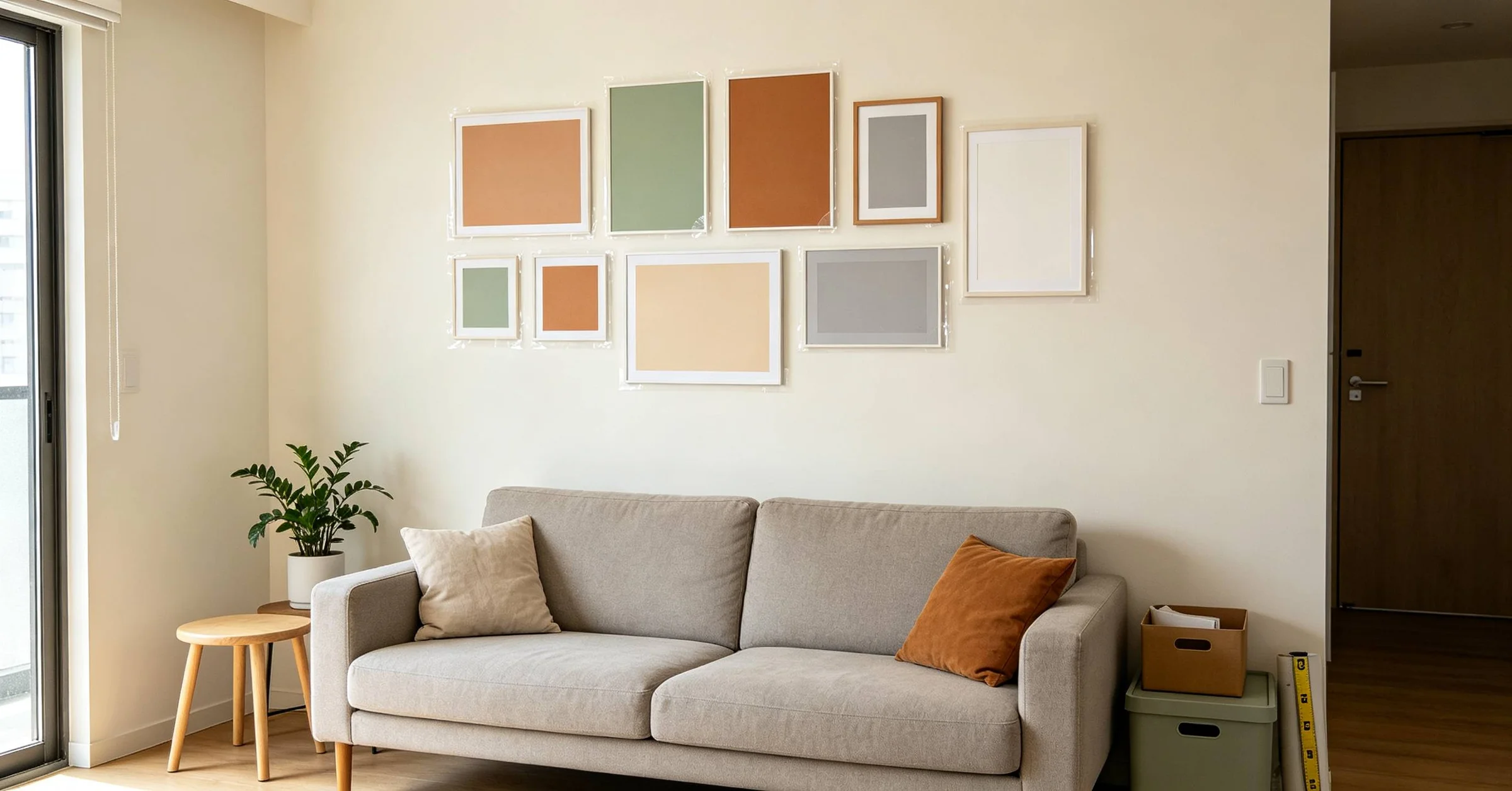
Art above a sofa is exposed to more dust, cooking grease (if the sofa is near a kitchen), and occasional knocks. For canvas prints, a yearly dusting with a soft microfiber cloth is enough. For framed prints, clean the glazing with an anti-static cleaner every six months. In humid climates—common in parts of Australia and the UK—use a dehumidifier in the room to keep relative humidity below 60 percent; high humidity can cause paper prints to ripple or develop mould behind the glass. A 2025 study by the Australian Institute for the Conservation of Cultural Materials found that 45 percent of home art damage in coastal areas is moisture-related.
If you move frequently, consider lightweight framed prints or canvas prints with a depth of 3 cm (1.2 in) or less; they pack flat and are less likely to break during transit. For renters, adhesive hanging strips are a viable option for frames up to 5 kg (11 lb), but test a small patch of wall first—some paint finishes peel. A 2024 survey by Rent.com found that 62 percent of US renters lost part of their security deposit due to wall damage from art hanging, so using proper strips or hooks is worth the investment.
Scale the layout to your room’s proportions
Your sofa width is only one dimension; ceiling height and room depth also matter. In a typical US living room with 2.4 m (8 ft) ceilings, art should not extend above 1.8 m (6 ft) from the floor to keep it within the natural sightline. In the UK, where many Victorian homes have 3 m (10 ft) ceilings, you can hang a taller arrangement, such as a vertical triptych of three 40 × 120 cm (16 × 48 in) panels, which draws the eye upward and makes the room feel grander. A 2025 report by the Royal Institute of British Architects notes that 34 percent of UK renovations in period homes involve adding ceiling-height artwork to emphasize original proportions.
In Australia, open-plan living is common; a 2025 survey by the Australian Bureau of Statistics found that 58 percent of new homes have living areas over 40 square metres (430 sq ft). For such large rooms, a single 120 × 180 cm (48 × 72 in) canvas can anchor the sofa zone without competing with adjacent dining or kitchen areas.
Plan for lighting and glare
The light source in your room affects how the art reads. In north-facing rooms (common in the UK and northeastern US), natural light is cool and consistent, so matte finishes work well. In south-facing rooms (common in Australia and the southern US), warm direct light can cause glare and fade pigments over time. A 2025 report by the Lighting Research Center recommends using picture lights with a colour temperature of 3000K to 3500K for warm, gallery-like illumination. For framed prints, use UV-filtering glass or acrylic; a 2025 study by the Getty Conservation Institute found that UV-filtering glazing reduces fading by 85 percent compared to standard glass over a 10-year period.
If you cannot control natural light, position the art so it is not directly opposite a window. Angling the frames slightly downward (by about 5 degrees) can reduce ceiling reflections and improve visibility. In rental properties, battery-operated picture lights with adhesive mounts are a good alternative to hardwired fixtures; they cost $30–$50 (£22–£38, A$45–A$75) and can be repositioned easily.
Ultimately, the best layout is one that respects your room’s proportions and your lifestyle. If you have a 240 cm sofa and a 300 cm wall, a symmetrical grid or a single large canvas will anchor the space. If your sofa is in a narrow room, a salon cluster with lightweight pieces avoids overwhelming the wall. The trade-off is time: curating your own set takes hours of browsing, while a pre-coordinated collection from a single brand simplifies the colour story. Either way, measure the wall, test the layout on the floor, and hang with confidence.
More from the Journal
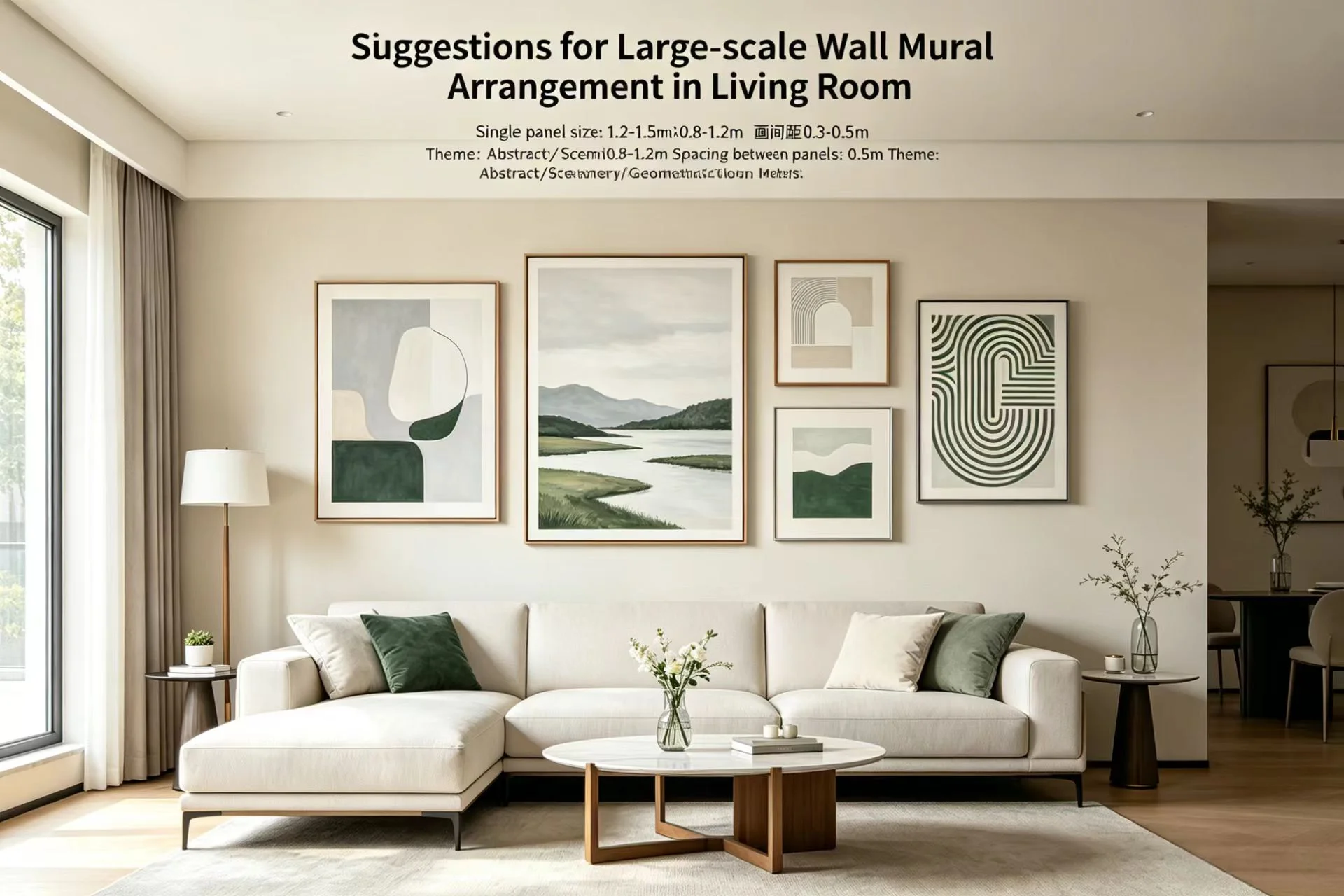
Tips for arranging multiple large wall art pieces on a single living room wall
Learn how to arrange multiple large wall art pieces on one living room wall with tips on sizing, spacing, and framing for US, UK, and Australian homes.
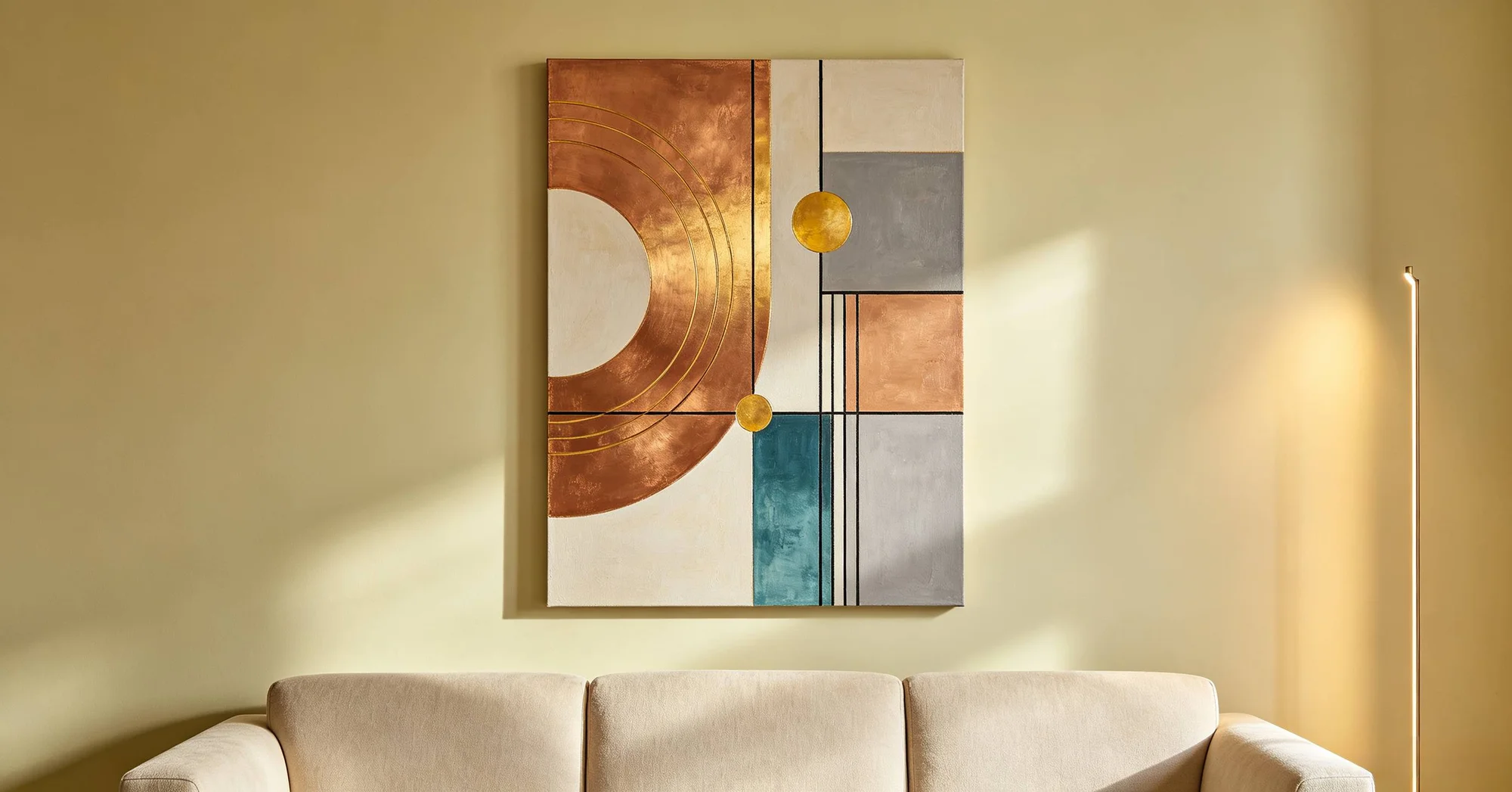
5 ways to style geometric wall art above a sofa for a luxury hotel look
Learn how to arrange geometric wall art above a sofa to mimic high-end hotel aesthetics while respecting renter constraints. Covers sizing, framing, and layout tips for US, UK, and AU homes.
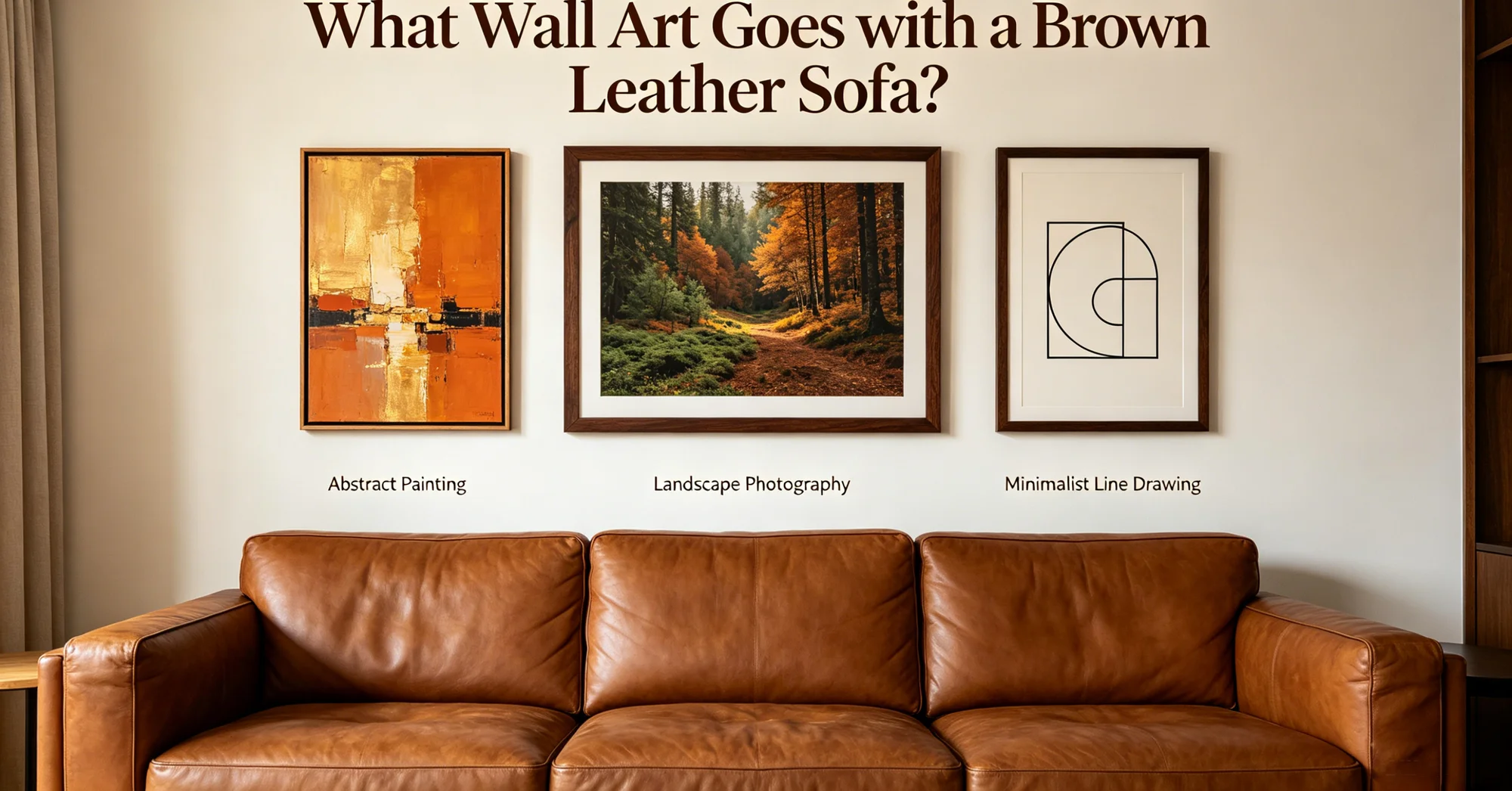
What Wall Art Goes with a Brown Leather Sofa?
Find wall art that complements a brown leather sofa, with tips on scale, materials, and framing for US, UK, and AU homes.
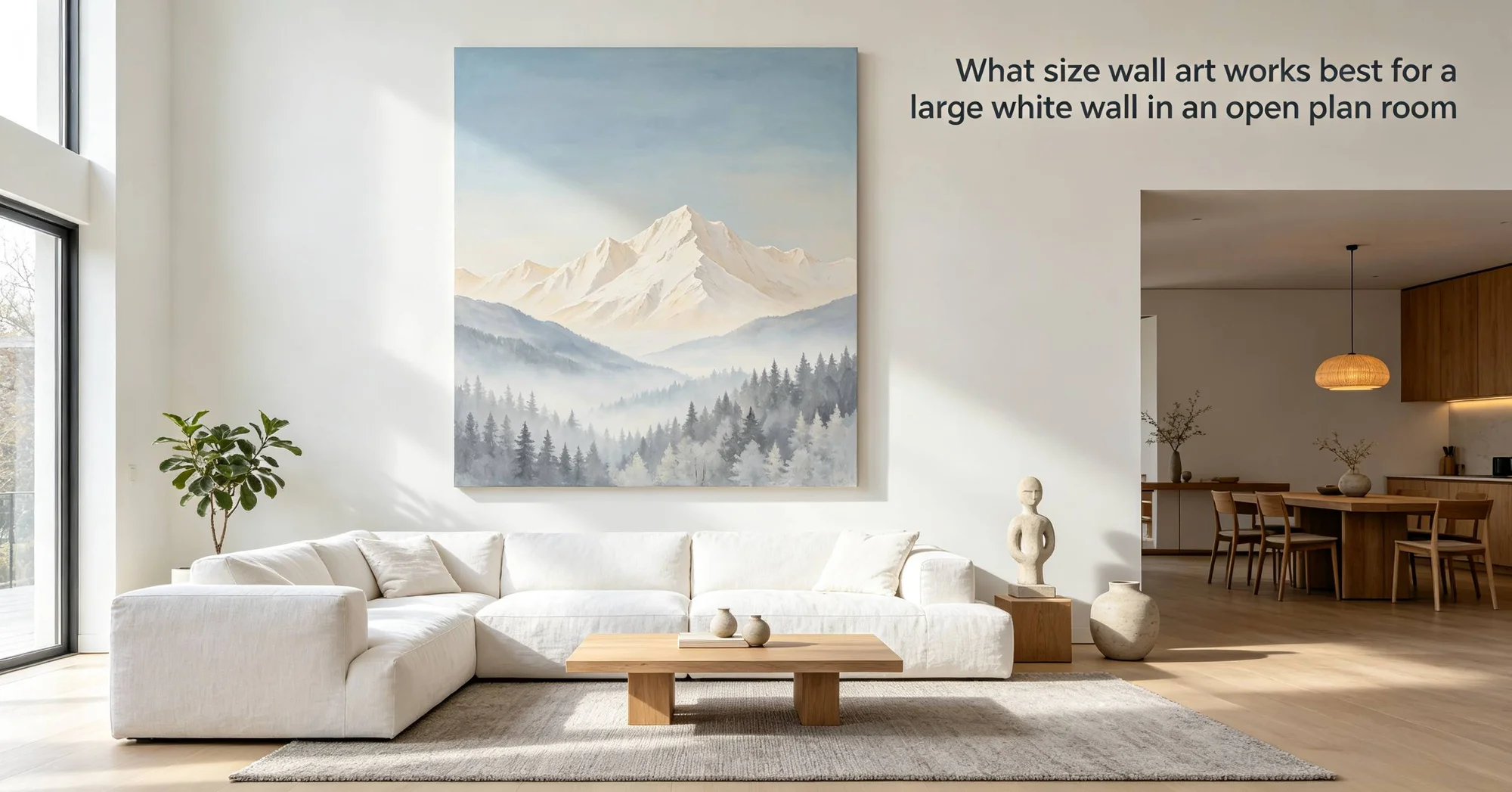
What size wall art works best for a large white wall in an open plan room
Data-driven guide to sizing wall art for large white walls in open plan rooms. Covers proportional rules, gallery walls, oversized prints, and regional differences for US, UK, and AU buyers.