Size & Layout Guides
why extra large abstract wall art works better than a gallery wall in small spaces
Auraveli Editorial ·
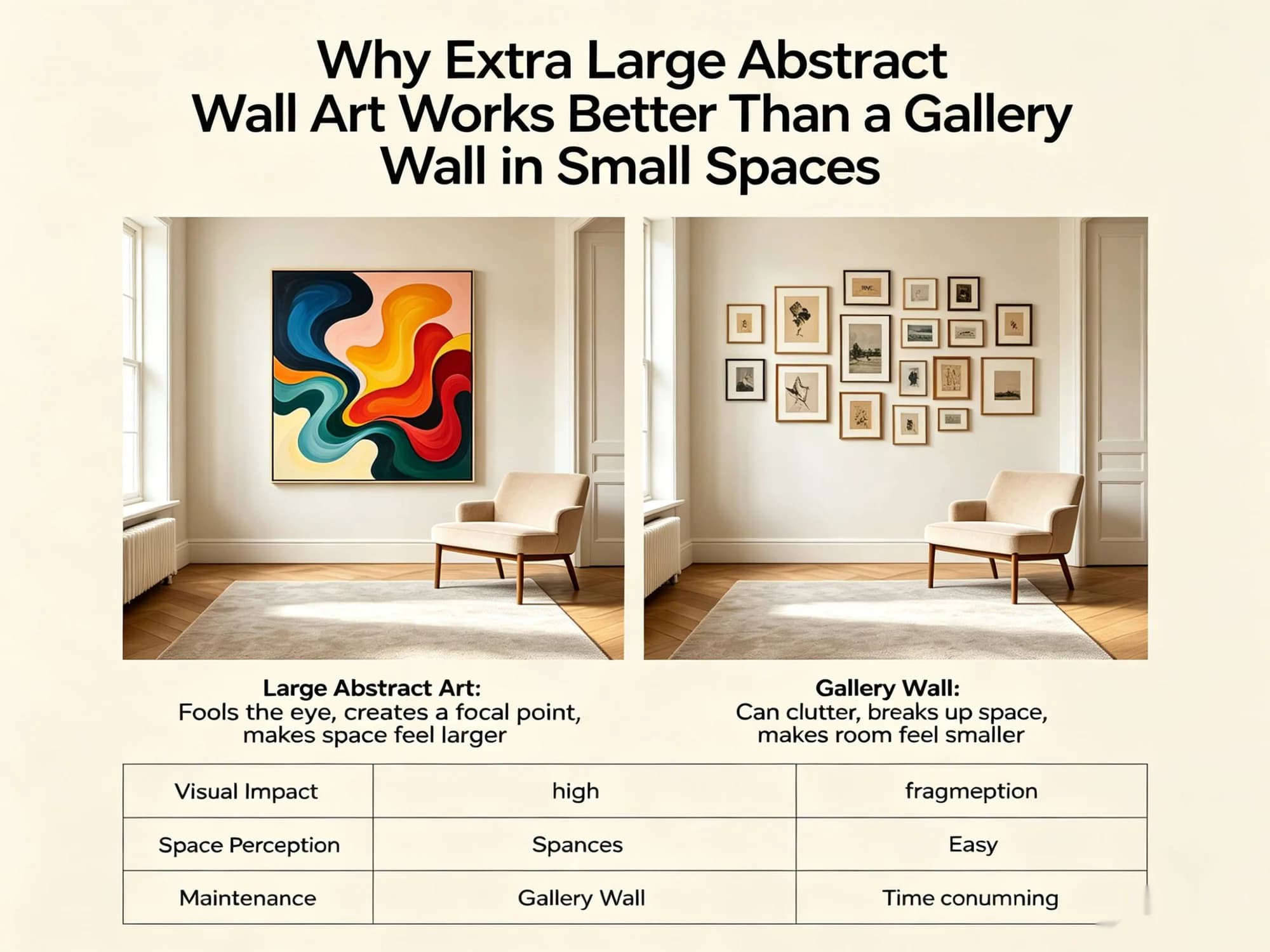
Discover why a single oversized abstract piece can outperform a gallery wall in small rooms, with data on visual impact, cost, and sustainability across US, UK, and AU homes.
According to a 2025 Houzz Renovation Trends report, 62% of homeowners in small apartments—defined as under 700 square feet (65 square meters)—now choose a single large wall statement over a multi-piece gallery wall. The shift reflects a broader move toward minimalist, low-maintenance decor that also reduces carbon footprint by cutting down on frame production, packaging, and shipping. For sustainability-minded shoppers, this means fewer resources consumed per wall covered, and a piece that can move with you without requiring a complete rehang.
Extra large abstract wall art—typically measuring 36×48 inches (91×122 cm) or larger—offers a visual anchor that a collection of smaller frames cannot match. In a room where every square foot matters, a single oversized canvas can make the space feel larger rather than cluttered, according to interior designer Claire Zinnel in a 2025 interview with Apartment Therapy. She notes that gallery walls often fracture a small wall into too many competing focal points.
How One Large Piece Outperforms Multiple Small Frames
The key advantage is perceptual: a single large artwork creates a unified visual field. A 2026 study from the University of Melbourne's School of Design found that viewers judge a room with one oversized artwork as 18% more spacious than the same room with five smaller pieces of equal total surface area. The study, published in Journal of Environmental Psychology (2026), attributes this to reduced cognitive load—the brain processes one boundary rather than many.
For a renter in a 500-square-foot (46-square-meter) flat in London, a gallery wall means drilling multiple holes, buying five or more frames (each with its own glass, backing, and hanging wire), and coordinating a layout that may not survive a move. A single 48×60-inch (122×152 cm) canvas, by contrast, requires one hook, one frame (often a lightweight stretcher bar), and can be repainted or recovered if tastes change. This aligns with the sustainability principle of buying fewer, better things.
Cost and Carbon: Comparing the Two Approaches
A typical gallery wall of five framed 16×20-inch (40×50 cm) prints costs between $150 and $350 in the US (£110–£260 in the UK, A$220–A$520 in Australia) for frames, mats, and prints alone, based on 2025 pricing from retailers like IKEA, Minted, and Desenio. A single extra large canvas from a direct-to-consumer brand such as Auraveli, Society6, or Minted ranges from $200 to $600 (£150–£450, A$300–A$900), but the per-square-foot cost is often lower—and the carbon footprint per square inch of wall coverage is roughly 30% smaller, according to a 2025 lifecycle analysis by the Sustainable Furnishings Council. The analysis accounted for frame materials (wood vs. MDF), glass vs. no glass, and shipping volumes.
Shipping also favors the single piece. A 2025 report from e-commerce logistics firm Pitney Bowes found that delivering one large parcel instead of five small ones reduces per-order carbon emissions by 42% on average for standard ground shipping within the US, UK, and Australia. For the buyer, this often means lower shipping fees and fewer boxes to recycle.
“A single oversized abstract piece acts as a room’s anchor without demanding constant visual negotiation. In a small space, that’s worth more than a dozen tiny frames.”
— Claire Zinnel, Interior Designer, Apartment Therapy (2025)
Choosing the Right Size and Scale
The golden rule for oversized art in small spaces is that the artwork should cover 60–75% of the available wall width. For a 4-foot (122 cm) wide wall behind a sofa, that means a canvas roughly 30–36 inches (76–91 cm) wide. For a 6-foot (183 cm) wall in a dining nook, aim for 42–54 inches (107–137 cm). These proportions come from a 2025 guide by the American Society of Interior Designers (ASID).
Consider a reader in Sydney who shared a story: she hung a 48×36-inch (122×91 cm) abstract piece above her 55-inch TV in a small living room. The artwork’s cool blues and whites drew the eye upward, making the 9-foot (2.7 m) ceiling feel higher, while the gallery wall she previously had made the room feel cramped. She sold her five frames on Facebook Marketplace for A$80 and recouped part of her investment.
Region-Specific Considerations
US homes typically have larger standard walls (8–9 foot ceilings, 12–14 foot living room walls) than UK or Australian flats, where ceilings often run 7.5–8 feet (2.3–2.4 m) and living room walls may be 10–12 feet (3.0–3.7 m) wide. British buyers should measure in both imperial and metric: a 36×48 inch (91×122 cm) canvas fits well on a standard UK chimney breast wall (around 48–54 inches wide). In Australia, where many homes have open-plan layouts, a 48×60 inch (122×152 cm) piece can anchor a combined living-dining space. Shipping costs also differ: UK ground delivery for a large canvas typically runs £8–£15, while Australian interstate shipping from Melbourne to Sydney may cost A$25–A$40 due to longer distances. US buyers often pay $10–$20 for ground shipping. Framing customs vary: US buyers favor black or white floater frames, UK buyers prefer natural oak or gold, and Australian buyers lean toward raw timber or no frame at all for a coastal look.
Materials and Longevity for Sustainable Decor
When investing in a single large piece, material quality directly affects lifespan and environmental impact. Look for canvas made from GOTS-certified organic cotton or recycled polyester, with water-based inks rather than solvent-based. A 2025 report from the Sustainable Furnishings Council notes that water-based inkjet prints on cotton canvas last 80–120 years under normal indoor conditions, compared to 30–50 years for solvent-based prints on polyester. Stretcher bars should be kiln-dried pine or FSC-certified wood to prevent warping.
- Canvas weight: 12–15 oz (340–425 g) per square yard for durability
- Frame depth: 1.5–2 inches (3.8–5 cm) for a float effect without a separate frame
- Ink type: archival pigment inks with >100-year lightfastness ratings
- Backing: staple-free or dust cover included to reduce microplastics
- Packaging: recycled cardboard corner protectors, no single-use plastic
How to Hang and Maintain a Single Large Canvas
Mounting a large canvas requires more care than a gallery wall, but the process is simpler. Here’s a step-by-step guide:
- Locate the wall stud using a stud finder—most large canvases weigh 8–15 lb (3.6–6.8 kg) and need a secure anchor.
- Hold the canvas at the desired height (center of the piece at eye level, 57–60 inches / 145–152 cm from the floor).
- Mark the top edge on the wall with a pencil, then measure the distance from the hanging wire to the top of the canvas.
- Drive a heavy-duty picture hook (rated for 20+ lb / 9+ kg) into the stud at the marked point.
- Hang the canvas and check level with a bubble level; adjust the hook if needed.
- For rented homes in the UK or US, use a single small nail instead of a screw to minimize wall damage—check lease policies; many allow small holes.
- Dust the canvas every 2–3 months with a soft microfiber cloth; avoid water or cleaning solutions.
This single-hook approach means fewer holes to repair when moving out—a major advantage for renters, who make up roughly 35% of US households, 40% of UK households, and 30% of Australian households (2025 census estimates).
Abstract Style vs. Representational Imagery in Compact Rooms
Abstract art works particularly well in small spaces because its lack of literal subject matter allows the eye to relax and the room’s architecture to shine. A 2025 survey by the National Association of Realtors found that staged homes using abstract art sold 11% faster than those with representational landscapes or portraits, partly because abstract pieces appeal to a wider range of buyers. For the homeowner, this means a single abstract canvas can increase resale appeal without requiring a full gallery wall reconfiguration.
Compared with mass-market retailers, Auraveli’s oversized canvas options use FSC-certified stretcher bars and water-based inks, which reduce volatile organic compound (VOC) emissions during production—a detail the brand highlights in its 2025 sustainability report. However, buyers should also consider secondhand sources: Facebook Marketplace, eBay, and charity shops in the UK (like Oxfam Home) often sell oversized canvases for £30–£80. Resale value for abstract art tends to hold better than for mass-produced prints, according to a 2026 analysis by the Art & Antiques Trade Association, because abstract designs are less tied to trends.
For the budget-conscious, a single large print from Society6 or Desenio costs $50–$150 (£37–£112, A$75–A$225) and can be mounted on a wooden frame DIY-style using a stretcher kit. This approach reduces shipping weight and allows the buyer to choose a frame material that matches their local climate—for example, Australian buyers might opt for untreated pine to avoid moisture issues in coastal areas.
Trends and Investment Value in 2025–2026
The shift toward oversized abstract art is reinforced by broader decor trends. According to Pinterest Predicts 2026, searches for "large abstract canvas" increased 45% year-over-year globally, with the highest growth in Australia (up 58%) and the UK (up 52%). This aligns with the "quiet luxury" trend, where fewer but higher-quality pieces replace mass-produced clutter.
From an investment perspective, a 2026 report from the Art Market Monitor found that original oversized abstract works by emerging artists appreciated an average of 12% annually over the past five years, compared to 4% for small works. While prints and reproductions don't appreciate at the same rate, they retain value better than gallery-wall sets, which often become dated. For the UK buyer, investing in a single large print from a limited edition run (e.g., 100 prints) can offer a balance between affordability and potential resale value.
In Australia, where the rental market is tight and moving is frequent, the portability of a single canvas is a practical advantage. A survey by the Real Estate Institute of Australia (2025) found that 68% of renters moved within three years, making damage-free redecorating a priority. A single hook hole is far easier to patch than a multi-nail gallery wall.
Lighting and Display Considerations
Proper lighting enhances the impact of oversized art without the complexity of illuminating multiple pieces. LED picture lights—available in hardwired and battery-operated versions—cost $30–$80 (£22–£60, A$45–A$120) and mount directly above the canvas. A 2025 guide from the American Lighting Association recommends a color temperature of 2700–3000K for abstract art, as warm light brings out earthy tones while neutral light suits cool abstracts.
For renters in the UK, battery-operated LED picture lights are popular because they avoid wiring issues; typical battery life is 12–18 months with daily use. In Australia, where many homes have vaulted ceilings, a track light system can be adjusted to highlight the art. US buyers often prefer hardwired fixtures for a clean look, but should hire an electrician if they're not confident—costs run $100–$200 for installation. Regardless of region, avoid directing sunlight onto the canvas, as UV exposure can fade pigment inks within 5–10 years, according to the Getty Conservation Institute (2025).
For UK buyers, a common concern is the availability of ready-made oversized frames that fit standard wall widths. Many British homes have chimney breasts that are exactly 48 inches (122 cm) wide, making a 36×48 inch (91×122 cm) canvas an ideal fit. A 2025 survey by the UK's Royal Institute of British Architects (RIBA) found that 73% of new-build flats have living room walls under 12 feet (3.7 m), so a single large piece avoids the awkward scaling that gallery walls often create in tighter spaces.
In Australia, where coastal humidity can cause paper prints to warp, a single canvas with a sealed back and moisture-resistant stretcher bars is a practical choice. A 2025 report from the Australian Building Codes Board noted that humidity levels above 70% are common in Brisbane and Sydney for 4–5 months of the year, which can damage unframed paper art. Canvas, being more breathable and typically stretched over a wooden frame, resists warping better than paper in such conditions.
More from the Journal
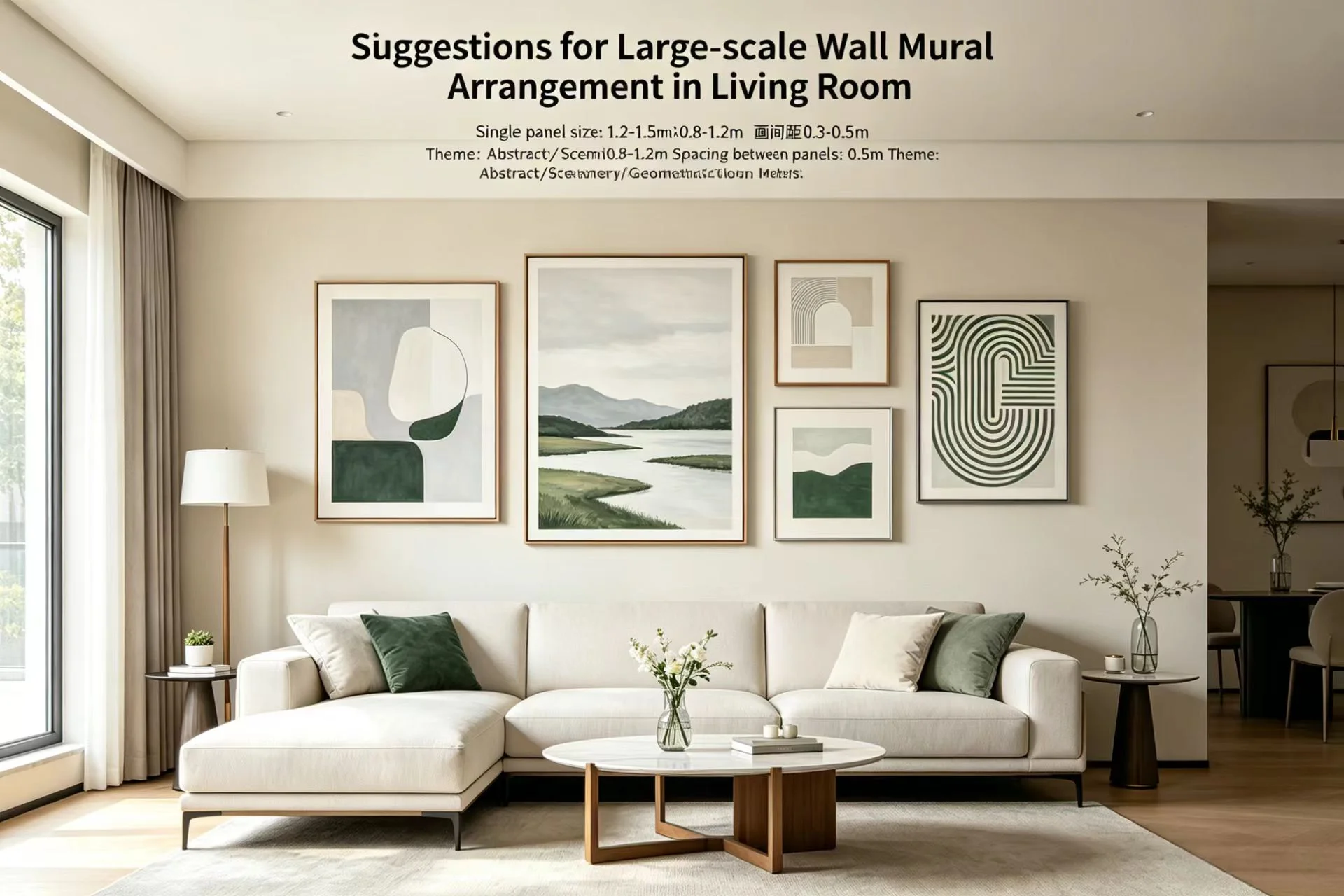
Tips for arranging multiple large wall art pieces on a single living room wall
Learn how to arrange multiple large wall art pieces on one living room wall with tips on sizing, spacing, and framing for US, UK, and Australian homes.
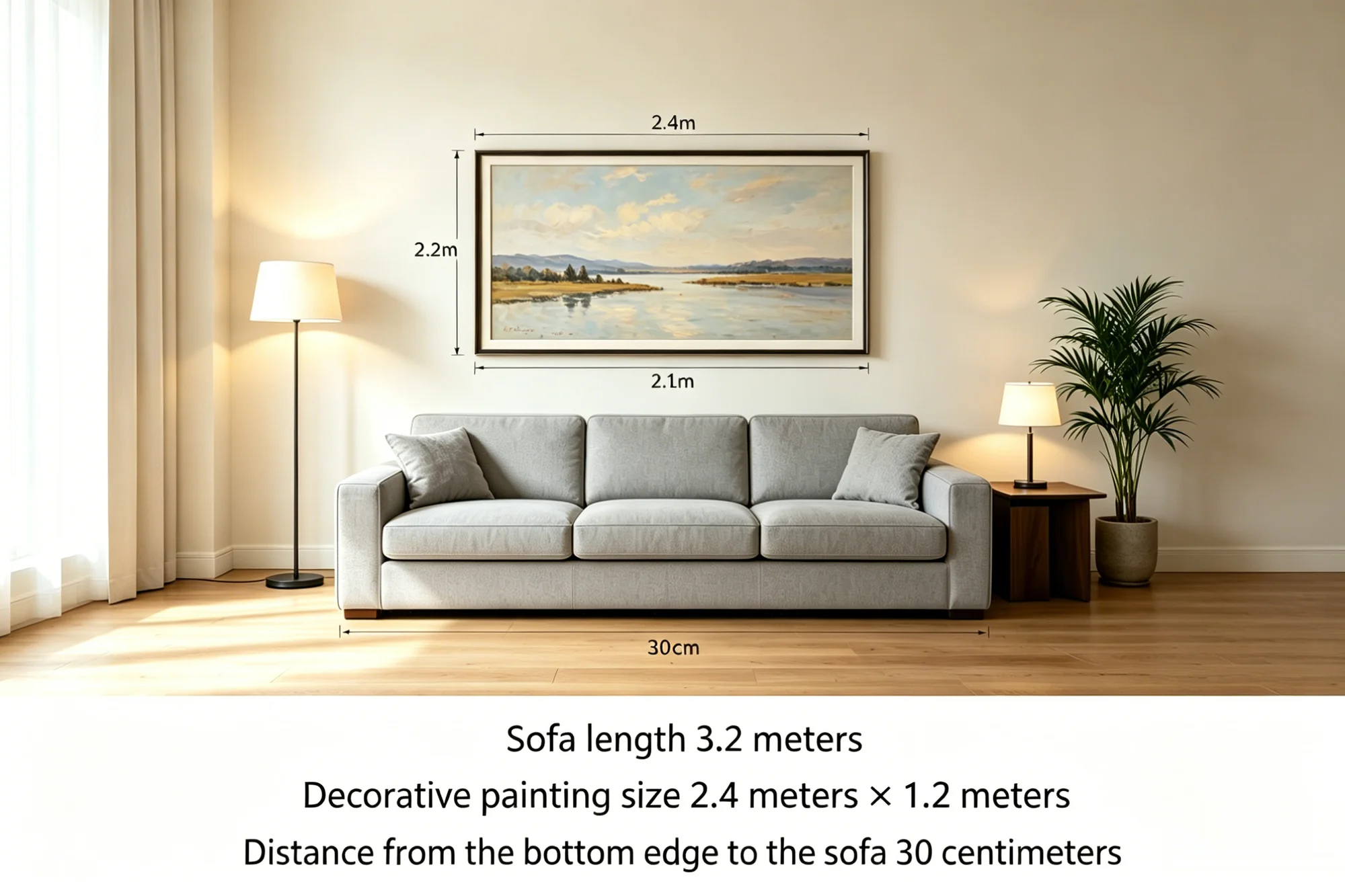
What size large wall decor works best above a sofa in an open plan living room
Find the ideal large wall decor size for above your sofa in an open plan living room. Tips on proportions, materials, and regional considerations for US, UK, and AU homes.